

José de Alencar
Images
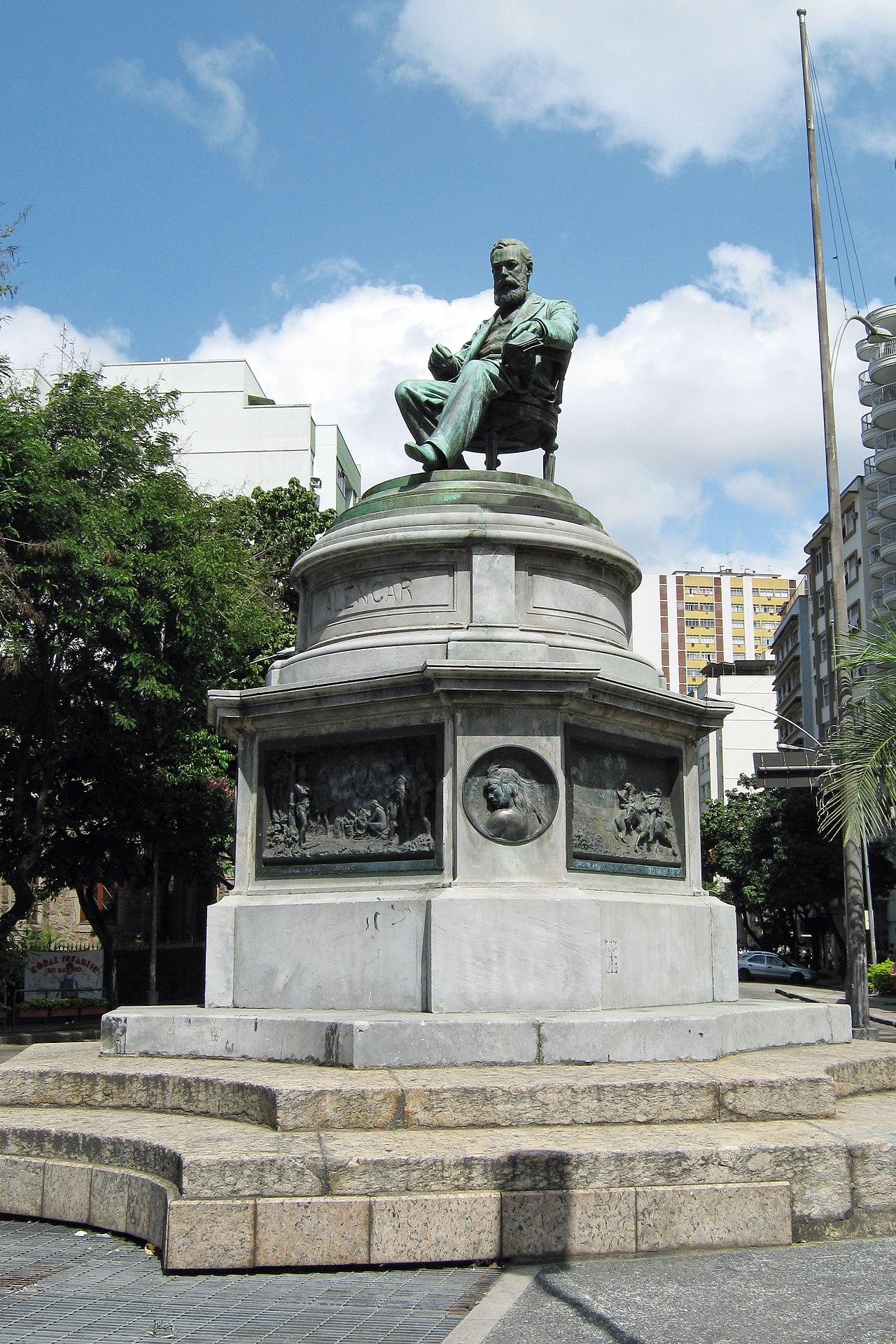
Monumento a José de Alencar


Forging a National Literary Consciousness
José de Alencar (1829-1877) stands as a pivotal figure in the development of Brazilian literature, instrumental in shaping a distinct national identity through his prolific writing. As a lawyer and politician, Alencar possessed a keen understanding of the social and political landscape of Brazil during the Empire period. This background informed his literary endeavors, allowing him to craft narratives that resonated deeply with contemporary Brazilian society.
He was a leading exponent of Brazilian Romanticism, a movement that sought to define and celebrate Brazilian culture, history, and nature in contrast to European literary traditions. His work was not merely artistic expression; it was a deliberate project to construct a literary foundation for a nascent nation, asserting its unique voice on the global stage.
The 'Indianism' Project
Alencar's most enduring contribution is arguably his pioneering work in 'Indianism.' At a time when European literary models dominated, he championed the indigenous peoples of Brazil as central figures in the national narrative. This was a radical departure, transforming the often-marginalized native populations into romanticized heroes embodying Brazilian virtues like courage, nobility, and a profound connection to the land. Through novels such as 'O Guarani' and 'Iracema,' Alencar created foundational myths for Brazil, offering an alternative origin story that celebrated its pre-colonial heritage.
This literary strategy was crucial in fostering a sense of shared national identity and pride among a diverse populace, effectively using literature as a tool for nation-building.
A Multifaceted Literary Career and Enduring Influence
Alencar's literary output was remarkably diverse, encompassing novels, dramas, and critical essays. His novels explored various facets of Brazilian life, from the romanticized indigenous past to contemporary urban society and regional customs. His skill lay in his ability to blend vivid descriptions of Brazilian landscapes and customs with compelling character development and engaging plots.
Beyond his creative writing, Alencar's political career and his role as an orator further cemented his public profile. His election as a patron of the 23rd chair of the Brazilian Academy of Letters posthumously recognized his immense contribution, solidifying his status as a literary patriarch whose works continue to be studied and admired for their artistic merit and historical significance.
The Strategic Use of Pseudonyms and Literary Platforms
The fact that Alencar sometimes used the pen name Erasmo reveals a strategic dimension to his literary career. Pseudonyms can serve various purposes, from protecting the author's identity to experimenting with different literary personas or even subtly influencing critical reception. In Alencar's case, the use of a pseudonym might have allowed him to engage with certain themes or genres with a degree of detachment or to test the waters for specific works.
This adds a layer of complexity to his public image, suggesting a thoughtful and perhaps calculated approach to his engagement with the literary world. His active participation in shaping literary discourse, alongside his creative output, underscores his comprehensive influence on Brazilian letters.
See also
Frequently Asked Questions
Who was José de Alencar?+
What is Indianism and why did Alencar write about indigenous people?+
Which famous books did Alencar write?+
Did Alencar use a pen name?+
How did Alencar help Brazil feel proud of its culture?+
Based on content from Wikipedia · Licensed under CC BY-SA 4.0