

John III of Portugal
Images

File:Post-medieval coin , Vintém of John III of Portugal (FindID 828661).jpg




The Pious King's Grand Design
John III's reign (1521-1557) marked a pivotal era for Portugal, characterized by the consolidation and expansion of its burgeoning global empire. Succeeding his father, Manuel I, John III inherited a kingdom already at the forefront of maritime exploration. His strategic vision, however, was to solidify Portugal's economic power, primarily through the lucrative spice trade.
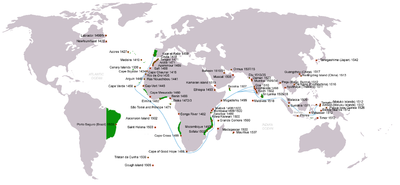
He heavily invested in reinforcing Portuguese bases in India, such as Goa, which became a vital administrative and commercial hub. This strategic focus allowed Portugal to secure a near-monopoly over the trade of highly sought-after spices like cloves and nutmeg originating from the Maluku Islands. This control over the spice routes was not merely about acquiring wealth; it was about geopolitical influence and establishing Portugal as a dominant force in global commerce.
Simultaneously, John III oversaw the significant Portuguese colonization of Brazil, recognizing its potential for resources and settlement, thereby extending the empire's reach into the Western Hemisphere. By the time of his death, the Portuguese Empire spanned an impressive 4 million square kilometers, a testament to his ambitious policies and the era's spirit of discovery and expansion.
Navigating New Worlds
John III's era was defined by unprecedented encounters and strategic diplomatic shifts. Under his rule, the Portuguese achieved a historic first: becoming the initial Europeans to establish contact with Muromachi Japan. This encounter opened a complex chapter of cultural exchange, trade, and missionary activity, forever altering both Portuguese and Japanese histories.
Recognizing the shifting global landscape, John III made a conscious decision to de-emphasize territorial ambitions in North Africa, which had been a focus for previous rulers. Instead, he redirected resources and attention towards the immensely profitable trade networks in India and the burgeoning colonial project in Brazil. In Europe, he actively sought to bolster Portugal's trade by improving diplomatic and commercial relations with regions bordering the Baltic Sea and the Rhineland.
This forward-thinking approach demonstrated an understanding that Portugal's prosperity depended not only on its overseas ventures but also on robust European partnerships, creating a more diversified and resilient economic base.
The Foundation of Knowledge
Beyond his role as an empire builder and trade magnate, John III was deeply committed to intellectual and religious development, earning him the moniker 'The Pious.' He played a crucial role in the introduction and establishment of the Society of Jesus (Jesuits) in Portugal. These highly educated individuals were instrumental in advancing education and spreading Catholic doctrine. John III actively supported the founding and expansion of educational institutions, recognizing their importance for both the state and the church.
A significant achievement during his reign was the establishment of the University of Coimbra's Faculty of Medicine, a landmark development that contributed to the advancement of medical science in Portugal. This emphasis on education and religious reform was not merely a personal inclination; it was a strategic investment in shaping a learned populace and solidifying the cultural and spiritual identity of his vast empire, ensuring its long-term stability and influence.
Legacy of a Global Monarch
John III's reign represents a critical juncture in Portuguese history, a period where the foundations of a global empire were solidified and its economic engine, fueled by the spice trade, reached its zenith. His strategic decisions to focus on Asia and the Americas, coupled with his diplomatic overtures in Europe, created a complex web of international relations that defined Portugal's place in the world. The expansion of the empire under his leadership was not just territorial; it was an economic and cultural phenomenon that left an indelible mark on global history.
Furthermore, his commitment to education and the arts, exemplified by his support for the University of Coimbra and the introduction of the Jesuits, fostered an environment of intellectual growth that complemented his imperial ambitions. John III's legacy is that of a monarch who skillfully navigated the challenges of a rapidly changing world, transforming Portugal into a formidable global power while simultaneously laying groundwork for future intellectual and societal advancements.
See also
Frequently Asked Questions
Who was John III of Portugal?+
What did John III do with the spice trade?+
Why did John III focus on Brazil?+
How did John III help schools and medicine?+
What nickname did John III earn and why?+
Based on content from Wikipedia · Licensed under CC BY-SA 4.0