

Jameh Mosque of Isfahan
Images

Epigraphy in Jameh Mosque of Isfahan


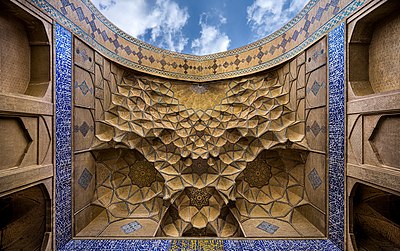


The Stratified History of the Jameh Mosque
The Jameh Mosque of Isfahan is not a static monument but a palimpsest of architectural history, reflecting over a thousand years of continuous construction, renovation, and adaptation. Its origins trace back to the late 8th century CE, with significant expansions and modifications occurring under various dynasties, including the Seljuks, Ilkhanids, Timurids, and Safavids. This layered development means the mosque presents a fascinating chronological survey of Islamic architectural styles.
Early structures, likely hypostyle halls, evolved to incorporate grander iwans (vaulted spaces), elaborate muqarnas (stalactite vaulting), and intricate tilework. Each era left its indelible mark, transforming the mosque from a simple congregational space into a complex urban monument. The sheer scale of its evolution, spanning from the Abbasid period to the 20th century, makes it an unparalleled site for studying the trajectory of Persian and Islamic architecture, demonstrating how religious and civic functions intertwined and shaped the built environment over centuries.
Architectural Innovations and Artistic Expression
As a congregational mosque, the Jameh Mosque of Isfahan served as a focal point for religious, social, and political life, driving continuous architectural innovation. Its vast courtyard, surrounded by arcades and iwans, became a model for mosque design across the region. The mosque is particularly renowned for its four-iwan plan, a layout that became a hallmark of Persian mosque architecture, with each iwan facing a central courtyard.
The Seljuk period, in particular, saw significant contributions, including the construction of the magnificent Oljeitu Dome and the southern iwan, showcasing sophisticated brickwork and geometric precision. Later periods introduced breathtaking tile mosaics and calligraphy, transforming surfaces into vibrant canvases of religious expression. The mosque’s ability to integrate diverse stylistic elements-from the austere grandeur of early periods to the opulent decoration of later ones-highlights its role as a dynamic laboratory for architectural experimentation and artistic refinement.
Global Recognition and Enduring Legacy
The Jameh Mosque of Isfahan’s inscription as a UNESCO World Heritage Site in 2012 underscores its profound global significance. This recognition acknowledges its status as an outstanding example of Islamic architecture and a crucial component of Iran's cultural heritage. Beyond its aesthetic and historical value, the mosque represents the continuity of religious practice and community life over more than a millennium.
It stands as a powerful symbol of Isfahan's historical prominence as a major cultural and political center. Its enduring presence and the ongoing preservation efforts ensure that it continues to inspire architects, historians, and visitors alike, offering invaluable insights into the spiritual and artistic achievements of Islamic civilization. The mosque is not merely a relic of the past but a living testament to the enduring power of faith and human creativity.
The Mosque as an Urban Nucleus
The strategic location of the Jameh Mosque, adjacent to the Grand Bazaar of Isfahan, highlights its integral role within the urban fabric of the city. This proximity fostered a symbiotic relationship, where the mosque served as a spiritual anchor while the bazaar functioned as the economic heart. This integration reflects a common pattern in historic Islamic cities, where religious and commercial centers were often closely linked, facilitating social cohesion and daily life.
The mosque complex itself expanded over time to encompass various structures, including madrasas (religious schools) and libraries, further solidifying its position as a multifaceted civic institution. Its continuous development over centuries, often driven by the patronage of successive rulers, demonstrates its central importance in the political and cultural landscape of Isfahan, making it a microcosm of the city's historical evolution.
See also
Frequently Asked Questions
What is the Jameh Mosque of Isfahan?+
How old is the mosque?+
Why does the mosque have a four‑iwan plan?+
Where is the mosque located?+
What special features were added during the Seljuk period?+
Based on content from Wikipedia · Licensed under CC BY-SA 4.0