

Ivan Pavlov: The Dog Whisperer Scientist!
Images
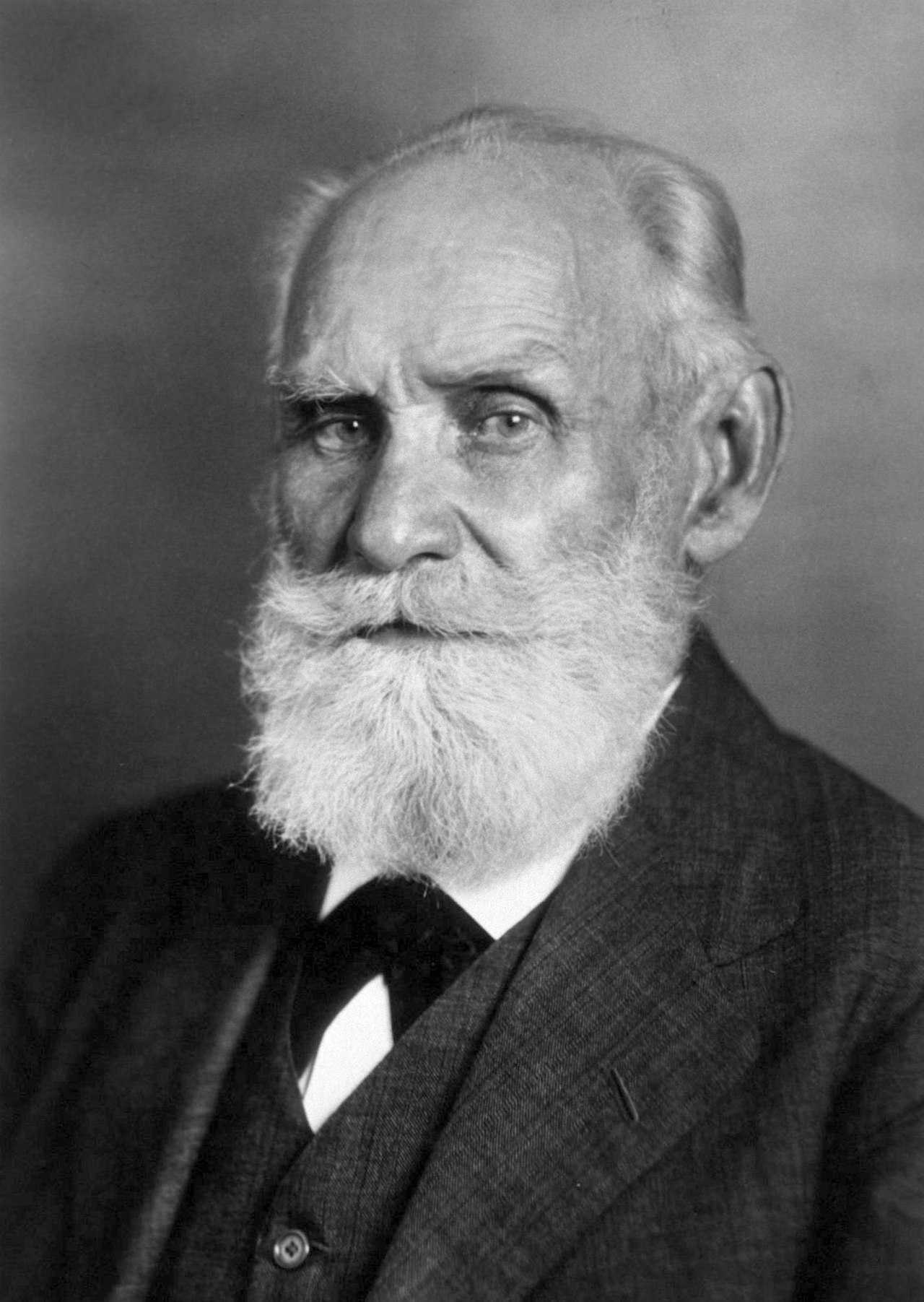
Ivan Pavlov
From Theological Roots to Physiological Frontiers
Ivan Petrovich Pavlov was born on September 26, 1849, in Ryazan, Russia. Initially pursuing theological studies, Pavlov soon redirected his intellectual energies toward the natural sciences, driven by a profound curiosity about the physiological mechanisms of life. He enrolled at Saint Petersburg University, where he excelled in physics and mathematics before focusing on medicine and physiology.
His early scientific career was marked by intensive research into the digestive system of mammals. Through meticulous experimentation, often involving surgically prepared animals to allow for direct observation of bodily processes, Pavlov elucidated the complex neural regulation of digestion. This seminal work, detailing the intricate interplay of nerves and glands in nutrient processing, earned him international acclaim and the Nobel Prize in Physiology or Medicine in 1904.
This recognition cemented his status as a leading figure in experimental physiology, but his most enduring legacy was yet to be forged through his investigations into conditioned reflexes.
The Accidental Discovery of Conditioned Responses
While studying digestion, Pavlov observed a phenomenon that initially seemed like a mere distraction: dogs would salivate not only when food was presented but also at the mere sight of the experimenter or the sound of their footsteps. He termed these 'psychic secretions.' Recognizing the potential significance of this observation, Pavlov shifted his focus. He designed experiments where a neutral stimulus, such as a bell, a light, or a metronome, was consistently paired with the presentation of food (the unconditioned stimulus).
The food naturally elicited salivation (the unconditioned response). Through repeated pairings, the previously neutral stimulus became a conditioned stimulus, capable of eliciting salivation (the conditioned response) on its own, even in the absence of food. This process, which he termed 'conditional reflexes,' demonstrated that physiological responses could be learned through association, a radical departure from purely instinctual or reflex-based explanations of behavior.
The Pillars of Classical Conditioning Theory
Pavlov's systematic investigation of conditioned reflexes laid the groundwork for the theory of classical conditioning. He meticulously identified and differentiated key elements: the unconditioned stimulus (UCS) that naturally elicits a response, the unconditioned response (UCR) that is the natural reaction, the neutral stimulus (NS) that initially evokes no specific response, and the conditioned stimulus (CS) which, after association with the UCS, elicits a learned response.
The learned reaction to the CS is the conditioned response (CR). Pavlov also explored concepts such as extinction (when the CS is presented without the UCS, the CR weakens), spontaneous recovery (the reappearance of an extinguished CR), generalization (responding to stimuli similar to the CS), and discrimination (learning to respond only to the specific CS). His rigorous experimental methodology and precise terminology provided a robust framework for understanding associative learning.
Pavlov's Enduring Influence on Science and Society
Ivan Pavlov's work, spanning from his Nobel-winning research on digestion to his profound insights into conditioned reflexes, concluded with his death on February 27, 1936. His discoveries transcended physiology, profoundly impacting the nascent field of psychology, particularly through the development of behaviorism. Figures like John B.
Watson explicitly adopted and expanded upon Pavlov's principles to explain human behavior. Classical conditioning provides a fundamental model for understanding how phobias develop, how advertising influences consumer behavior, how therapeutic interventions like systematic desensitization work, and even how emotional responses become attached to specific cues. Pavlov's legacy is one of rigorous scientific inquiry, revealing the remarkable capacity of organisms to learn and adapt through association, thereby fundamentally altering our perception of the mind and behavior.
Beyond the Bell
While Pavlov's experiments are iconic, it's crucial to understand their broader context and limitations. His focus on observable physiological responses and learned associations provided a powerful counterpoint to introspective psychological methods prevalent at the time. However, behaviorism, heavily influenced by Pavlov, has been criticized for its reductionist approach, often neglecting the role of cognitive processes, genetics, and individual interpretation in shaping behavior.
Despite these critiques, Pavlov's meticulous scientific methodology and his discovery of associative learning remain cornerstones of behavioral science. His work continues to inspire research into neural plasticity, learning mechanisms, and the development of effective behavioral interventions across various disciplines, from animal training to clinical psychology and neuroscience.
Go deeper
Frequently Asked Questions
Who was Ivan Pavlov?+
How did Pavlov discover that dogs can learn to drool at a bell?+
What is a conditioned reflex?+
What did Pavlov win a Nobel Prize for?+
What other ideas did Pavlov study besides the bell?+
Based on content from Wikipedia · Licensed under CC BY-SA 4.0