

Itaipu Dam
Images
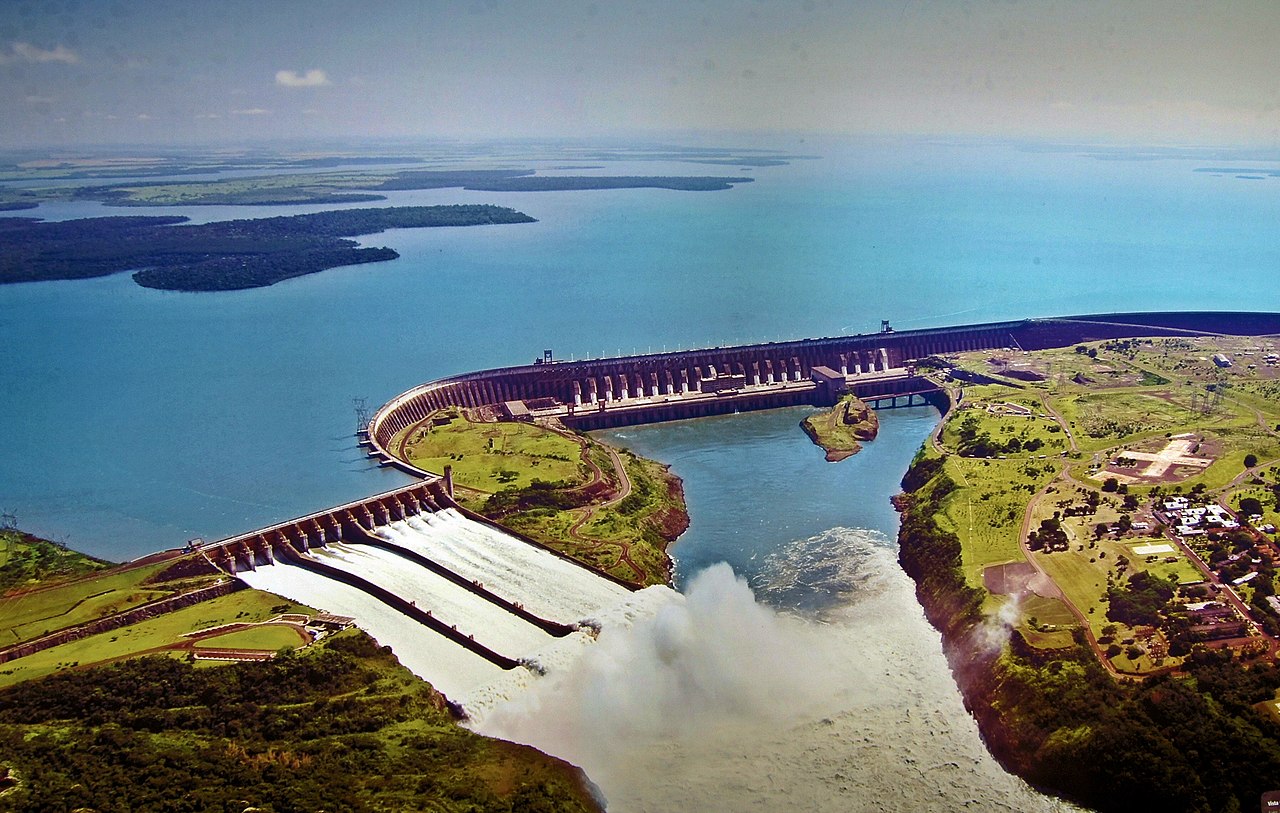
Itaipu Dam
Genesis of a Giant
The concept of harnessing the Paraná River's power for bilateral benefit materialized in the Treaty of Itaipu, signed in 1973 between Brazil and Paraguay. Construction commenced in 1975, initiating one of the most ambitious engineering projects in history. The scale of the undertaking was staggering: over 40,000 workers were employed at its peak, and the project involved monumental earthmoving operations, including the diversion of the Paraná River itself.
The dam's design, a concrete rock-fill structure with a central concrete gravity section, was engineered to withstand immense hydrostatic pressure and seismic activity. The construction phase, completed in 1982, was a testament to meticulous planning, advanced construction techniques, and international cooperation, overcoming significant logistical and technical challenges. The sheer volume of materials used, such as concrete and steel, underscores the gargantuan effort involved in its creation.
The Mechanics of Megawatts
Itaipu Dam operates as a sophisticated hydroelectric power plant, leveraging the potential energy of the water stored in its vast reservoir. The reservoir, formed by the dam, creates a significant head of water. When released, this water flows through 20 massive penstocks, each measuring 11 meters in diameter, to drive 20 Francis turbines.
Each turbine is coupled to a generator, producing electricity. The dam's operational strategy involves balancing energy demand with water availability, managed through a complex system of spillways and control gates. The plant's impressive installed capacity and high load factor make it a remarkably efficient producer of electricity.
The continuous operation and maintenance of these intricate systems are crucial for ensuring a stable and reliable power supply to both Brazil and Paraguay.
Beyond Electricity
Itaipu Dam's influence extends far beyond its primary function of electricity generation. It is a cornerstone of Brazil's and Paraguay's energy security, providing a substantial portion of their electricity needs from a renewable source, thereby reducing dependence on fossil fuels and mitigating greenhouse gas emissions. This contributes significantly to global efforts to combat climate change.
Furthermore, the dam plays a crucial role in regional development by providing affordable energy that fuels economic growth and industrialization. While the creation of the reservoir necessitated the relocation of thousands of people and impacted local ecosystems, the dam also offers benefits such as flood control and improved navigation on the Paraná River. Its existence represents a complex interplay of environmental, economic, and social considerations inherent in large-scale infrastructure projects.
Engineering Marvels and Environmental Considerations
The sheer scale of Itaipu Dam is awe-inspiring. The volume of concrete used in its construction is enough to build 380,000 apartments, each 100 square meters. The dam's crest length is 7,919 meters, and its height reaches 196 meters, making it one of the tallest dams in the world.
The reservoir it creates covers an area of approximately 1,350 square kilometers, submerging significant tracts of land and altering the local environment. Environmental impact assessments and mitigation strategies were integral to the project, including efforts to preserve biodiversity and manage water quality. The dam's spillway capacity is extraordinary, capable of releasing up to 62,000 cubic meters of water per second, a flow rate that dwarfs that of Niagara Falls.
These statistics highlight Itaipu as a triumph of human ingenuity, albeit one with significant environmental responsibilities.
Go deeper
Frequently Asked Questions
What is the Itaipu Dam and where is it located?+
How does the dam make electricity?+
Why was the dam built?+
How many people worked on building the dam?+
What happens to the land when the reservoir fills?+
Based on content from Wikipedia · Licensed under CC BY-SA 4.0