

ISO 3166: The World's Secret Codes!
Images

File:Lietuvos apskritys ISO 3166-2.png



The Genesis and Evolution of Standardized Geographic Codes
ISO 3166 is a critical international standard published by the International Organization for Standardization (ISO), officially titled 'Codes for the representation of names of countries and their subdivisions'. Its primary function is to provide a universally recognized set of codes for geographical entities, thereby eliminating ambiguity in data exchange and communication. The standard addresses the need for concise, unambiguous identifiers for countries, dependent territories, and special areas of geographical interest, as well as their principal administrative subdivisions.
The initial publication of ISO 3166-1, focusing on country codes, occurred in 1978, with subsequent revisions and expansions, including the introduction of ISO 3166-2 for subdivisions, reflecting the dynamic nature of global political and administrative landscapes. This evolution is crucial for maintaining the standard's relevance and accuracy in an ever-changing world.
The Indispensable Role of ISO 3166 in Global Systems
The significance of ISO 3166 extends far beyond mere convenience; it is a cornerstone of modern global infrastructure. In the digital realm, these codes are fundamental for domain name systems (e.g., .us, .uk), internet protocol addressing, and international e-commerce. They ensure that online transactions, shipping logistics, and data routing are precise and efficient.
For governments and international organizations, ISO 3166 codes are vital for statistical reporting, customs declarations, and diplomatic correspondence, facilitating accurate data aggregation and policy-making. Furthermore, in fields like aviation and telecommunications, standardized codes prevent misidentification and ensure seamless operations across international borders. The standard's widespread adoption underscores its indispensable contribution to global connectivity and interoperability.
Mechanisms of ISO 3166
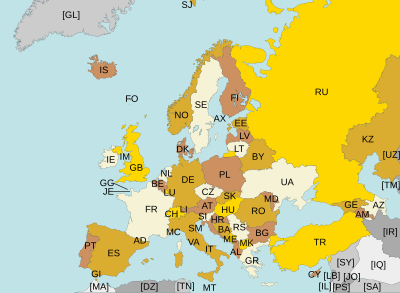
The ISO 3166 standard is structured into several parts, with ISO 3166-1 being the most widely recognized, defining codes for countries and territories. This part includes three code sets: alpha-2 (two-letter codes, e.g., FR for France), alpha-3 (three-letter codes, e.g., FRA), and numeric (three-digit codes). ISO 3166-2 focuses on codes for principal subdivisions of countries, such as states or provinces (e.g., US-CA for California, USA).
The assignment of codes is based on the United Nations' list of country names and their subdivisions, ensuring international consensus. The maintenance agency for ISO 3166 is ISO itself, which regularly updates the standard to incorporate changes in country names, political status, and administrative structures, ensuring its continued accuracy and utility.
ISO 3166 and Related Global Standards
ISO 3166 does not operate in isolation; it is deeply integrated with and influences numerous other international standards and systems. For instance, the Internet Assigned Numbers Authority (IANA) uses ISO 3166-1 alpha-2 codes as the basis for country-code top-level domains (ccTLDs) in the Domain Name System (DNS). Similarly, the International Telecommunication Union (ITU) utilizes these codes in various telecommunication standards.
The United Nations Statistical Division also relies on ISO 3166 for its country and area classifications. Understanding ISO 3166 provides a gateway to comprehending how these disparate global systems achieve interoperability through a common language of geographic identification, highlighting the profound impact of standardization on global information flow and coordination.
See also
Frequently Asked Questions
What are ISO 3166 codes?+
Why do we need country codes?+
How do ISO 3166 codes help the internet?+
Where do the codes come from?+
When were ISO 3166 codes first created?+
Based on content from Wikipedia · Licensed under CC BY-SA 4.0