

Iranian Rial: Iran's Awesome Money!
Images

A fistful of Rials




The Rial
The Iranian Rial (IRR) serves as the official currency of the Islamic Republic of Iran, underpinning its entire economic infrastructure. As the primary medium of exchange, it facilitates all domestic transactions, from individual purchases to large-scale industrial commerce. The Rial's subdivision into 100 dinars is a theoretical construct, largely rendered obsolete by the rial's diminished purchasing power.
This hyperinflationary effect means that dinars are practically non-existent in circulation, simplifying transactions to the main Rial denominations. The currency's symbol, ﷼, while widely recognized, has a complex standardization history, with specific Iranian standards (ISIRI 820, 2900, 3342) defining its representation for technical applications like typewriters and digital encoding, including the Unicode compatibility character U+FDFC.
Historical Evolution of the Rial
The Iranian Rial boasts a lineage that stretches back through significant periods of Iranian history, though its modern iteration has been shaped by more recent economic and political developments. While the term 'Rial' has ancient roots in Persian coinage, the currency as it exists today has undergone transformations influenced by various dynasties and governmental changes. Understanding this historical trajectory is crucial for grasping the Rial's current standing and the factors that have contributed to its value fluctuations.
Each era has imprinted its economic policies and societal needs onto the currency, making the Rial a tangible link to Iran's past and a reflection of its ongoing economic narrative. Its journey is a testament to the dynamic nature of national currencies.
Socio-Economic Significance of the Rial
The Iranian Rial is far more than a mere unit of account; it is intrinsically linked to the socio-economic well-being of the nation. Its stability, or lack thereof, directly impacts inflation rates, the cost of living, and the overall confidence in the Iranian economy. For citizens, the Rial dictates their ability to access essential goods and services, their savings' value, and their participation in the global marketplace.
For businesses, it governs investment decisions, trade balances, and profitability. The government relies on the Rial for fiscal policy implementation, taxation, and managing national debt. Therefore, the Rial's performance is a critical indicator of Iran's economic health and its integration into the international financial system.
Technical Specifications and Standardization of the Rial Symbol
The representation of the Iranian Rial involves interesting technical considerations, particularly concerning its symbol. While the symbol ﷼ is commonly understood, its formal standardization has been a deliberate process. Iranian national standards, such as ISIRI 820, were developed to define a specific symbol for use on typewriters, indicating an early effort to codify its representation.
Subsequent standards, ISIRI 2900 and ISIRI 3342, further elaborated on character encoding for this symbol. The inclusion of a compatibility character in the Unicode Standard (U+FDFC ﷼) demonstrates the global effort to ensure that this unique currency symbol can be accurately displayed and processed across various digital platforms, reflecting the intersection of national identity and international technological standards.
The Rial in the Global Financial Landscape
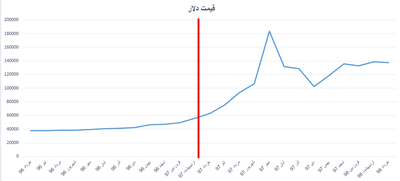
The Iranian Rial operates within a complex global financial system, subject to international economic trends, sanctions, and trade relations. Its exchange rate against major world currencies like the US Dollar and the Euro is a closely watched metric, reflecting both domestic economic conditions and geopolitical influences. Fluctuations in the Rial's value can significantly affect Iran's import and export capabilities, foreign investment attractiveness, and the purchasing power of its citizens on the international stage.
Understanding the Rial's position requires considering its interaction with global markets, international financial institutions, and the broader dynamics of international trade, highlighting its role not just domestically but also in the wider world economy.
See also
Frequently Asked Questions
What is the Iranian Rial?+
How does the Iranian Rial help people buy things in Iran?+
Why are dinars not used much in Iran today?+
What does the symbol ﷼ look like and how is it used?+
How does the Iranian Rial affect people's everyday life?+
Based on content from Wikipedia · Licensed under CC BY-SA 4.0