

Invasion of Poland (1939)
Images

Synagogue


Geopolitical Landscape and Strategic Importance of Poland
Poland occupies a pivotal position in Central Europe, historically serving as a land bridge between Western and Eastern Europe. Its geography is characterized by extensive plains, which historically facilitated military movements and trade, but also made it vulnerable to invasion from both east and west. The country's large area, spanning over 312,000 square kilometers, and its significant population of nearly 38 million people, made it a substantial entity in the European balance of power.
Bordering Germany to the west and the Soviet Union to the east, Poland's strategic location meant that any conflict involving these two major powers was likely to engulf Polish territory. The interwar period saw Poland striving to maintain its independence, navigating complex relationships with its powerful neighbors, and seeking security through alliances, particularly with France and the United Kingdom, whose guarantees would prove critical in the unfolding crisis.
Tactical Innovation and Strategic Surprise
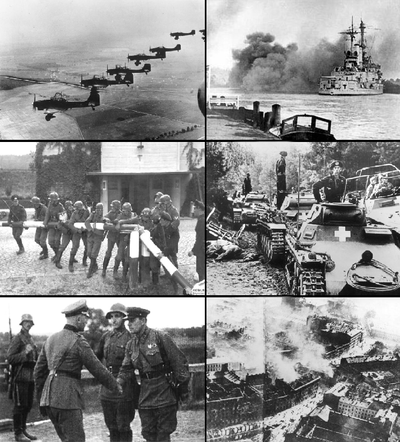
The invasion of Poland on September 1, 1939, marked a watershed moment in military history with the debut of Germany's 'Blitzkrieg' doctrine. This strategy represented a radical departure from the static trench warfare that had characterized World War I. Blitzkrieg emphasized the synchronized use of armored formations (Panzer divisions), motorized infantry, and close air support from the Luftwaffe to achieve deep penetrations and encirclements of enemy forces.
The objective was not merely to defeat the enemy but to shatter their command and control structures, sow confusion, and achieve rapid operational success. The Polish army, while courageous, was equipped with outdated tactics and weaponry, ill-prepared for the speed, coordination, and sheer destructive power of the German assault. The element of surprise was paramount, with German forces launching a multi-pronged attack across the Polish border, overwhelming defenses before they could effectively mobilize or receive substantial aid.
The Entangling Alliances and the Outbreak of World War II
The invasion of Poland acted as the immediate trigger for the Second World War due to pre-existing mutual defense pacts. The United Kingdom and France, having adopted a policy of appeasement towards Hitler's aggressive expansionism for years, finally drew a line in the sand. They had guaranteed Poland's independence in March 1939.
Consequently, upon Germany's refusal to withdraw its forces, both nations declared war on Germany on September 3, 1939. This declaration transformed a regional conflict into a global conflagration. However, the 'Phoney War' period that followed saw limited direct military action on the Western Front, leading some historians to question the immediate commitment of the Allied powers.
Nevertheless, the invasion irrevocably set the stage for a conflict that would engulf the world for six long years, leading to unprecedented devastation and geopolitical realignment.
Consequences and Historical Repercussions
The swift defeat of Poland had profound and tragic consequences. The country was partitioned between Germany and the Soviet Union, and its people endured brutal occupation, persecution, and immense suffering, including the systematic extermination of Jewish populations in the Holocaust. On a global scale, the invasion shattered the fragile peace of Europe and initiated a conflict of unparalleled scope and destruction.
World War II would result in an estimated 70 to 85 million fatalities, fundamentally alter the global political order, lead to the rise of the United States and the Soviet Union as superpowers, and set the stage for the Cold War. The invasion of Poland remains a stark historical lesson on the dangers of unchecked aggression, the complexities of international alliances, and the devastating human cost of total war.
See also
Frequently Asked Questions
What was the invasion of Poland in 1939?+
Why did Germany attack Poland?+
How did the German attack use a new strategy called Blitzkrieg?+
What happened to Poland after it was invaded?+
Why did Britain and France declare war on Germany after the invasion?+
Based on content from Wikipedia · Licensed under CC BY-SA 4.0