

International recognition of Palestine
Images

International Recognition of Israel and Palestine in Europe 2025


The Genesis of Statehood
The journey towards international recognition for Palestine is deeply rooted in its declaration of statehood. On November 15, 1988, the Palestine Liberation Organization (PLO) proclaimed the State of Palestine, asserting sovereignty over the West Bank, including East Jerusalem, and the Gaza Strip. This declaration was a pivotal moment, aiming to formalize Palestinian national aspirations on the global stage.
The immediate aftermath saw a significant wave of international support, with 78 countries extending recognition by the end of 1988. This initial endorsement from a substantial bloc of nations, primarily from the Non-Aligned Movement and the Soviet bloc, signaled a growing global consensus for Palestinian self-determination. It was a strategic move to establish a political entity that could engage in future negotiations from a position of recognized statehood, even amidst ongoing conflict and occupation.
Navigating the United Nations
Palestine's engagement with the United Nations represents a crucial aspect of its quest for international legitimacy. In November 2012, the UN General Assembly voted to grant Palestine non-member observer state status. This upgrade from its previous observer status allowed Palestine to participate more actively in UN debates and access international treaties and institutions, such as the International Criminal Court (ICC).
The ICC's subsequent recognition of Palestine as a state in December 2014 further bolstered its legal standing. However, Palestine's ambition for full UN membership, which would grant it voting rights in the General Assembly, has been consistently thwarted. This is largely due to the United States' veto power as a permanent member of the UN Security Council, which has repeatedly blocked such moves, reflecting a divergence in international political alignments on the issue.
The Geopolitical Chessboard
The international recognition of Palestine is intricately linked to the geopolitical dynamics within the UN Security Council. The United States, a staunch ally of Israel, has consistently utilized its veto power to prevent Palestine's full UN membership, arguing that statehood should be achieved through direct negotiations between Israelis and Palestinians. This stance contrasts sharply with the positions of the other four permanent members: China, France, Russia, and the United Kingdom, all of whom recognize Palestine.
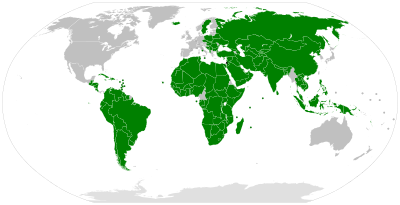
This division among the permanent five creates a significant hurdle. Furthermore, the broader international community, including a majority of UN member states (157 as of September 2025), has recognized Palestine. This widespread recognition underscores a global sentiment favoring Palestinian statehood, even as powerful states maintain opposition within key international forums.
The Oslo Accords, signed in 1993 and 1995, aimed to create a Palestinian Authority for interim self-governance, but the peace process has since stalled, further complicating the path to full recognition and statehood.
The 'Two-State Solution' and its Global Advocacy
The concept of a 'two-state solution,' envisioning an independent Palestinian state alongside Israel, remains the dominant framework for resolving the Israeli-Palestinian conflict, supported by a vast majority of the international community. This solution aims to establish secure borders for both states, allowing for self-determination and peaceful coexistence. Many influential nations, including fourteen of the nineteen G20 member countries, have recognized Palestine, signaling their commitment to this two-state paradigm.
Countries like Argentina, Brazil, China, France, India, Russia, and the UK are among those that support Palestinian statehood. However, the path to realizing this solution is fraught with challenges. Some nations, such as Germany, Italy, Japan, South Korea, and the U.S., do not currently recognize Palestine, though some, like Italy and Japan, have indicated potential future recognition contingent on specific conditions, such as Hamas meeting certain criteria.
This complex web of recognition and non-recognition highlights the ongoing diplomatic efforts and the persistent obstacles to achieving a comprehensive and lasting peace.
See also
Frequently Asked Questions
What happened on November 15, 1988?+
Why did the UN give Palestine non‑member observer state status in 2012?+
How many countries recognized Palestine as of September 2025?+
Why can’t Palestine become a full UN member?+
What is the two‑state solution?+
Based on content from Wikipedia · Licensed under CC BY-SA 4.0