

International Bureau of Weights and Measures
Images

05010002




The Genesis of Global Measurement Standards
The International Bureau of Weights and Measures (BIPM) stands as a testament to humanity's drive for precision and uniformity. Established in 1875 through the Metre Convention, its primary mission is to ensure that measurements made anywhere in the world are comparable and reliable. This intergovernmental organization, currently comprising 64 member states, acts as the ultimate arbiter of measurement standards across diverse scientific disciplines, including physical metrology, chemistry, and ionizing radiation.
Its headquarters, the historic Pavillon de Breteuil near Paris, France, serves as the nerve center for global metrological coordination, fostering an environment where scientific progress and international commerce can flourish on a common, quantifiable foundation. The very concept of a unified measurement system was revolutionary, moving away from the inconsistencies of local standards towards a universal language of science and trade.
Upholding the International System of Units (SI)
At the heart of the BIPM's work is the stewardship of the International System of Units (SI), the modern descendant of the metric system. The SI provides a coherent framework of seven base units (meter, kilogram, second, ampere, kelvin, mole, and candela) from which all other units can be derived. The BIPM is responsible for ensuring the stability and accuracy of these fundamental units, a process that involves continuous research and redefinition based on the latest scientific understanding.
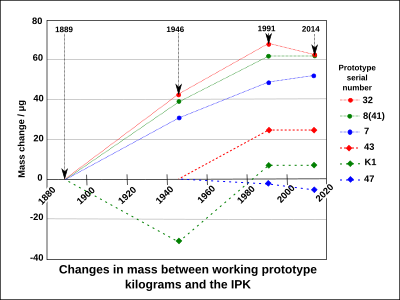
For instance, the redefinition of the kilogram in 2019, based on fundamental physical constants, exemplifies the BIPM's commitment to a measurement system that is not dependent on any single physical artifact but on invariant properties of nature. This ensures that measurements remain consistent over time and across different laboratories.
The Critical Role of Coordinated Universal Time (UTC)
Beyond physical quantities, the BIPM plays an indispensable role in maintaining Coordinated Universal Time (UTC). UTC is the primary time standard by which the world regulates clocks and time. It is derived from International Atomic Time (TAI), an extremely stable timescale based on the combined readings of hundreds of atomic clocks worldwide.
The BIPM's Laboratory of Time and Frequency is central to this effort, comparing and analyzing time signals from national metrology institutes. The slight adjustments made to UTC, known as leap seconds, are managed to keep it within 0.9 seconds of Universal Time (UT1), which is based on Earth's rotation. This precise timekeeping is fundamental for global navigation systems, telecommunications, financial transactions, and scientific research that relies on synchronized observations.
Impact on Science, Technology, and Global Economy
The BIPM's influence extends far beyond the laboratory. Its work is foundational to virtually every aspect of modern life. In scientific research, standardized measurements allow for the reproducibility and validation of experiments across borders, accelerating discovery.
In technology, precise measurements are critical for the development of everything from microelectronics to aerospace engineering. The global economy relies heavily on consistent units of measure for international trade, ensuring fair pricing and product quality. Without the BIPM and the standards it upholds, global commerce would be mired in disputes, and technological advancement would be significantly hampered.
It provides the essential, often invisible, infrastructure that enables our interconnected world to function.
Challenges and Future Directions in Metrology
The BIPM operates in a dynamic scientific landscape, constantly facing new challenges and opportunities. As technology advances, the demand for ever-greater measurement accuracy increases. Emerging fields like quantum computing and advanced materials science require new metrological approaches and potentially new units or standards.
The BIPM is at the forefront of exploring these frontiers, working with member states to develop the measurement capabilities needed for future innovations. Furthermore, ensuring equitable access to metrological expertise and standards for all nations remains a key objective, promoting global scientific and economic development. The ongoing evolution of the SI and the continuous refinement of timekeeping are central to its future work.
See also
Frequently Asked Questions
What is the International Bureau of Weights and Measures?+
Why was the BIPM created in 1875?+
Where is the BIPM located?+
How does the BIPM keep the kilogram accurate?+
What is Coordinated Universal Time and how does the BIPM help with it?+
Based on content from Wikipedia · Licensed under CC BY-SA 4.0