

Insular Region, Venezuela
Images

Insular Region in Venezuela
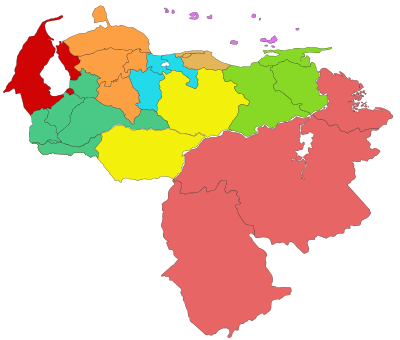

Geographical Framework and Ecological Significance
The Insular Region of Venezuela represents a distinct geographical and administrative division, comprising all of the nation's islands. It is bifurcated into the state of Nueva Esparta and the Federal Dependencies. Nueva Esparta is primarily composed of larger, more populated islands like Margarita, Coche, and Cubagua, which possess varied topography including coastal plains, hills, and some mountainous areas.
The Federal Dependencies, conversely, are an extensive archipelago of numerous small islands, cays, and islets scattered across a significant maritime expanse. This region's geography is characterized by tropical marine and insular climates, marked by high temperatures and distinct wet and dry seasons. Ecologically, these islands and their surrounding waters host diverse marine life, coral reefs, and unique terrestrial ecosystems adapted to island conditions.
The conservation of these environments is crucial, given their biodiversity and vulnerability to climate change and human impact. The strategic location of these islands also holds geopolitical importance for Venezuela's maritime claims and resource management.
Historical Trajectories
The history of Venezuela's Insular Region is deeply intertwined with the broader narrative of the Americas. These islands were among the earliest points of contact between indigenous populations and European explorers, notably Christopher Columbus in 1498. Margarita Island quickly became a significant Spanish settlement, known for its rich pearl beds, which fueled early colonial wealth but also led to the near-extinction of indigenous pearl divers.
Throughout the colonial period, the islands served as strategic outposts and were often targets of pirate raids and naval conflicts. During Venezuela's fight for independence, Margarita Island played a pivotal role, earning the title 'La Heroica' for its staunch support of the revolutionary cause. Post-independence, the islands continued to be important for fishing, trade, and later, tourism, each era leaving its mark on the cultural and physical landscape, from ancient shell middens to colonial fortifications and modern infrastructure.
Socio-Cultural Fabric and Identity Formation
The Insular Region boasts a rich socio-cultural tapestry woven from indigenous roots, Spanish colonial influences, and subsequent waves of migration. The population, predominantly concentrated on Margarita Island, exhibits a strong sense of island identity, shaped by their unique environment and historical experiences. Spanish is the official language, but local dialects and expressions are common, reflecting a distinct insular vernacular.
The culture is characterized by vibrant traditions, including religious festivals, music (such as the 'Gaita de Tambora'), and a unique culinary heritage heavily featuring seafood. The lifestyle on many of the smaller islands is more traditional and community-oriented, while Margarita has developed a more cosmopolitan atmosphere due to tourism. This blend of tradition and modernity, coupled with the inherent challenges and opportunities of island living, defines the social dynamics and cultural expressions of the region's inhabitants.
Economic Dynamics
The economy of the Insular Region has evolved significantly over time. Historically, the exploitation of natural resources, particularly pearls from Cubagua and Margarita, was paramount, leading to immense wealth for the Spanish crown but also environmental degradation and the decimation of indigenous labor. Fishing continues to be a fundamental economic activity, supporting local communities and contributing to the national supply of seafood.
In recent decades, tourism has emerged as a major economic driver, especially for Margarita Island, which attracts both domestic and international visitors with its beaches, historical sites, and duty-free shopping status. This has spurred growth in the hospitality, retail, and service sectors. However, the region's economy is also susceptible to national economic fluctuations and challenges related to infrastructure and resource management.
Efforts towards economic diversification, while ongoing, often face hurdles due to the region's geographical isolation and dependence on external factors.
Governance and Administrative Structure
The Insular Region's governance reflects its unique geographical distribution. It is composed of the state of Nueva Esparta, which operates under Venezuela's federal system with its own governor and legislative assembly, and the Federal Dependencies. The Federal Dependencies represent a distinct administrative category, comprising over 70 islands and islets, many of which are uninhabited or sparsely populated.
This territory is directly administered by the national executive branch, specifically the President of Venezuela, through a designated authority. This centralized oversight is crucial for managing the vast maritime area, ensuring national sovereignty, regulating resource extraction (such as fishing and potential offshore energy), and providing essential services to the few inhabited islands. The administrative structure highlights the challenges of governing a dispersed territory and balancing local needs with national interests.
Educational Landscape and Human Capital Development
Education in Venezuela's Insular Region is structured to serve its dispersed population, with varying levels of access and resources across its islands. The state of Nueva Esparta has a more established educational infrastructure, including primary, secondary, and tertiary institutions, with the Universidad de Oriente (UDO) having a significant campus on Margarita Island. This university plays a vital role in higher education and research, contributing to the development of local human capital.
The Federal Dependencies, with their scattered and often small populations, present greater challenges for educational provision. Schools on these islands are typically smaller, focusing on primary education, and may require innovative solutions for delivering secondary and vocational training. Efforts are made to ensure educational continuity, often involving distance learning or specialized programs.
The curriculum generally aligns with national educational standards, but there is an increasing recognition of the need to integrate island-specific knowledge, such as marine biology, environmental science, and maritime studies, into the educational framework to foster relevant skills and promote sustainable development within the region.
See also
Frequently Asked Questions
What islands make up Venezuela's Insular Region?+
Why is Margarita Island called 'La Heroica'?+
What kind of weather do the islands have?+
What kinds of animals and plants live on the islands?+
What languages do people speak on the islands?+
Based on content from Wikipedia · Licensed under CC BY-SA 4.0