

Infrared: The Invisible Heat You Can Feel!
Images
Infrared


The Nature of Infrared Radiation
Infrared (IR) radiation constitutes a segment of the electromagnetic spectrum with wavelengths ranging from approximately 700 nanometers (nm) to 1 millimeter (mm). This region lies between visible light and microwaves. Unlike visible light, IR radiation is not perceptible to the human eye, yet it is the primary carrier of thermal energy.
All matter with a temperature above absolute zero (-273.15 degrees Celsius or 0 Kelvin) emits IR radiation due to the thermal motion of its constituent atoms and molecules. The intensity and spectral distribution of this emitted radiation are directly related to the object's temperature, a principle fundamental to infrared thermometry. The longer wavelengths of IR compared to visible light allow it to penetrate certain materials that are opaque to visible light, such as smoke, fog, and some plastics, making it invaluable for specific imaging applications.
A Historical Revelation
The discovery of infrared radiation is credited to Sir William Herschel, a German-born British astronomer, in 1800. While studying the dispersion of sunlight through a prism, Herschel observed that the temperature increased progressively across the spectrum of visible light, reaching its peak just beyond the red end. He conducted experiments by placing thermometers in different colored bands of the spectrum created by a prism and noted that the thermometer placed in the region where no visible light was present (beyond red) recorded the highest temperature.
This groundbreaking observation led him to hypothesize the existence of an invisible form of radiation responsible for this heat, which he termed 'infrared rays,' signifying their position below red in the spectrum. This discovery opened a new frontier in understanding the electromagnetic spectrum.
The Indispensable Role of Infrared in Science and Technology
Infrared radiation plays a pivotal role across numerous scientific disciplines and technological advancements. In astronomy, infrared telescopes can penetrate interstellar dust clouds that obscure visible light, enabling the observation of star formation regions, cool celestial objects, and the early universe. Spectroscopy, a technique that analyzes the interaction of matter with light, utilizes infrared to identify molecular structures and chemical compositions, crucial in fields from materials science to environmental monitoring.
In telecommunications, infrared is used in short-range, high-speed data transmission, such as in fiber optics and wireless optical communication systems. Its ability to detect heat signatures makes it indispensable for predictive maintenance in industries, identifying potential equipment failures before they occur by spotting abnormal temperature rises.
Mechanisms of Infrared Interaction and Detection
The interaction of infrared radiation with matter is primarily governed by absorption and emission processes. When IR radiation encounters a material, its energy can be absorbed, causing molecular vibrations and leading to an increase in temperature. Conversely, as previously mentioned, objects emit IR radiation based on their temperature.
Detecting this radiation involves specialized sensors. Photoconductive detectors, like mercury cadmium telluride (MCT), change their electrical resistance when exposed to IR. Photovoltaic detectors, such as indium antimonide (InSb), generate a voltage in response to IR photons.
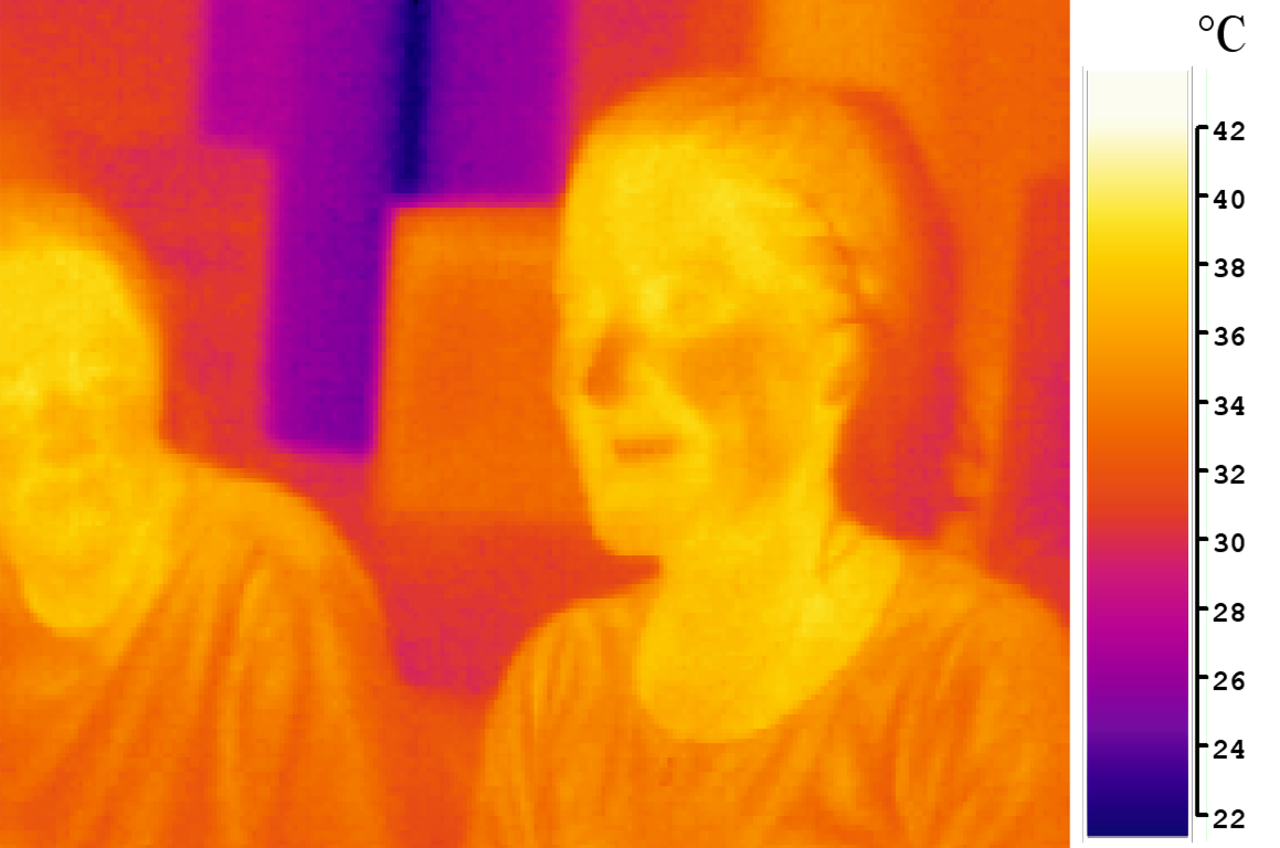
Bolometers measure the temperature change caused by absorbed IR radiation. These detection principles form the basis of thermal imaging cameras, which convert IR energy into visible images, allowing for non-contact temperature measurement and visualization of heat patterns.
Ubiquitous Applications
The applications of infrared technology are remarkably diverse and pervasive. Consumer electronics widely employ IR for remote controls, enabling wireless operation of televisions, air conditioners, and other devices. In healthcare, infrared thermography is used for non-invasive temperature monitoring, early detection of diseases like breast cancer, and assessing blood flow. Security systems utilize passive infrared (PIR) sensors to detect motion by sensing the body heat of intruders.
The automotive industry uses IR for adaptive cruise control and night vision systems. Furthermore, remote sensing satellites equipped with IR sensors monitor Earth's climate, track wildfires, assess crop health, and map surface temperatures, providing critical data for environmental management and disaster response. The versatility of infrared continues to drive innovation across nearly every sector.
Go deeper
Based on content from Wikipedia · Licensed under CC BY-SA 4.0