

Informal Empire: When Countries Are Like Big Siblings!
Images
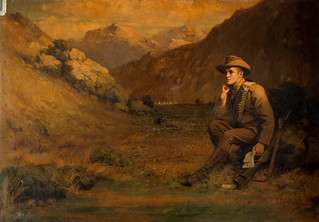
Soldier in a Landscape, J McMaster, 1901


Conceptualizing Informal Empire
The concept of 'informal empire' offers a critical lens through which to examine historical and contemporary power dynamics that transcend formal colonial structures. It describes a situation where a polity, through its commercial, strategic, or military interests, establishes a significant sphere of influence over another region or country that is not formally annexed, protected, or a vassal state. This influence is characterized by a degree of control that allows the dominant power to shape the foreign region's policies and economic activities to its advantage.
As defined by scholars like Gregory Barton and Brett Bennett, informal empire involves a 'willing and successful attempt by commercial and political elites to control a foreign region, resource, or people.' This control is often maintained through a combination of extraterritorial privileges, the threat of economic and political sanctions, and the strategic exclusion of rival imperial powers, creating a subtle yet potent form of dominion.
Mechanisms of Control
The instruments of informal empire are diverse and often intertwined, primarily revolving around economic leverage and the credible threat of coercion. Economic domination is a cornerstone, achieved through establishing asymmetric trade relationships where the dominant power dictates terms, or through financial instruments that create debt dependency. The threat of economic sanctions-ranging from trade embargoes to freezing assets-serves as a potent tool to compel compliance.
Beyond economics, 'gunboat diplomacy' represents the military dimension, where the visible presence of naval power acts as a deterrent and a clear signal of intent, without necessitating full-scale invasion. This strategic deployment of force underscores the underlying power imbalance and the willingness of the dominant state to enforce its interests. Furthermore, the enforcement of extraterritorial privileges, where citizens of the dominant power are exempt from local laws, highlights a direct assertion of legal authority over foreign territory.
The Enduring Legacy
The impact of informal empires extends far beyond the historical periods in which they were most prevalent, leaving a complex and often detrimental legacy on global political and economic structures. Countries subjected to informal imperial control frequently experienced distorted economic development, with their economies structured to serve the needs of the dominant power rather than fostering indigenous growth. This often led to a dependency that persisted long after direct influence waned, contributing to patterns of underdevelopment and inequality that continue to shape the global South.
Politically, informal empires could foster client states, suppress nationalist movements, and draw arbitrary borders that fueled future conflicts. Understanding informal empire is crucial for analyzing contemporary issues such as neocolonialism, global economic disparities, and the persistent influence of powerful states in international affairs, demonstrating that power can be wielded effectively without the formal trappings of empire.
Historical Manifestations and Key Actors
Throughout history, various polities have engaged in practices consistent with informal empire. European powers, particularly Great Britain and France during the 19th and early 20th centuries, extensively utilized informal methods to expand their influence. For instance, Britain's relationship with China, characterized by trade imbalances, the Opium Wars, and the establishment of treaty ports, exemplifies informal imperial control.
Similarly, the United States' interactions with Latin America, often termed 'dollar diplomacy,' involved leveraging economic power and military interventions to secure political stability favorable to American interests, without formal annexation. The driving force behind these actions was consistently the pursuit of commercial advantage, access to resources, and strategic geopolitical positioning by the political and economic elites of the dominant nations, aiming to preempt rivals and secure their own national prosperity and security.
Go deeper
Frequently Asked Questions
What is an informal empire?+
How does a big country influence a smaller one without owning it?+
What tools do big countries use in an informal empire?+
Why can informal empires hurt the smaller country's growth?+
Are informal empires still happening today?+
Based on content from Wikipedia · Licensed under CC BY-SA 4.0