

Infant Mortality
Images

Current World Infant Mortality Rate




Defining and Quantifying Early Life Loss
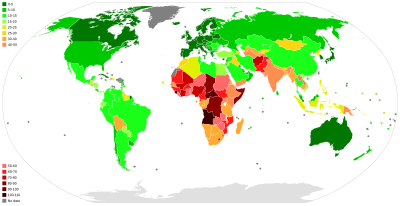
Infant mortality signifies the death of a live-born infant before reaching the age of one year. It is a sensitive barometer of a population's health, socioeconomic conditions, and the efficacy of its healthcare system. The infant mortality rate (IMR), expressed as the number of infant deaths per 1,000 live births, is the primary metric used to track this phenomenon.
Beyond the first year, the under-five mortality rate (U5MR) provides a broader perspective on child survival. The IMR is particularly crucial as it reflects the health of both the mother and the infant, encompassing risks from pregnancy through the neonatal period and the first year of life. Fluctuations in IMR can signal underlying issues in maternal health, access to healthcare, environmental quality, and nutritional status within a society.
Understanding these rates is fundamental for targeted public health interventions and policy development aimed at improving child survival.
Historical Trajectories and Global Progress
The historical landscape of infant mortality reveals a dramatic global transformation. In the mid-20th century, specifically around 1950, the global infant mortality rate stood at a staggering 65 deaths per 1,000 live births. This meant that, on average, more than 6% of all newborns did not survive their first year.
This rate was significantly higher in many developing regions. However, through concerted global efforts in public health, advancements in medical science, improved sanitation, widespread vaccination campaigns, and better access to maternal and child healthcare, these numbers have seen unprecedented declines. By 2015, the global IMR had fallen to approximately 29 deaths per 1,000 live births, and by 2021, global under-five deaths had reduced to 5 million.
This represents a monumental achievement, saving millions of lives annually and demonstrating the profound impact of sustained investment in child survival strategies.
The Complex Web of Causality
The causes of infant mortality are multifaceted and interconnected, varying significantly by region and socioeconomic context. In developed nations like the United States, leading causes in 2013 included congenital anomalies (birth defects), complications related to preterm birth and low birth weight, Sudden Infant Death Syndrome (SIDS), and unintentional injuries. However, globally, infectious diseases, malnutrition, and complications from birth asphyxia and neonatal infections remain significant contributors, particularly in low-resource settings.
Preventable factors play a critical role; maternal behaviors such as smoking, alcohol consumption, and drug use during pregnancy are strongly linked to adverse birth outcomes. Furthermore, a lack of access to quality prenatal care, inadequate nutrition for the mother, and poor environmental conditions (e.g., lack of clean water and sanitation) exacerbate risks. Socioeconomic determinants, including maternal education level and poverty, are also powerful predictors of infant mortality rates.
Interventions and Policy Frameworks for Child Survival
Addressing infant mortality requires a comprehensive, multi-pronged approach rooted in public health principles and global policy frameworks. Key interventions focus on improving maternal health through accessible prenatal and postnatal care, promoting skilled birth attendance, and ensuring access to emergency obstetric services. Public health measures like widespread immunization programs against common childhood illnesses (e.g., measles, pneumonia) and initiatives to improve access to clean water and sanitation are vital for preventing infectious diseases.
Nutritional support, including promoting breastfeeding and providing micronutrient supplements, plays a crucial role in strengthening infant resilience. Global initiatives, such as the United Nations' Millennium Development Goals and Sustainable Development Goals (SDGs), have set ambitious targets for reducing child mortality, driving national policies and international cooperation. SDG 3, for instance, aims to 'Ensure healthy lives and promote well-being for all at all ages,' with specific targets for reducing neonatal and under-five mortality, underscoring the global commitment to safeguarding early life.
Socioeconomic and Educational Linkages
The relationship between socioeconomic factors, education, and infant mortality is profound and well-documented. Studies across numerous countries consistently show that higher levels of maternal education are strongly associated with lower infant mortality rates. Educated mothers are more likely to understand health information, seek timely medical care for themselves and their children, practice better hygiene, and make informed decisions about nutrition and family planning.
Conversely, poverty often correlates with limited access to healthcare, nutritious food, safe housing, and educational opportunities, creating a cycle of disadvantage that increases infant mortality risk. Furthermore, the political and economic stability of a nation, reflected in its infrastructure and investment in public services like healthcare and education, directly impacts its ability to support healthy pregnancies and infant survival. Regions with higher life expectancy and stronger educational systems generally exhibit lower infant mortality rates, highlighting the interconnectedness of societal development and child well-being.
See also
Frequently Asked Questions
What is infant mortality?+
Why do some babies die before they are one year old?+
How has infant mortality changed over time?+
What causes infant mortality in different parts of the world?+
How can we help reduce infant mortality?+
Based on content from Wikipedia · Licensed under CC BY-SA 4.0