

Hydrogen bond
Images

Hydrogen bond


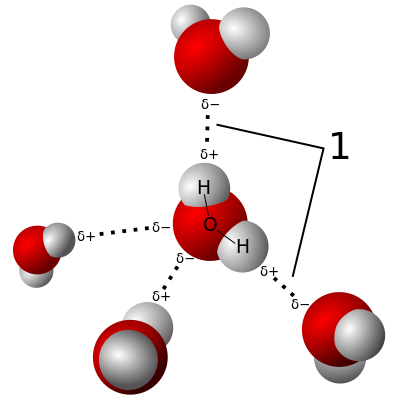


The Quantum Nature of Hydrogen Bonding
Hydrogen bonding (Dn−H···Ac) is a sophisticated intermolecular force that transcends simple electrostatic attraction. While charge-dipole interactions play a role, the phenomenon is more accurately described by quantum mechanical principles, including charge transfer (nB → σAH) and orbital interactions. This resonance-assisted interaction involves a degree of orbital overlap between the lone pair on the acceptor atom (Ac) and the antibonding molecular orbital (σ) of the donor bond (Dn−H).
This delocalization contributes to the bond's strength and its partial covalent character. The strength and nature of a hydrogen bond exist on a continuum, ranging from weak van der Waals-like interactions, such as C-H···O bonds, to very strong interactions approaching covalent character, particularly with highly electronegative donor and acceptor atoms like fluorine. The geometry and environment significantly influence these interactions, making them dynamic and context-dependent.
Water's Anomalous Properties
The unique properties of water are a direct consequence of its extensive hydrogen bonding network. The high specific heat capacity and boiling point of water are attributed to the substantial energy required to disrupt these intermolecular attractions. Furthermore, the solid phase of water, ice, exhibits a lower density than its liquid form due to the highly ordered, tetrahedral arrangement of molecules stabilized by hydrogen bonds.
This phenomenon is critical for aquatic life, as floating ice insulates bodies of water, preventing them from freezing solid. The cohesive and adhesive properties of water, essential for plant vascular systems and surface tension, are also driven by hydrogen bonding.
Structural Integrity and Molecular Recognition
In biological systems, hydrogen bonds are fundamental to maintaining the structural integrity and function of macromolecules. The double helix structure of DNA is stabilized by specific hydrogen bonding patterns between complementary base pairs (A-T and G-C). These precise interactions are crucial for accurate DNA replication and transcription.
Similarly, the intricate three-dimensional folding of proteins, which dictates their function as enzymes, antibodies, and structural components, is heavily influenced by hydrogen bonds formed between amino acid residues in the polypeptide chain. Hydrogen bonds also mediate molecular recognition events, such as antigen-antibody binding and enzyme-substrate interactions, enabling complex biological processes.
Materials Science and Supramolecular Chemistry
The principles of hydrogen bonding are extensively applied in materials science and supramolecular chemistry. They are responsible for the mechanical properties of materials like cellulose (in paper and cotton) and silk. In supramolecular chemistry, researchers design molecules that self-assemble through controlled hydrogen bonding to create novel materials with specific functions, such as liquid crystals, responsive polymers, and drug delivery systems.
The ability to tune the strength and directionality of hydrogen bonds allows for the precise engineering of complex architectures and functionalities at the molecular level, driving innovation in fields from nanotechnology to medicine.
The Continuum of Interactions
It is important to recognize that hydrogen bonding exists on a spectrum. While classic examples involve O-H···O or N-H···N interactions, weaker hydrogen bonds, such as C-H···O or even C-H···π interactions, are increasingly appreciated for their roles in molecular recognition and crystal engineering. These weaker interactions, though individually less significant than strong hydrogen bonds, can collectively contribute to the stability of complex systems, like protein-ligand binding or the organization of lipid membranes.
Understanding this continuum is vital for accurate modeling and prediction in computational chemistry and for designing new materials and pharmaceuticals.
See also
Frequently Asked Questions
What is a hydrogen bond?+
Why are hydrogen bonds important for water?+
How do hydrogen bonds help DNA stay together?+
Can hydrogen bonds be strong or weak?+
What happens to ice because of hydrogen bonds?+
Based on content from Wikipedia · Licensed under CC BY-SA 4.0