

Huascarán
Images

Huascarán


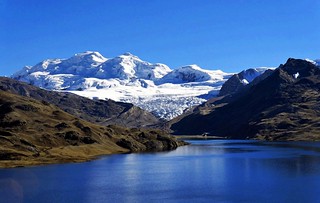


Geomorphology and Location of a Tropical Giant
Huascarán, scientifically designated as Nevado Huascarán or Mataraju, is a prominent mountain massif situated within the Yungay Province of the Ancash Department in Peru. It forms a central part of the Cordillera Blanca, the highest mountain range of the western Andes. Its geographical coordinates place it firmly within the Earth's tropical zone.
The massif features two distinct summits: Huascarán Norte and the significantly higher Huascarán Sur. Huascarán Sur, reaching an elevation of 6,768 meters (22,205 feet), is not only the highest point in Peru but also holds the distinction of being the highest peak in the northern Andes and, crucially, the highest point in all of the Earth's tropics. This unique position means it is the tallest mountain located between the Tropic of Cancer and the Tropic of Capricorn, a remarkable feat given the generally lower altitudes associated with tropical mountain ranges compared to polar or temperate ones.
Climatic Extremes and Glacial Dynamics
The climate atop Huascarán is characterized by extreme cold and harsh conditions, typical of high-altitude environments. Despite its tropical latitude, the summit is permanently covered by a vast ice cap and extensive glaciers. These glaciers are dynamic features, constantly shaped by snowfall, sublimation, and ice flow.
The presence of such significant glacial formations at tropical latitudes is a key aspect of Huascarán's unique geography. These glaciers are vital sources of freshwater for downstream communities and ecosystems, but they are also highly sensitive to climate change. Rising global temperatures pose a significant threat to these ice masses, leading to accelerated melting and potential impacts on water resources and increased risks of glacial lake outburst floods (GLOFs).
Huascarán's Standing in the Global Mountain Landscape
In the context of South American topography, Huascarán is a formidable peak, ranking as the fourth-highest mountain on the continent. It is surpassed only by Aconcagua, Ojos del Salado, and Monte Pissis, all located further south in the Andes. However, Huascarán's significance extends beyond its absolute height.
It is also recognized for its topographic isolation, ranking 25th globally. Topographic isolation measures the distance to the nearest point of higher elevation. A high isolation value indicates that a peak is a prominent, standalone massif, far from any higher mountains.
This isolation contributes to Huascarán's majestic and imposing presence on the landscape, making it a highly sought-after objective for mountaineers.
Historical Context and Mountaineering Significance
The ascent of Huascarán has been a goal for mountaineers since the early 20th century. The first successful ascent of Huascarán Sur was in 1932 by a German-Austrian expedition. Climbing Huascarán is a serious undertaking, requiring advanced mountaineering skills, acclimatization, and experience with glacier travel and ice climbing.
The mountain's challenging routes and the risks associated with its high altitude, potential avalanches, and crevasses make it a test of endurance and skill. The historical attempts and successes on Huascarán are part of the rich tapestry of mountaineering history, showcasing human ambition against the formidable power of nature.
Ecological and Cultural Importance
Beyond its geographical and mountaineering importance, Huascarán and its surrounding region are ecologically significant. The high-altitude ecosystems support unique flora and fauna adapted to extreme conditions. The mountain is also deeply embedded in the cultural landscape of Peru.
The name 'Huascarán' itself is derived from the Quechua language, spoken by indigenous peoples of the Andes. While the exact meaning is debated, it is often associated with the Inca emperor Huascar. The mountain serves as a natural monument, a symbol of Peru's dramatic landscapes, and a source of national pride, drawing attention to the importance of conservation efforts in high-Andean environments.
See also
Frequently Asked Questions
What is Huascarán?+
How tall is Huascarán Sur?+
Why does Huascarán have glaciers even though it is in the tropics?+
Who first climbed Huascarán Sur and when?+
What is special about Huascarán's isolation?+
Based on content from Wikipedia · Licensed under CC BY-SA 4.0