

The Amazing Steam Engine!
Images
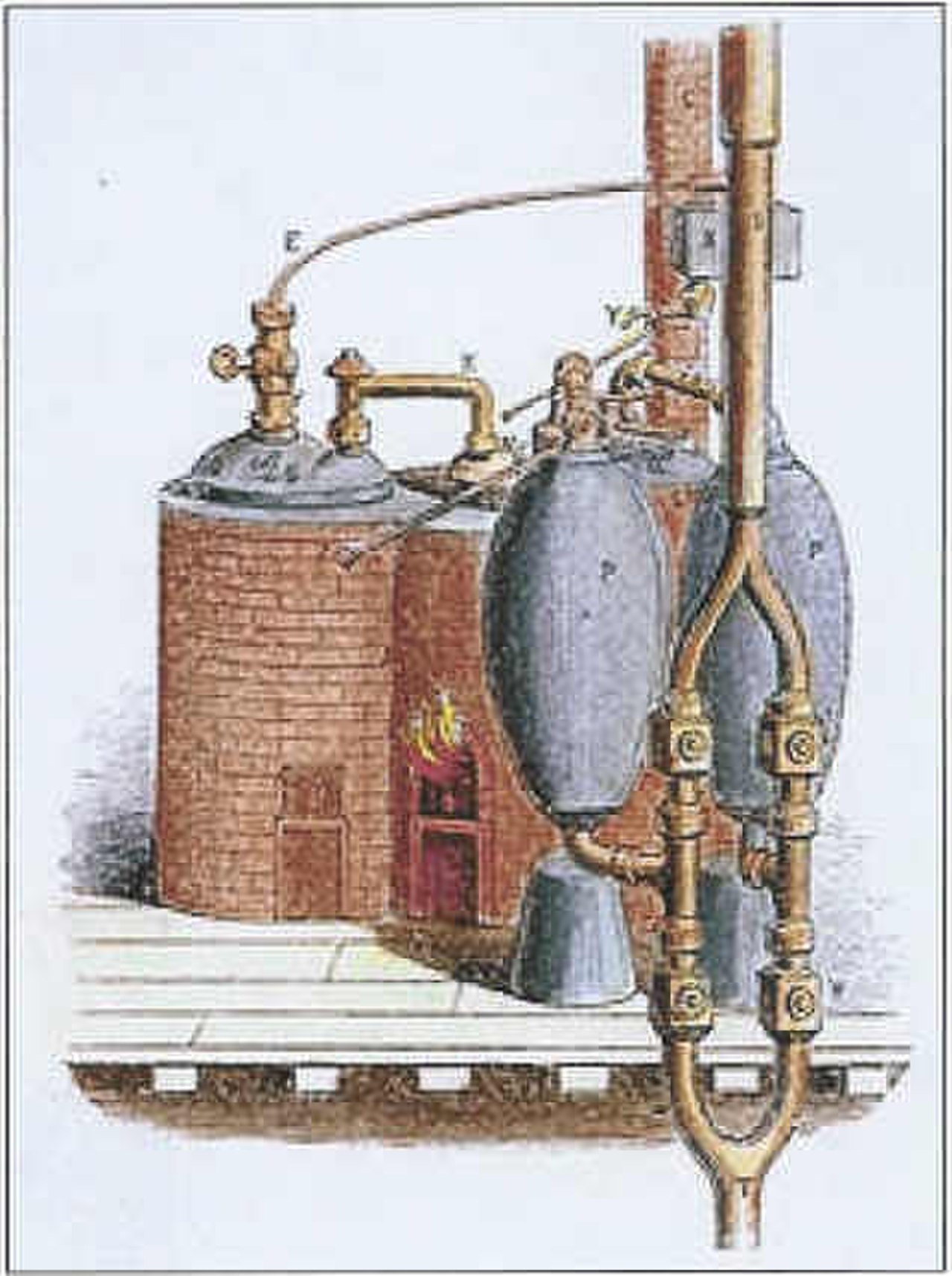
History of the steam engine
Nascent Concepts
The concept of harnessing steam's expansive force dates back to antiquity. The aeolipile, a rudimentary steam turbine attributed to Heron of Alexandria in the 1st century AD, demonstrated steam's potential for motion, though it remained largely a novelty. Centuries later, during the Islamic Golden Age, Taqi al-Din described a steam turbine in 16th-century Ottoman Egypt, showcasing continued experimentation.
In Europe, Denis Papin's development of the steam digester (a pressure cooker) in 1679 laid groundwork for understanding steam pressure. Thomas Savery patented a steam pump in 1698, which, while functional for low-lift pumping, was inefficient and prone to boiler explosions. These early efforts, while significant, were limited by materials science, engineering precision, and a lack of understanding of thermodynamics, preventing widespread practical application until the 18th century.
Newcomen and Watt's Innovations
The true genesis of the practical steam engine arrived with Thomas Newcomen's atmospheric engine in 1712. This groundbreaking invention utilized a piston and cylinder, a fundamental design that would persist for centuries. Newcomen's engine operated by creating a vacuum within the cylinder; steam was admitted, then cooled, causing condensation and a pressure drop.
Atmospheric pressure then pushed the piston down, performing work. While revolutionary for its time, particularly in its application for pumping water out of coal mines – a critical need for the burgeoning industrial economy – it was inefficient, consuming vast amounts of fuel. The next monumental leap came from James Watt.
Between the 1760s and 1780s, Watt introduced crucial improvements, including the separate condenser, which dramatically reduced fuel consumption by keeping the cylinder hot. He also developed mechanisms for rotary motion, transforming the engine from a simple pump into a versatile power source capable of driving factory machinery, thus becoming the engine of the Industrial Revolution.
Steam's Dominance and the Transition to New Technologies
The impact of Watt's improved steam engine was profound. It liberated industry from the constraints of water and wind power, enabling factories to be located anywhere and operate continuously. This fueled unprecedented economic growth, urbanization, and societal change.
The 19th century saw steam power applied to transportation with the development of steam locomotives and steamships, revolutionizing travel and trade. By the late 19th century, steam engines were the dominant power source globally. However, the relentless march of innovation led to their eventual decline.
The development of the more efficient steam turbine, particularly by Charles Parsons in the late 19th century, offered higher power outputs for applications like electricity generation. Concurrently, the internal combustion engine emerged as a more compact and efficient power source for vehicles. While reciprocating steam engines largely faded from widespread use by the mid-20th century, the principle of steam power remains vital, with steam turbines generating the vast majority of the world's electrical power today.
Thermodynamic Principles and Engineering Evolution
At its core, the steam engine operates on the principles of thermodynamics, specifically the conversion of thermal energy into mechanical work. Water, heated in a boiler, transforms into steam, significantly increasing in volume and pressure. This pressurized steam is directed into a cylinder containing a piston.
The pressure differential forces the piston to move, typically in a reciprocating (back-and-forth) motion. In early engines like Newcomen's, this motion was primarily driven by atmospheric pressure acting on the piston after the steam condensed, creating a vacuum. Watt's innovations, such as the double-acting cylinder (where steam pushed the piston in both directions) and the separate condenser, greatly enhanced efficiency and power output.
The reciprocating motion was then converted into rotary motion using mechanisms like the crankshaft and flywheel, enabling the engine to perform continuous work. The evolution of materials, metallurgy, and precision engineering allowed for higher pressures and temperatures, leading to more powerful and efficient engines, culminating in the high-speed, high-efficiency steam turbines that are critical to modern power generation.
Enduring Influence and Future Prospects
The steam engine's legacy is immeasurable. It was the primary catalyst for the Industrial Revolution, fundamentally reshaping economies, societies, and the global landscape. Its widespread adoption led to mass production, rapid urbanization, and the development of modern transportation networks.
The technologies it spawned, from railways to factories, laid the foundation for the modern world. Even as direct applications of reciprocating steam engines have diminished, the underlying principle of steam power remains indispensable. Steam turbines are the workhorses of electricity generation worldwide, converting heat from burning fossil fuels, nuclear reactions, or geothermal sources into electrical energy.
Furthermore, there is ongoing research into advanced steam technologies, exploring potential revivals of reciprocating steam engines with modern materials and control systems for niche applications or as part of hybrid energy systems, demonstrating the enduring relevance of this foundational invention.
See also
Frequently Asked Questions
What is a steam engine?+
How does a steam engine make things move?+
Who first built a useful steam engine?+
Why did James Watt improve the steam engine?+
What happened to steam engines after the 20th century?+
Based on content from Wikipedia · Licensed under CC BY-SA 4.0