

The Amazing Story of Paper!
Images
History of paper
Precursors to Paper
Before the advent of true paper, civilizations utilized a variety of materials for recording information, each with its own limitations. In the Mediterranean, papyrus, derived from the pith of the papyrus plant, served as a primary writing surface. While significant, papyrus production was largely confined to Egypt due to the plant's specific growing conditions.
In the Americas, materials like amate, made from bark fibers, were used. However, the most prominent precursor in the Western world was parchment, crafted from meticulously prepared animal skins. This process involved cleaning, stretching, and scraping hides to create a smooth, durable, and reusable surface.
Parchment, though superior to papyrus in durability, was labor-intensive and costly to produce, limiting its widespread use and accessibility, and thus restricting the scale of written knowledge.
The Genesis of Papermaking
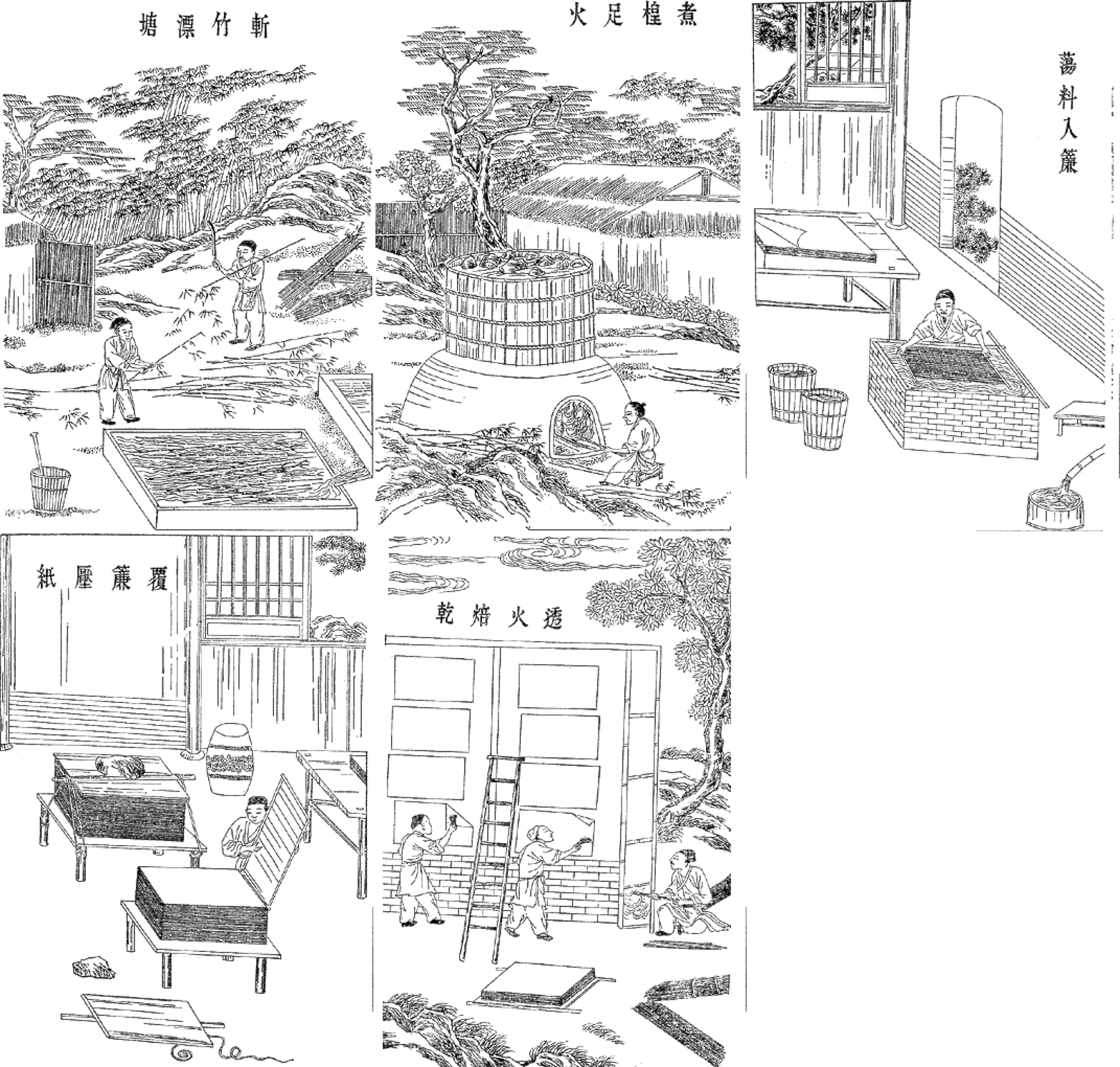
The invention of true paper, characterized by its nonwoven sheet structure derived from macerated plant fibers, is traditionally attributed to Cai Lun in China during the Eastern Han Dynasty (circa 105 AD). Cai Lun's innovation involved refining existing techniques to create a more efficient and versatile process. He is credited with using a mixture of materials including mulberry bark, hemp waste, old rags, and fishing nets, which were boiled and then beaten into a pulp.
This pulp was suspended in water and then strained through a fine screen, allowing the water to drain and leaving a thin, uniform layer of fibers to dry into a sheet. This method produced a writing material that was significantly cheaper, lighter, and more abundant than parchment, revolutionizing record-keeping, literature, and administration within China.
The Silk Road of Knowledge
For centuries, the art of papermaking remained a closely guarded Chinese secret. However, through trade and cultural exchange, particularly along the Silk Road, the technology began to spread. By the 8th century, papermaking reached the Islamic world, where it was enthusiastically adopted and further developed.
Major centers like Samarkand and Baghdad became hubs for papermaking, with scholars and artisans refining the process and producing vast quantities of books. This diffusion was crucial; it replaced papyrus and parchment in many regions, facilitating the preservation and transmission of knowledge across diverse cultures. By the 11th century, paper technology had arrived in Europe, initially through Spain.
The introduction of water-powered paper mills in the 13th century, particularly in Spain, significantly increased production efficiency, making paper more accessible and gradually displacing traditional materials like parchment and wooden panels.
Paper's Enduring Legacy and Modern Transformations
The impact of paper on human civilization is immeasurable. It democratized knowledge, fueled literacy, and enabled the rapid dissemination of ideas, playing a pivotal role in major historical movements like the Renaissance and the Scientific Revolution. Even with the rise of digital technologies, paper remains indispensable.
Its versatility has led to continuous innovation, with the development of wood-based papers in the 19th century providing an even more abundant and cost-effective source of fiber. In the 20th century and beyond, materials science has introduced plastic 'papers,' laminates, and specialized coatings, creating papers with unique properties for diverse applications, from durable outdoor signage to advanced packaging. Paper's journey from simple plant pulp to sophisticated modern materials highlights its adaptability and enduring relevance.
See also
Frequently Asked Questions
What is paper made from?+
Who invented paper and when?+
How did paper spread to other parts of the world?+
Why was paper better than parchment?+
What happened to paper after the 19th century?+
Based on content from Wikipedia · Licensed under CC BY-SA 4.0