

Hindu–Arabic numeral system
Images
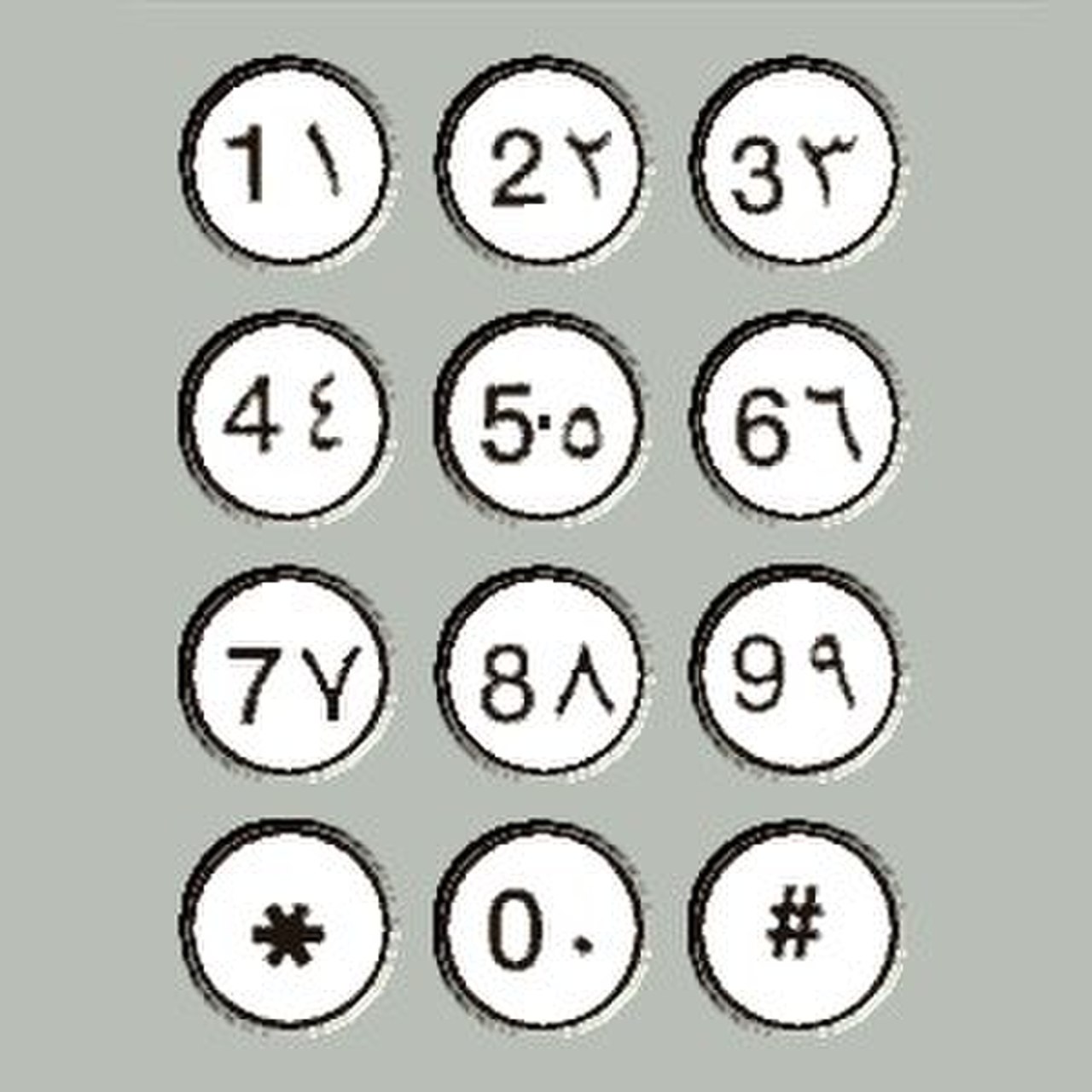
Hindu–Arabic numeral system
Genesis and Evolution
The Hindu–Arabic numeral system, a positional base-ten system, represents a monumental achievement in human intellectual history. Its origins trace back to ancient India, with development occurring between the 1st and 4th centuries CE. The system's foundation lies in the Brahmi numerals, which evolved over time.
Crucially, it incorporated the concept of zero as a placeholder and a number in its own right, a revolutionary idea that distinguished it from earlier numeral systems. By the 9th century, Arab mathematicians played a pivotal role in its dissemination and refinement. Scholars like Al-Khwārizmī, in his treatise 'On the Calculation with Hindu Numerals' (circa 825 CE), and Al-Kindi, in 'On the Use of the Hindu Numerals' (circa 830 CE), meticulously documented and explained the system.
Their work was instrumental in transmitting this knowledge westward. The system's journey to Europe was gradual, gaining significant traction in the 13th century with Fibonacci's influential 'Liber Abaci,' which advocated for its adoption over the cumbersome Roman numerals. Despite initial resistance, its superior efficiency for calculation eventually led to its widespread acceptance, particularly after the advent of the printing press in the 15th century.
The Elegance of Place Value and Zero
The core strength of the Hindu–Arabic numeral system resides in its elegant implementation of place value. Unlike additive systems (like Roman numerals) where symbols have fixed values, here, the position of a digit dictates its magnitude. For instance, in the number 777, the leftmost '7' signifies seven hundreds, the middle '7' represents seventy, and the rightmost '7' denotes seven units.
This positional notation dramatically simplifies arithmetic operations. Addition, subtraction, multiplication, and division become systematic procedures rather than complex manipulations of symbols. The inclusion of zero as both a placeholder and a numerical entity is equally transformative. It allows for the unambiguous representation of numbers like 101, distinguishing it from 11, and is indispensable for algorithms and algebraic manipulation.
This conceptual leap enabled the development of sophisticated mathematical theories and computational methods that were previously unimaginable.
A Universal Language
Today, the Hindu–Arabic numeral system is the de facto global standard for representing numbers. While the underlying mathematical principles are universal, the glyphs themselves exhibit fascinating regional variations. The most common form encountered in the Western world and much of Europe are the 'Western Arabic numerals' (0, 1, 2, 3...).
In contrast, the Middle East primarily uses 'Eastern Arabic numerals' (٠, ١, ٢, ٣...), and the Indian subcontinent employs various indigenous numeral scripts derived from Brahmi. Despite these visual differences, the functional equivalence ensures that mathematical concepts and data can be communicated across cultures. This standardization has been a critical enabler of global commerce, scientific collaboration, and the interconnected digital infrastructure that defines the modern era.
It represents a shared intellectual heritage that transcends borders.
Impact on Science, Technology, and Computation
The profound impact of the Hindu–Arabic numeral system extends far beyond basic arithmetic. It laid the groundwork for the development of algebra, calculus, and higher mathematics. The ability to represent quantities precisely and manipulate them efficiently was essential for the scientific revolution, enabling advancements in physics, astronomy, and engineering.
Furthermore, this numeral system is the bedrock of modern computation. The binary system used by computers, while different in base, operates on the same principle of positional notation. Early mechanical calculators and modern digital computers fundamentally rely on the efficient representation and processing of numerical information, a capability directly inherited from the Hindu–Arabic system.
Its influence is woven into the fabric of virtually every scientific discipline and technological innovation, making it one of humanity's most significant intellectual contributions.
See also
Frequently Asked Questions
What is the Hindu–Arabic numeral system?+
Why is zero so special in this system?+
How did the Hindu–Arabic numerals travel from India to Europe?+
What makes Hindu–Arabic numerals easier to use than Roman numerals?+
Where do I see different styles of these numerals today?+
Based on content from Wikipedia · Licensed under CC BY-SA 4.0