

Hera
Images
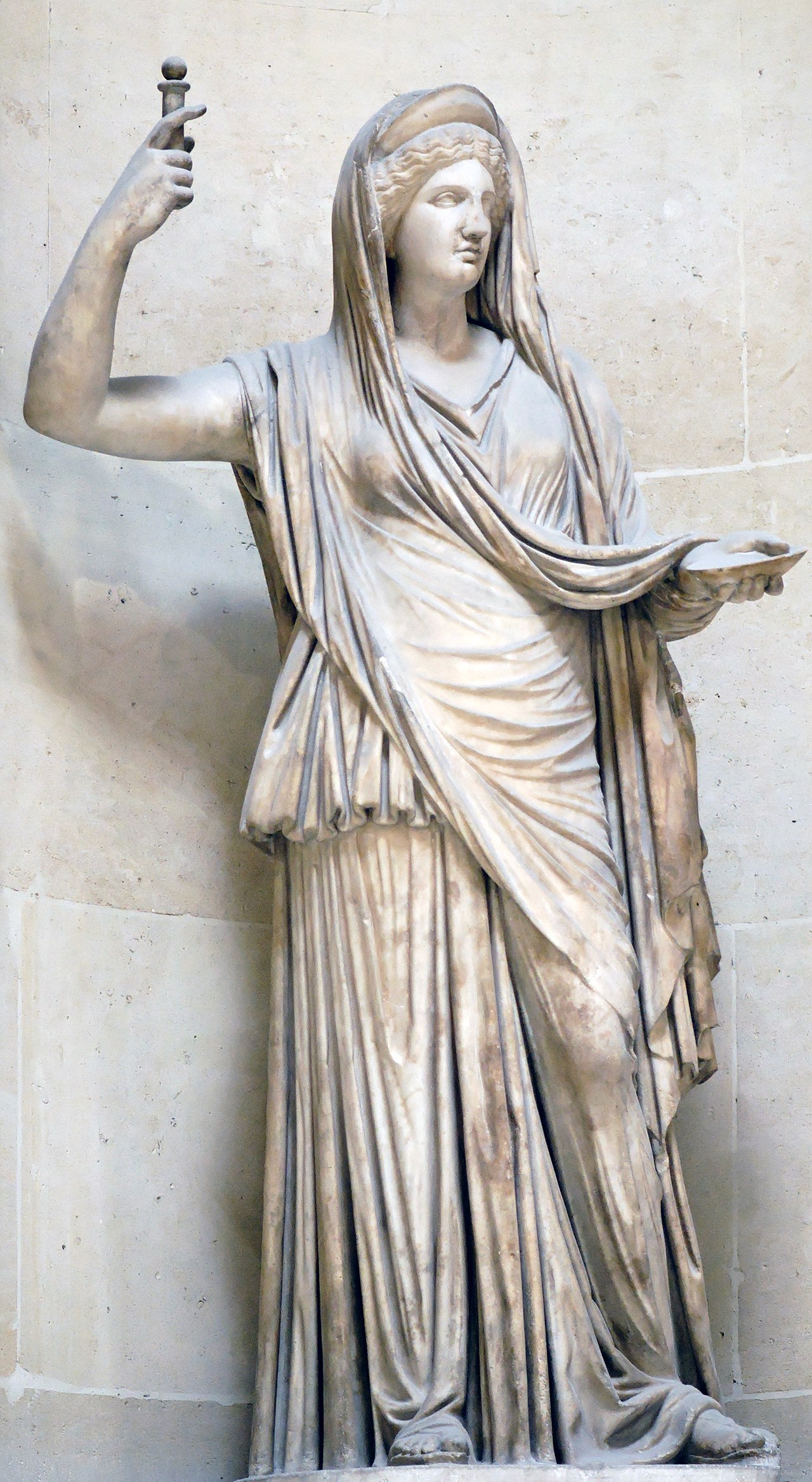
Hera
The Sovereign of Olympus
Hera occupies a paramount position within the Greek pantheon, not merely as the wife of Zeus but as a sovereign deity in her own right. Her authority extended over the fundamental institution of marriage, a cornerstone of ancient Greek society, and she was revered as the patroness of women, childbirth, and the family unit. Her iconography consistently portrays her with symbols of royalty-the diadem, scepter, and throne-underscoring her regal status and divine power.
Unlike deities associated with more abstract concepts or specific natural phenomena, Hera's influence was deeply embedded in the social and familial structures of the time. She represented the ideal of the married woman, the protector of marital fidelity, and the matriarchal figure. The ancient Greeks sought her favor for the stability of their households and the well-being of their families, making her a central figure in their religious practices and a powerful symbol of enduring commitment and divine oversight in human relationships.
Her presence on Mount Olympus was a constant reminder of her supreme status and her role in maintaining cosmic order.
The Dual Nature of Hera
Hera's mythological narrative is characterized by a profound duality: she is simultaneously the benevolent protector of marriage and a formidable figure driven by intense jealousy and wrath. Her most prominent narratives revolve around her reactions to Zeus's numerous infidelities. These episodes reveal a goddess who, while upholding the sanctity of her own union, was also capable of extreme cruelty towards Zeus's consorts and their illegitimate offspring.
Her relentless persecution of figures like Heracles, whom she tormented throughout his life, exemplifies this vengeful aspect. These myths served not only to explain divine conflicts but also as moral exemplars, illustrating the dangers of divine anger and the complex dynamics of power and fidelity within relationships, even at the Olympian level. Her sacred animal, the peacock, with its myriad eyes, is often interpreted as symbolizing her constant, watchful, and sometimes suspicious gaze over the affairs of gods and mortals alike.
This complex characterization makes Hera a compelling study in divine psychology and the human emotions projected onto the divine.
Mount Olympus
The mythical Mount Olympus served as the celestial abode of the twelve Olympian gods, a realm of eternal splendor and divine governance. For Hera, as Queen, it was the seat of her authority and the stage upon which much of Olympian drama unfolded. This legendary mountain was envisioned as a place of unparalleled beauty and power, far removed from the mortal world, where the gods held court and shaped destiny.
Hera's residence within this divine hierarchy reinforced her status and her role in the cosmic order. The ancient Greeks directed their prayers and sacrifices towards Olympus, seeking the favor of its divine inhabitants, with Hera being a principal recipient, particularly from women and those celebrating or seeking marital blessings. The concept of Olympus as a unified, albeit often contentious, divine community highlights Hera's integral role in the Olympian system, representing the stability and authority expected of a queen and a divine consort.
The grandeur of Olympus was a reflection of the gods' power and their perceived detachment from earthly concerns.
Hera's Cultural Resonance and Enduring Significance
Hera's influence permeated ancient Greek culture, extending beyond her mythological exploits to shape religious practices, social norms, and artistic expression. Her widespread worship, evidenced by numerous temples and cult sites across the Hellenic world, underscores her importance as a major deity. She was particularly venerated by women, especially those who were married, as she embodied the ideals of marital fidelity, domestic authority, and the protection of the family.
Her myths provided a framework for understanding societal expectations regarding marriage and gender roles, while also exploring the potent emotions of love, jealousy, and power. In art and literature, Hera was consistently depicted as a figure of immense dignity and authority, her image serving as a visual representation of queenship and divine power. The enduring legacy of Hera lies in her complex portrayal as a powerful female figure who commanded respect, embodied societal values, and navigated the intricate relationships within the divine realm, offering timeless insights into human nature and the dynamics of power.
Go deeper
Frequently Asked Questions
Who is Hera in Greek mythology?+
What does Hera protect?+
Why does Hera sometimes act angrily?+
What symbols show Hera's power?+
Where does Hera live?+
Based on content from Wikipedia · Licensed under CC BY-SA 4.0