

Henry Walter Bates: The Amazing Explorer!
Images

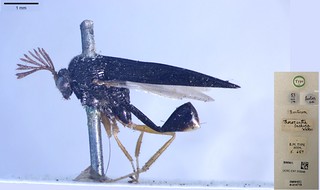
Oozetetes splendens (Walker, 1862)


The Genesis of a Naturalist's Obsession
Born in Leicester, England, Henry Walter Bates developed an early fascination with entomology, the study of insects. This passion led him to connect with like-minded individuals, including Alfred Russel Wallace, with whom he would later share an extraordinary scientific adventure. In 1848, they set sail for the Amazon basin, driven by the ambition to collect specimens and unravel the mysteries of tropical biodiversity, a pursuit fueled by the burgeoning theories of evolution.
Bates's meticulous approach and keen observational skills were evident from the outset, setting the stage for his later groundbreaking discoveries. The sheer scale of the Amazon, with its unparalleled diversity, provided the perfect laboratory for his scientific inquiries, pushing the boundaries of geographical and biological exploration.
Cataloging a World Unknown
Bates's eleven-year sojourn in the Amazon was a period of intense scientific fieldwork. While Wallace returned earlier, losing his collection to a fire, Bates persevered, enduring challenging conditions to amass an unparalleled collection. Upon his return in 1859, he had sent back over 14,712 specimens, a testament to his dedication and the region's richness.
Astonishingly, approximately 8,000 of these were new to science, vastly expanding the known insect fauna, particularly among butterflies. This monumental collection provided crucial empirical data that supported the evolutionary theories being developed concurrently by Charles Darwin and Alfred Russel Wallace. His work highlighted the immense, undiscovered biological wealth of the tropics and the importance of systematic collection in advancing scientific understanding.
Batesian Mimicry
Bates's most enduring scientific contribution is his pioneering work on mimicry. He was the first to scientifically articulate and provide extensive evidence for Batesian mimicry, a phenomenon where a palatable species evolves to resemble an unpalatable or dangerous one. Through careful observation of Amazonian butterflies, Bates documented numerous instances where harmless species mimicked the coloration and patterns of toxic or venomous ones, thereby gaining protection from predators.
This concept was revolutionary, offering a clear, observable mechanism by which natural selection could drive the evolution of complex adaptations. His detailed descriptions and logical explanations in 'The Naturalist on the River Amazons' provided compelling evidence for the power of natural selection in shaping species' appearances and behaviors.
The Enduring Influence of 'The Naturalist on the River Amazons'
'The Naturalist on the River Amazons', published in 1863, transcended its status as a mere travelogue to become a seminal work in natural history. It offered a vivid, accessible account of life in the Amazon, blending engaging narrative with rigorous scientific observation. The book not only introduced the concept of mimicry to a wider audience but also inspired countless aspiring naturalists and explorers.
Bates's work underscored the interconnectedness of life and the intricate evolutionary processes at play in diverse ecosystems. His legacy continues to resonate, influencing fields from evolutionary biology and ecology to conservation science, underscoring the profound impact of dedicated fieldwork and insightful scientific interpretation.
Bates's Wider Scientific and Curatorial Career
Beyond his Amazonian exploits, Henry Walter Bates had a distinguished career as an entomologist and curator. After his return, he became a prominent figure in scientific circles, contributing to various societies and journals. He eventually took on the role of Assistant Secretary of the Zoological Society of London, a position he held for many years.
In this capacity, he continued to foster scientific discourse and manage collections, further solidifying his influence on the scientific community. His extensive knowledge and experience made him a respected authority, ensuring that his contributions to natural history and evolutionary theory were widely recognized and appreciated throughout his lifetime and beyond.
See also
Frequently Asked Questions
Who was Henry Walter Bates and why is he famous?+
What is Batesian mimicry?+
How did Bates help scientists like Charles Darwin?+
What book did Bates write about his Amazon adventures?+
Why do people still remember Bates today?+
Based on content from Wikipedia · Licensed under CC BY-SA 4.0