

Henry VII of England
Images

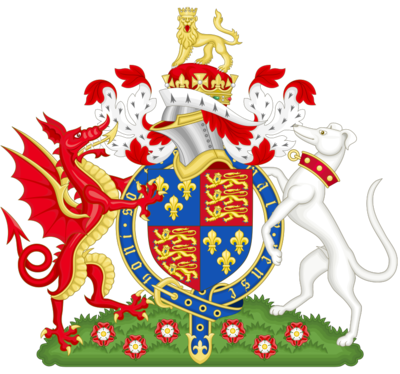
Royal Standard of Henry VII of England (Greyhound and Roses of Lancaster)




Ascension Through Conflict
Henry VII's path to the English throne was forged in the crucible of the protracted Wars of the Roses. Born into the Lancastrian faction, his early life was marked by the instability and danger of the dynastic struggle. Following the Yorkist victory in 1471, Henry spent fourteen years in exile, primarily in Brittany, a period that honed his strategic thinking and resolve.
His claim to the throne was initially tenuous, based on his Lancastrian lineage through his mother, Margaret Beaufort, a descendant of John of Gaunt. However, his decisive victory over Richard III at the Battle of Bosworth Field on August 22, 1485, dramatically altered England's political landscape. This victory was not merely symbolic; it was the last time an English monarch would win their crown through direct combat on the battlefield.
He further solidified his position by decisively defeating a Yorkist challenge at the Battle of Stoke Field in 1487, effectively bringing the devastating Wars of the Roses to a close and ushering in an era of much-needed peace and stability.
Consolidating Power
Upon securing the throne, Henry VII embarked on a systematic campaign to consolidate his power and legitimize the new Tudor dynasty. A cornerstone of this strategy was his marriage to Elizabeth of York, daughter of the Yorkist King Edward IV. This union symbolically reconciled the warring houses of Lancaster and York, creating a powerful visual representation of national unity.
Beyond this crucial alliance, Henry was a master diplomat, skillfully navigating international relations to secure England's borders and promote his dynasty's legitimacy. He sought recognition from foreign powers and strategically used alliances, such as support from France and Scotland during his invasion, to his advantage. He meticulously worked to restore the prestige and authority of the monarchy, which had been severely weakened by decades of civil war, ensuring that royal power was respected and unchallenged.
Fiscal Prudence and Economic Revitalization
Henry VII's reign is particularly noted for its emphasis on fiscal responsibility and economic development. Unlike many of his predecessors who indulged in extravagant spending, Henry was exceptionally frugal, prioritizing the accumulation of royal revenue. He implemented a rigorous system of financial administration, paying meticulous attention to detail in tax collection and revenue generation.
His government introduced new taxes and reformed existing ones, significantly increasing the Crown's income. This careful financial management not only stabilized the kingdom's finances after years of conflict but also provided the resources necessary for effective governance and foreign policy. His supportive policies towards the wool industry and his assertive stance in trade negotiations, including a notable standoff with the Low Countries, fostered economic growth and laid crucial foundations for England's future commercial prosperity.
The Foundation of a New Era
Henry VII's nearly 24-year reign marked a pivotal transition in English history. He inherited a kingdom fractured by internal conflict and economic instability and bequeathed to his son, Henry VIII, a realm that was largely unified, financially sound, and internationally respected. His administrative reforms, economic policies, and diplomatic successes established the Tudor dynasty firmly on the throne and created a more centralized and efficient state.
While his methods of tax collection were later found to have abuses, his overarching goal of strengthening the monarchy and ensuring the kingdom's stability was largely achieved. His reign set the stage for the dramatic events of the 16th century, making him a foundational figure in the development of modern England.
See also
Based on content from Wikipedia · Licensed under CC BY-SA 4.0