

Head-up display
Images
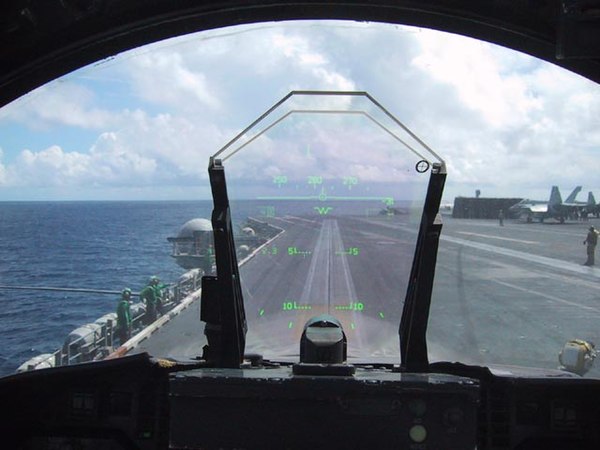
Head-up display
The Genesis of Enhanced Situational Awareness
The head-up display (HUD) represents a significant advancement in human-computer interaction, particularly within high-stakes environments like aviation and driving. Its fundamental purpose is to present critical data directly within the user's field of vision, thereby minimizing the need to divert attention from the primary task-be it piloting an aircraft or navigating a vehicle. The origin of the term 'head-up' stems directly from its initial application in military aviation, where pilots needed to maintain forward vision for combat or navigation while simultaneously accessing vital flight parameters such as airspeed, altitude, and heading.
This design philosophy directly addresses the cognitive load and reaction time limitations inherent in human perception, offering a more intuitive and efficient way to process information. The advantage extends beyond mere convenience; by eliminating the need for the eyes to refocus between distant external views and closer internal instruments, HUDs reduce visual fatigue and improve the speed and accuracy of responses.
From Cockpit Necessity to Automotive Innovation
Initially conceived and deployed in military fighter jets during the latter half of the 20th century, HUD technology was driven by the extreme demands of aerial combat and high-speed flight. The ability to track targets, manage complex aircraft systems, and maintain spatial orientation required an information display that did not compromise forward visibility. This led to the development of sophisticated optical projection systems.
As aviation technology progressed, HUDs became standard in commercial airliners, enhancing pilot efficiency and safety during all flight phases. The transition of HUDs into the automotive sector marked a significant democratization of the technology. Early automotive HUDs were relatively basic, often displaying only speed.
However, they have evolved dramatically, now capable of projecting complex navigation routes, speed limit warnings, lane departure alerts, and even information from advanced driver-assistance systems (ADAS) directly onto the windshield, creating an immersive and informative driving experience.
The Critical Role of HUDs in Safety and Performance
The importance of head-up displays cannot be overstated, especially in contexts where split-second decisions can have life-or-death consequences. In aviation, HUDs are instrumental in improving landing performance in low visibility conditions and enhancing overall flight safety by providing pilots with immediate access to critical flight data. For automotive applications, the impact on safety is profound.
By keeping essential information within the driver's direct line of sight, HUDs significantly reduce the time drivers spend looking away from the road. This reduction in 'eyes off the road' time is crucial for preventing accidents, particularly in dynamic traffic environments. Furthermore, HUDs contribute to a more relaxed and less fatiguing driving experience, as drivers do not need to constantly shift their gaze and refocus their eyes.
They also play a role in driver education, subtly guiding users towards safer driving practices.
Optical Principles and Projection Mechanics
The functionality of a head-up display relies on sophisticated optical principles. At its core, a HUD system comprises a display source (typically a small LED or LCD panel), a projection lens system, and a reflective surface, often referred to as a combiner. The display source generates the digital information, which is then magnified and collimated by the projection optics.
Collimation ensures that the light rays are parallel, making the projected image appear at a specific, comfortable focal distance for the viewer, regardless of their actual distance from the display unit itself. This projected image is then directed towards the combiner – a transparent surface, usually the windshield or a dedicated piece of glass. The combiner is angled to reflect the projected image towards the user's eyes, superimposing it onto the real-world view.
The transparency of the combiner is crucial, allowing the user to see the projected data while simultaneously viewing the external environment without significant obstruction. The precise alignment and optical design are critical to ensure the image is clear, stable, and correctly positioned.
HUDs as a Gateway to Augmented Reality
Head-up displays are widely recognized as a foundational technology for the development of more advanced augmented reality (AR) systems. While traditional HUDs project static or semi-dynamic information, AR systems aim to overlay rich, context-aware, and interactive digital content onto the user's perception of the real world. HUDs share the core principle of presenting digital information within the user's natural field of view.
However, AR goes further by requiring precise registration-aligning virtual objects with real-world counterparts-and sophisticated tracking of the user's position and orientation. The evolution from HUDs to AR involves integrating sensors, advanced processing capabilities, and more complex display technologies. This progression promises to revolutionize fields beyond transportation, including maintenance, training, medicine, and entertainment, by seamlessly blending digital information and experiences with our physical reality.
See also
Frequently Asked Questions
What is a head-up display?+
Why did pilots use head-up displays in the military?+
How do head-up displays help drivers stay safe?+
When did head-up displays first appear in airplanes?+
Are head-up displays only for planes and cars?+
Based on content from Wikipedia · Licensed under CC BY-SA 4.0