

Hans Sloane
Images

Hans Sloane's nautilus shell at the Natural History Museum




The Genesis of a Grand Collection
Sir Hans Sloane, born in 1660, was a physician of considerable repute, serving the elite and earning election to the Royal College of Physicians at a remarkably young age. However, his professional life was intertwined with an insatiable passion for collecting. His travels to the Caribbean in 1687 were instrumental in expanding his natural history pursuits.
During his time in Jamaica, he meticulously cataloged the island's diverse botanical and zoological specimens, amassing a wealth of knowledge that would later be published. This period was crucial in shaping his understanding of biodiversity and the interconnectedness of the natural world. Sloane's collection grew exponentially, encompassing not only biological specimens but also antiquities, coins, and curiosities from across the globe, reflecting a comprehensive approach to documenting human and natural history.
His dedication to scientific observation and systematic recording set a precedent for future naturalists and collectors.
Chocolate's Transformation
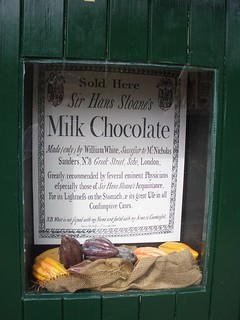
While often attributed as the inventor, Sir Hans Sloane's role in the history of chocolate is more accurately described as a popularizer and adapter. Upon encountering chocolate as a beverage in Jamaica, typically mixed with water and spices, he found its taste unpalatable. His innovative solution was to add milk, transforming the bitter concoction into a smooth, palatable drink.
This adaptation was not merely a personal preference but a significant cultural and culinary shift. By introducing milk chocolate to European society, Sloane contributed to the evolution of chocolate consumption, moving it from a medicinal or ceremonial drink to a widely enjoyed confection. This seemingly simple act had a profound impact on the global chocolate industry, paving the way for the milk chocolate products enjoyed worldwide today.
A Philanthropic Bequest
Sir Hans Sloane's most enduring legacy lies in his monumental bequest of his entire collection of 71,000 items to the British nation upon his death in 1753. This act of extraordinary philanthropy was not merely a donation but the foundational cornerstone for several of Britain's most prestigious cultural and scientific institutions. The British Museum, established by an Act of Parliament in 1753 to house Sloane's collection alongside other bequests, became the first national public museum.
Similarly, his vast library and manuscript collections formed the nucleus of the British Library, and his extensive natural history specimens were crucial to the establishment of the Natural History Museum, London. Sloane's foresight in ensuring public access to such a comprehensive collection democratized knowledge and set a precedent for national cultural preservation.
Enduring Recognition
The impact of Sir Hans Sloane's life and work is commemorated through numerous place names, particularly in London and his native Ireland. Areas such as Hans Place, Hans Crescent, and Sloane Square in Chelsea, London, reflect his later residence and significant contributions. His birthplace in Killyleagh, Northern Ireland, also honors him with Sir Hans Sloane Square.
These geographical markers serve as constant reminders of his multifaceted career as a physician, naturalist, and collector. Beyond these physical tributes, Sloane's influence resonates in the ongoing work of the institutions he helped found and in the continued study of natural history and the evolution of culinary traditions, such as the widespread enjoyment of milk chocolate, a testament to his innovative spirit and generous legacy.
See also
Frequently Asked Questions
Who was Sir Hans Sloane?+
Why did Sir Hans Sloane add milk to chocolate?+
What did Sir Hans Sloane collect?+
How did Sir Hans Sloane help people learn about nature?+
Where can we see places named after Sir Hans Sloane?+
Based on content from Wikipedia · Licensed under CC BY-SA 4.0