

Hamadan
Images

Hamadan in Iran




Geopolitical Anchor
Hamadan's location is a defining characteristic, placing it within a rugged, mountainous terrain in western Iran. Situated at an elevation of 1,850 meters above sea level, the city benefits from a cooler climate and offers breathtaking vistas, particularly from the slopes of the imposing Alvand Mountain, which reaches a formidable 3,574 meters. This high-altitude setting has historically influenced its development, potentially offering defensive advantages and shaping its agricultural potential.
Its distance from the capital, Tehran (approximately 360 km southwest), underscores its role as a significant regional center, distinct from the political and economic heartland. The mountainous geography not only dictates its physical landscape but also influences its accessibility and the types of industries that can thrive, often favoring trade routes that navigate the terrain and tourism drawn to its natural splendor.
Chronicles of Civilization
Hamadan stands as a testament to millennia of human settlement, recognized as one of Iran's most ancient cities. Its historical roots trace back potentially to 1100 BCE, when it may have been occupied by the Assyrians. Under the name Ecbatana, it rose to prominence as the capital of the Medes around 700 BCE, a pivotal era in ancient Near Eastern history.
This period predates many other major ancient civilizations, positioning Hamadan as a cradle of early urbanism and political organization. Its strategic location made it a coveted prize for successive empires, including the Achaemenids, Parthians, and Sassanians, each leaving their mark on the region. The city's enduring presence through these epochs highlights its resilience and its consistent importance as a center of power, culture, and trade, making its historical narrative a rich subject for study.
Cultural Crucible
The cultural fabric of Hamadan is deeply interwoven with the Persian language and its rich literary heritage. As the primary language, Persian facilitates a strong sense of shared identity and cultural continuity. The city actively preserves and showcases its historical and intellectual achievements, drawing significant domestic and international tourism, particularly during the favorable summer climate.
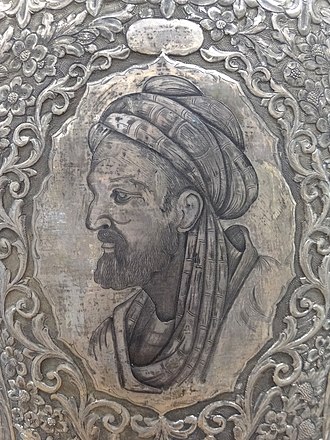
Key attractions like the Ganj Nameh inscriptions offer direct engagement with ancient history, providing insights into the administrative and religious practices of past rulers. Furthermore, Hamadan is revered as the final resting place and memorial site for prominent figures such as Avicenna, the influential polymath whose contributions to medicine and philosophy resonate globally, and Baba Taher, a revered mystic poet. These monuments are not merely landmarks but serve as focal points for cultural pride and educational endeavors, reflecting Hamadan's enduring role as an intellectual and artistic center.
Socio-Economic Dynamics
With a population exceeding 554,000 residents as of the 2016 census, Hamadan functions as a substantial urban center and the administrative capital of its province, county, and district. This demographic scale indicates a complex socio-economic structure, likely encompassing diverse employment sectors ranging from administration and services to commerce and potentially manufacturing or specialized crafts. Its role as a provincial capital implies a significant governmental presence and the provision of public services to a wide area.
While specific economic industries are not detailed in the provided text, cities of this stature typically rely on a combination of regional trade, agricultural processing, tourism, and public sector employment. The city's governance structure, mirroring that of other Iranian provinces, involves local administration responsible for managing urban development, public welfare, and economic initiatives, ensuring its continued relevance as a vital hub in western Iran.
Foundations of Knowledge
As a major provincial capital and a city with such a profound historical and cultural legacy, Hamadan undoubtedly possesses a robust educational infrastructure. While the provided source does not detail specific institutions, cities of this size typically host a range of educational facilities. This would likely include primary and secondary schools catering to the large youth population, alongside vocational training centers.
Crucially, Hamadan is home to higher education institutions, such as universities and colleges, which serve as centers for academic research and the cultivation of future professionals in various fields. These institutions play a vital role in preserving and advancing the region's cultural heritage, fostering scientific and technological development, and contributing to the intellectual vibrancy that has characterized Hamadan for centuries. The presence of these educational bodies ensures the transmission of knowledge and skills, supporting both the city's economic growth and its cultural continuity.
Go deeper
Based on content from Wikipedia · Licensed under CC BY-SA 4.0