

Half-staff: Flags That Show Sadness
Images

The United States Flag Flies at Half-Staff Atop the White House
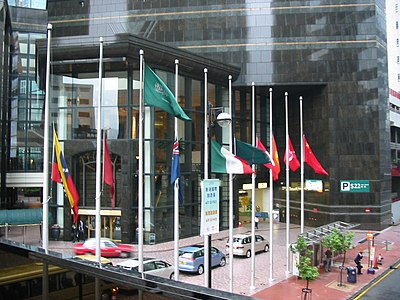


The Semiotics of Descent
The act of lowering a national flag to half-staff transcends mere decoration; it functions as a potent visual semiotic, communicating complex emotions and societal values across diverse populations. This deliberate descent from the zenith of the flagpole is a universally understood signal of collective mourning, solemn remembrance, or profound respect. Its efficacy lies in its simplicity and its widespread adoption, allowing for an immediate and shared emotional response to significant events.
Whether marking the passing of a head of state, commemorating a national tragedy, or honoring fallen heroes, the half-staff position transforms the flag into a dynamic symbol of shared human experience. It visually encapsulates a nation's collective psyche, momentarily pausing its usual display of unwavering strength to acknowledge vulnerability, loss, and the enduring significance of those being remembered. This practice underscores the flag's role not just as a national emblem, but as a responsive canvas for collective sentiment.
From Maritime Lament to National Decree
The historical lineage of the half-staff tradition is multifaceted, with scholarly consensus pointing towards maritime origins and early European customs as foundational. One prominent narrative suggests its genesis in the 17th century, where sailors, in a symbolic gesture of death's dominion, would fly the 'flag of death' above their own. Another significant thread traces the practice to the Netherlands, where lowering flags became an established method of expressing national sorrow.
Over centuries, this practice transitioned from informal custom to codified protocol within governmental and military structures. The evolution reflects a growing need for standardized national expressions of grief and honor, particularly following the deaths of prominent leaders or during periods of national crisis. This historical trajectory highlights how a simple gesture can become deeply embedded in a nation's cultural and political identity, adapting to changing societal norms while retaining its core solemnity.
The Gravitas of the Gesture
The decision to fly flags at half-staff is rarely arbitrary; it is imbued with significant societal and political weight, often dictated by specific laws and executive orders. For instance, in the United States, federal law outlines precise circumstances under which flags should be lowered, primarily following the death of the President, Vice President, Supreme Court Chief Justice, Speaker of the House, or other designated dignitaries.
The duration of this observance, often 30 days for a former President and 10 days for a current President, further emphasizes the gravity of the loss. Beyond these federal mandates, states and municipalities may also issue proclamations for specific events, such as acts of terrorism or natural disasters, fostering a sense of national unity and shared mourning. This practice serves as a powerful tool for collective catharsis, allowing citizens to process grief and reaffirm shared values through a visible, unified act of remembrance and respect.
The Ritual of Respect
The precise mechanics of lowering a flag to half-staff are governed by strict protocol, designed to ensure the act is performed with dignity and adherence to tradition. The universally accepted procedure involves first raising the flag briskly to the absolute top of the flagpole, known as the 'peak' or 'truck,' for a brief moment. This initial hoist is crucial; it signifies that the flag is not being lowered out of disrespect or distress, but rather as a deliberate act of solemn observance.
Following this, the flag is slowly and carefully lowered to the halfway point. When the flag is to be removed from the pole at the end of the day, the protocol is reversed: it is raised again to the peak before being lowered completely. This meticulous ritual transforms the act of lowering a flag into a meaningful ceremony, reinforcing the symbolic importance of the gesture and honoring the principles it represents.
Contemporary Relevance and Evolving Meanings
In the contemporary era, the practice of flying flags at half-staff continues to hold profound relevance, though its application and interpretation can sometimes spark debate. While established protocols govern official observances, the proliferation of social media and the immediacy of global news cycles have also led to discussions about when and for whom flags should be lowered. Instances of widespread public grief, such as after major terrorist attacks or during global health crises, have seen flags lowered in solidarity, sometimes extending beyond traditional governmental decrees.
This highlights the evolving nature of national mourning and the ways in which visual symbols can adapt to new forms of collective experience. The half-staff tradition remains a powerful, albeit sometimes contested, mechanism for expressing shared national sentiment, bridging historical continuity with the demands of the present moment.
See also
Based on content from Wikipedia · Licensed under CC BY-SA 4.0