

Greatest Common Divisor
Images

Zero-lag Synchronization and the Greatest Common Divisor of Network Loops




The Fundamental Nature of Shared Divisibility
The Greatest Common Divisor (GCD), also known as the Greatest Common Factor (GCF), is a fundamental concept in number theory. For two integers, say 'a' and 'b', where at least one is non-zero, the GCD is defined as the largest positive integer 'd' such that 'd' divides both 'a' and 'b' without leaving a remainder. This means 'a = kd' and 'b = md' for some integers 'k' and 'm'.
The GCD is unique and always positive. For instance, gcd(48, 18) = 6 because 6 is the largest number that divides both 48 (48 = 6 * 8) and 18 (18 = 6 * 3). The set of common divisors of two integers is precisely the set of divisors of their GCD.
This property highlights its central role in understanding the divisibility structure of integers.
A Legacy of Mathematical Inquiry
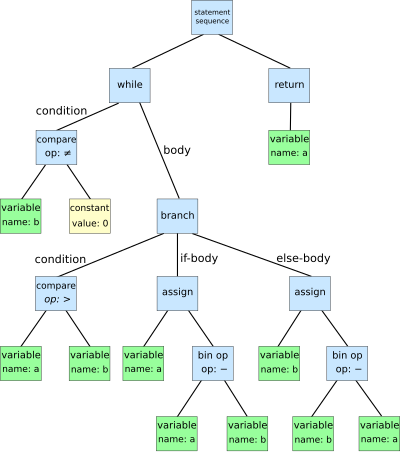
The study of GCDs traces back to antiquity. Euclid's Elements, written around 300 BCE, contains what is now known as the Euclidean Algorithm, a highly efficient method for computing the GCD of two integers. This algorithm is based on the principle that gcd(a, b) = gcd(b, a mod b), where 'a mod b' is the remainder when 'a' is divided by 'b'.
By repeatedly applying this property, the problem is reduced to finding the GCD of smaller and smaller numbers until one of them becomes zero, at which point the other number is the GCD. This algorithmic approach was remarkably advanced for its time and remains a cornerstone of computational number theory, demonstrating the enduring power of ancient mathematical insights.
The Indispensable Role in Computation and Cryptography
The GCD is far more than a theoretical curiosity; it is a workhorse in modern computing and cryptography. In computer science, it's crucial for simplifying fractions, reducing computational complexity, and is a building block for various algorithms. For example, in signal processing and data compression, simplifying ratios using GCD is essential.
In cryptography, the GCD plays a vital role in algorithms like RSA, a widely used public-key cryptosystem. The security of RSA relies on the difficulty of factoring large numbers into their prime components, a problem closely related to finding GCDs. Furthermore, the Extended Euclidean Algorithm, which finds integers x and y such that ax + by = gcd(a, b), is fundamental for calculating modular inverses, a key operation in many cryptographic protocols.
Algorithmic Elegance and Extensions
The Euclidean Algorithm is celebrated for its efficiency. Its time complexity is logarithmic with respect to the smaller of the two input numbers, making it suitable for even extremely large integers. For instance, to compute gcd(10^100, 10^100 - 1), the algorithm performs only a few steps.
Beyond pairs of integers, the GCD can be extended to multiple integers: gcd(a, b, c) = gcd(gcd(a, b), c). The concept also generalizes to other mathematical structures, such as polynomials and elements in Euclidean domains, where a similar division algorithm exists. In these contexts, the GCD is essential for factorization and understanding algebraic structures, showcasing its broad applicability across different branches of mathematics.
See also
Frequently Asked Questions
What is the Greatest Common Divisor (GCD)?+
How do we find the GCD of two numbers?+
Why is the GCD important in computers and secret codes?+
Can we find the GCD of more than two numbers?+
What is the Extended Euclidean Algorithm and why does it matter?+
Based on content from Wikipedia · Licensed under CC BY-SA 4.0