

Greater Iran: A Land of Many Stories
Images

Greater iran flag map
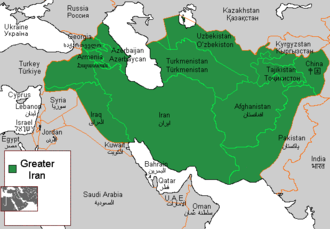


Defining the Iranosphere
Greater Iran, also termed the Iranosphere or Persosphere, represents a complex socio-cultural and historical construct rather than a discrete political entity. It encompasses a broad geographical expanse stretching across parts of West Asia, the South Caucasus, Central Asia, South Asia, and even into the Tarim Basin in East Asia. The defining characteristic of this region is the pervasive influence of Iranian peoples and languages, which have shaped local traditions, arts, literature, and societal structures over millennia.
This influence stems from two primary historical dynamics: periods of rule by powerful Iranian empires (such as the Achaemenid, Parthian, Sasanian, and Safavid dynasties) that fostered cultural assimilation, and the sustained presence of Iranian diaspora communities who maintained their cultural practices. Encyclopædia Iranica aptly labels it the 'Iranian Cultural Continent,' highlighting its role as a major civilizational sphere that facilitated the exchange of ideas and innovations across diverse populations.
The Evolution of Greater Iran
The historical trajectory of Greater Iran is marked by periods of immense territorial control followed by significant contraction. During the height of various Iranian empires, their dominion extended far beyond the modern borders of Iran, incorporating vast swathes of the Middle East, Central Asia, and the Caucasus. However, from the 16th century onwards, particularly under the Safavid and later Qajar dynasties, Iran faced increasing pressure from neighboring powers.
The Ottoman–Iranian Wars resulted in the loss of territories such as present-day Iraq, formalized by treaties like the Treaty of Amasya (1555) and the Treaty of Zuhab (1639). Simultaneously, the Russo-Iranian Wars led to the cession of crucial Caucasian territories to the Russian Empire, including Georgia, Dagestan, and most of Azerbaijan (Treaty of Gulistan, 1813), followed by Armenia and the remainder of Azerbaijan (Treaty of Turkmenchay, 1828). Further territorial adjustments occurred with the British Empire's influence over parts of Afghanistan, as documented in the Treaty of Paris (1857) and the McMahon Arbitration (1905).
These geopolitical shifts fundamentally altered the political map while leaving a deep cultural imprint.
Significance
The concept of Greater Iran holds profound significance for understanding the historical, cultural, and linguistic interconnections that bind a vast region. It provides a framework for analyzing shared heritage, explaining linguistic commonalities (e.g., the Iranian branch of Indo-European languages), and tracing the diffusion of artistic styles, philosophical ideas, and religious practices. The cultural exchange facilitated by the Iranosphere has contributed to the rich tapestry of civilizations in Central Asia, the Caucasus, and parts of South Asia.
Recognizing this historical sphere helps to deconstruct simplistic nationalistic narratives and appreciate the fluid, transnational nature of cultural development. It underscores how empires, migration, and trade have historically fostered shared identities and continuities that transcend modern state borders, influencing contemporary regional dynamics and cultural expressions.
Mechanisms of Cultural Dissemination
The expansion and maintenance of Iranian cultural influence across the vast Iranosphere were driven by multifaceted mechanisms. Imperial administration played a pivotal role; ruling dynasties implemented Persian as the lingua franca for governance, literature, and diplomacy, encouraging its adoption among elites and fostering a shared administrative and intellectual culture. This imperial patronage extended to the arts and sciences, leading to the development of distinct Persianate cultural traditions.
Beyond state power, extensive trade networks, particularly along the Silk Roads, facilitated the movement of people, goods, and ideas. Iranian merchants and artisans established communities in distant lands, acting as cultural conduits. Furthermore, voluntary migration and the establishment of diaspora communities in regions like India, Central Asia, and the Ottoman Empire ensured the continuity and adaptation of Iranian cultural practices, contributing to a dynamic and evolving cultural landscape that was both unifying and diverse.
Contemporary Relevance
While the political boundaries of Greater Iran dissolved centuries ago, its cultural and historical legacies remain potent forces in the contemporary world. The linguistic heritage is evident in the numerous Iranian languages spoken today, including Persian (Farsi, Dari, Tajik), Pashto, Kurdish, and Ossetian, each with its own distinct literary traditions. Festivals like Nowruz, the vernal equinox celebration, are observed across much of the former Iranosphere, symbolizing a shared cultural calendar.
Modern scholarship continues to explore the nuances of this historical region, examining how shared cultural elements continue to shape national identities, influence geopolitical relations, and foster cross-cultural understanding. The concept of Greater Iran serves as a critical lens for analyzing the deep historical roots of regional cooperation and competition, highlighting the enduring power of shared cultural narratives in a globalized era.
Go deeper
Frequently Asked Questions
What is Greater Iran?+
Why is it called the "Iranian Cultural Continent"?+
Which old empires helped spread Iranian culture?+
How did wars change Greater Iran's borders?+
Where can you see Iranian influence today?+
Based on content from Wikipedia · Licensed under CC BY-SA 4.0