

Gravitational Energy: The Invisible Pull!
Images

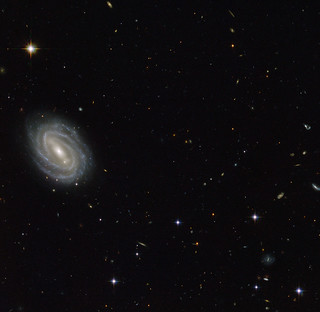
A window into the cosmic past


The Essence of Gravitational Potential Energy
Gravitational energy, more formally known as gravitational potential energy, quantifies the energy an object possesses by virtue of its position within a gravitational field. This potential energy is defined relative to a reference point, often taken as an infinite distance from the source of the gravitational field. Mathematically, it represents the minimum mechanical work required to move a mass from this reference point to a specific location within the field against the gravitational force.
The greater the distance separating two masses, the higher the gravitational potential energy stored between them. Conversely, as masses move closer, this potential energy decreases, often being converted into other forms of energy.
Historical Context and Theoretical Evolution
The understanding of gravitational energy evolved significantly with classical physics. Sir Isaac Newton's law of universal gravitation provided the foundational framework, describing gravity as a force of attraction between any two objects with mass. Later, Albert Einstein's theory of general relativity revolutionized this concept, describing gravity not as a force, but as a curvature of spacetime caused by mass and energy.
While Newton's formulation is sufficient for most everyday calculations and celestial mechanics, Einstein's perspective offers a deeper, more accurate understanding, particularly in strong gravitational fields or at cosmological scales, influencing how we conceptualize gravitational potential energy.
The Dynamics of Energy Conversion
The critical aspect of gravitational energy lies in its dynamic conversion into kinetic energy. When objects are allowed to move towards each other under the influence of gravity, the stored potential energy is released and transformed into kinetic energy. This process is fundamental to understanding phenomena like the acceleration of falling objects, the orbital motion of planets, and the collapse of nebulae to form stars.
The total mechanical energy (the sum of kinetic and potential energy) remains constant in a closed system, illustrating the principle of energy conservation as gravitational potential energy is exchanged for kinetic energy.
Cosmic Architect and Universal Significance
Gravitational energy is arguably the most significant force in shaping the large-scale structure of the universe. It is the primary driver behind the formation of galaxies, stars, and planetary systems from primordial matter. The initial slight density variations in the early universe were amplified by gravity, leading to the clumping of matter.
Furthermore, gravitational energy dictates the orbits of celestial bodies, from the Moon around Earth to galaxies within clusters. Its influence extends to phenomena like tidal forces, the formation of black holes, and the expansion dynamics of the universe itself, making it central to cosmology.
Applications and Modern Relevance
Beyond its cosmic role, gravitational energy has practical implications. Engineers consider it in the design of structures, bridges, and dams, where managing gravitational forces is paramount. In astrophysics and cosmology, understanding gravitational energy is crucial for studying phenomena like gravitational waves, the detection of exoplanets through gravitational lensing, and the dynamics of galaxy mergers.
While direct harnessing of gravitational potential energy for widespread power generation is complex, concepts like pumped-storage hydroelectricity utilize the principle of converting gravitational potential energy into electrical energy, demonstrating its tangible applications.
See also
Frequently Asked Questions
What is gravitational energy?+
How does gravitational energy turn into kinetic energy?+
Why is gravity important for making stars and planets?+
How do scientists use gravitational energy in engineering?+
What is the difference between Newton's and Einstein's ideas about gravity?+
Based on content from Wikipedia · Licensed under CC BY-SA 4.0