

Grave (mass)
Images

The Peace Hat and The Tomb of the Unknown Revolutionary War Soldier




Defining and Differentiating Mass Graves
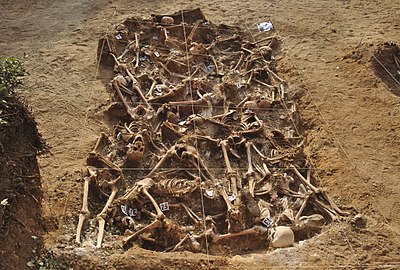
A mass grave is a burial site containing the remains of multiple individuals interred together, typically due to a single catastrophic event or a period of high mortality. This distinguishes them from cemeteries with individual plots or ossuaries where bones are stored. The circumstances leading to their creation are diverse, ranging from natural disasters like floods and earthquakes to man-made tragedies such as battlefield burials, executions, genocides, and the aftermath of widespread epidemics.
The sheer volume of individuals and the often hasty or ritualistic nature of their interment provide unique archaeological and anthropological data. Understanding the context of a mass grave is paramount, as it shapes the interpretation of the human remains and the historical narrative they represent. These sites are not merely repositories of the dead but are often sites of profound social and political significance.
Historical Trajectories of Mass Burial Practices
The practice of collective burial is deeply rooted in human history, predating recorded time. Early hominid sites sometimes show evidence of communal interments, suggesting shared social structures or responses to mortality. Throughout antiquity, mass graves were often associated with warfare, where fallen soldiers were buried together for practical or ritualistic reasons.
The medieval period, particularly with the advent of devastating plagues like the Black Death, saw an unprecedented increase in mass grave creation across Europe, reflecting the overwhelming scale of mortality. In more recent centuries, mass graves have become tragically synonymous with systematic violence, including political purges, ethnic cleansing, and genocides. Examining these sites across different eras allows for a comparative study of societal coping mechanisms, burial customs, and the evolving relationship between the living and the dead.
The Multifaceted Importance of Mass Grave Research
The significance of mass graves extends across multiple disciplines. For archaeologists and anthropologists, they are unparalleled sources for reconstructing past demographics, understanding disease patterns, analyzing diet and subsistence strategies, and identifying causes of death. Forensic science plays a crucial role in identifying victims, determining the circumstances of death, and even establishing familial relationships through DNA analysis, which can be vital for reconciliation efforts.
Beyond scientific inquiry, mass graves hold immense cultural and ethical importance. They often serve as focal points for collective memory, memorialization, and justice. Investigating these sites can help to bring closure to affected communities, challenge historical narratives that obscure atrocities, and serve as potent reminders of the human cost of conflict and neglect, thereby informing contemporary efforts towards peace and human rights.
Methodologies in Locating and Investigating Mass Graves
The discovery of mass graves is often a painstaking process, relying on a combination of historical research, oral testimonies, and advanced geospatial technologies. Historical documents, such as military records, church registers, or personal diaries, can provide crucial clues. Local knowledge and oral histories passed down through generations often pinpoint suspected locations.
Modern archaeological techniques, including ground-penetrating radar (GPR) and magnetometry, can non-invasively detect subsurface anomalies that may indicate disturbed soil or buried human remains. Once a site is identified, meticulous excavation is paramount. Forensic archaeologists employ systematic methods to document the spatial relationships between remains, artifacts, and the surrounding stratigraphy.
This careful approach ensures that the maximum amount of information is preserved and that the site is treated with the respect due to the deceased and their historical context.
Contemporary Relevance and Ethical Considerations
In the modern era, the study and management of mass graves remain critically important. They are often central to transitional justice mechanisms following periods of conflict or repression, aiding in the identification of victims and the prosecution of perpetrators. The exhumation and identification processes are fraught with ethical challenges, requiring sensitivity to the cultural and religious beliefs of the deceased and their families, as well as ensuring the dignity of the remains.
Furthermore, the preservation and memorialization of mass grave sites raise questions about how societies choose to remember their past, particularly traumatic events. These sites serve as powerful educational tools, fostering dialogue about human rights, historical accountability, and the prevention of future atrocities. The ongoing discovery and analysis of mass graves underscore their enduring role in shaping our understanding of history and our commitment to a more just future.
See also
Frequently Asked Questions
What is a mass grave?+
Why do mass graves happen?+
How do scientists find mass graves?+
Where do mass graves usually come from?+
How do mass graves help us learn about history?+
Based on content from Wikipedia · Licensed under CC BY-SA 4.0