

Grand Duchy of Moscow
Images

Muscovy 1300-1462


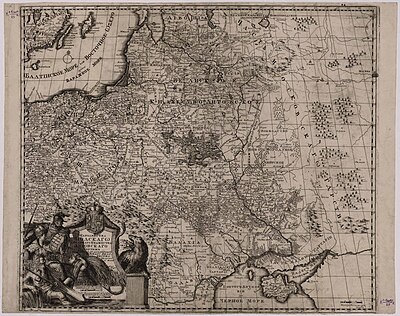


Geopolitical Crucible
The Grand Duchy of Moscow emerged and thrived within a complex geopolitical environment in Eastern Europe. Its location, situated on the upper reaches of major river systems like the Volga and Oka, provided crucial arteries for trade and communication, connecting it to the Baltic, Black, and Caspian Seas. This strategic positioning, however, also placed it at a crossroads of competing powers.
For centuries, Moscow existed under the suzerainty of the Golden Horde, a Mongol successor state, necessitating a delicate balance of tribute and resistance. The constant threat from neighboring principalities, such as Tver and Novgorod, and later from Lithuania and Poland, demanded a strong military and astute diplomacy. The Grand Princes of Moscow skillfully leveraged these pressures, often playing rivals against each other and gradually consolidating their own authority.
The vast, often sparsely populated, forested terrain also presented challenges and opportunities, offering resources but requiring effective administration and defense over expansive territories. This dynamic interplay of geography and external pressures forged Moscow into a resilient and ambitious state.
The Ascent of Moscow
The historical trajectory of the Grand Duchy of Moscow is a compelling narrative of state-building and territorial expansion spanning several centuries. Its rise was not a linear process but rather a series of calculated moves, strategic alliances, and decisive military actions. Early Grand Princes focused on consolidating their control over the surrounding lands, often through inheritance, purchase, or conquest.
The subjugation of rival principalities was a protracted affair, marked by periods of conflict and uneasy peace. A pivotal moment was the gradual weakening and eventual collapse of the Golden Horde, which liberated Moscow from Mongol overlordship and created a power vacuum that Moscow was poised to fill. Ivan III (the Great) played a crucial role in this transition, formally renouncing allegiance to the Horde in 1480 and significantly expanding Moscow's domain through diplomacy and warfare, incorporating territories like Novgorod and Tver.
His reign laid the ideological and administrative foundations for a unified Russian state, often referred to as 'gathering the Russian lands'.
Cultural Synthesis
The cultural landscape of the Grand Duchy of Moscow was a rich tapestry woven from East Slavic traditions, Byzantine influences, and the enduring impact of Orthodox Christianity. Following the fall of Constantinople in 1453, Moscow increasingly saw itself as the 'Third Rome,' the successor to Byzantium as the center of Orthodox faith. This ideological claim profoundly shaped Muscovite identity and its relationship with the wider world.
The Church was not merely a religious institution but a powerful force in political life, land ownership, and cultural dissemination. Literacy, though limited, was concentrated within the clergy and a growing administrative class, fostering the development of a distinct Muscovite literary tradition, including chronicles, religious texts, and legal documents. Social structure was hierarchical, with the Grand Prince at the apex, followed by the boyars (nobility), clergy, merchants, and a vast peasant population.
Despite the centralized authority, regional identities and customs persisted, contributing to the complex social fabric of the duchy.
Economic Foundations
The economy of the Grand Duchy of Moscow was fundamentally agrarian, with the vast majority of the population engaged in subsistence farming. The cultivation of grains, particularly rye and wheat, formed the bedrock of sustenance and trade. However, Moscow's economic development was significantly bolstered by its strategic location and the exploitation of natural resources.
The extensive forest cover provided timber for construction, fuel, and shipbuilding, while also supporting hunting and trapping, yielding valuable furs that became a major export commodity. The river systems facilitated internal trade and connected Moscow to external markets, including the Hanseatic League and eventually routes to Western Europe. The state actively participated in the economy, controlling key trade routes, levying taxes, and managing monopolies on certain goods.
This state intervention was crucial for funding the growing military apparatus and administrative bureaucracy necessary for expansion and governance, laying the groundwork for a more centralized economic system.
The Architecture of Power
The governance of the Grand Duchy of Moscow evolved significantly over its history, moving from a more decentralized system to a highly centralized autocracy. The Grand Prince wielded considerable power, increasingly styled as 'Sovereign' (Gosudar), symbolizing his ultimate authority. This power was exercised through a developing bureaucracy, with institutions like the Boyar Duma (council of nobles) playing an advisory role, though its influence waned as the Grand Prince's authority grew.
The legal system was codified, notably with the Sudebnik of 1497, which aimed to standardize laws across the expanding territories and began to regulate peasant movement, foreshadowing serfdom. The Church played a vital role in legitimizing princely authority and providing administrative support. As Moscow expanded, the challenge of governing vast distances led to the development of a system of provincial administration, often relying on local officials who were granted rights to collect taxes in exchange for service to the state.
This complex, evolving system of governance was instrumental in transforming Moscow from a regional principality into a formidable state capable of projecting power.
Intellectual Currents
Education and intellectual life within the Grand Duchy of Moscow were characterized by a strong emphasis on religious learning and the practical needs of state administration. Literacy was not a widespread phenomenon among the general populace; rather, it was concentrated within the ecclesiastical hierarchy, the princely court, and a growing class of scribes and administrators. Monasteries served as crucial centers for the preservation and copying of manuscripts, theological treatises, and historical chronicles.
The development of the Sudebnik, a codified legal system, demonstrates a sophisticated engagement with law and administration. While formal secular educational institutions were largely absent, the transmission of knowledge occurred through apprenticeships, oral traditions, and the direct instruction of heirs. The concept of the 'Third Rome' fostered a unique intellectual climate, linking Moscow's destiny to divine providence and shaping its historical consciousness.
This intellectual framework, though distinct from Western European Renaissance humanism, provided the ideological underpinnings for Moscow's growing imperial ambitions.
See also
Frequently Asked Questions
What was the Grand Duchy of Moscow?+
Why did Moscow become powerful?+
How did Moscow get rid of the Golden Horde?+
Where did Moscow get its trade routes from?+
What does "Third Rome" mean for Moscow?+
Based on content from Wikipedia · Licensed under CC BY-SA 4.0