

Grand Duchy of Finland
Images

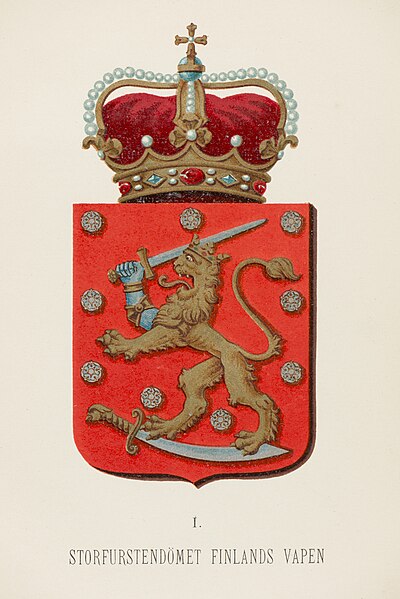
Coats of arms of the Grand Duchy of Finland



Geopolitical Context and Territorial Identity
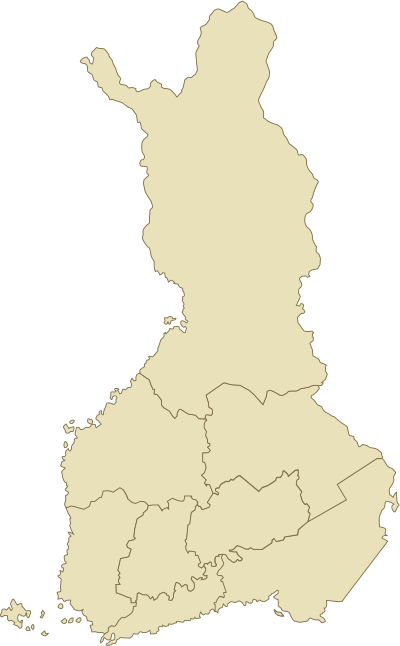
The Grand Duchy of Finland, existing from 1809 to 1917, occupied a distinct geopolitical space in Northern Europe. Its geographical location, bordering the vast Russian Empire, profoundly shaped its historical trajectory. Characterized by extensive forests, numerous lakes, and a subarctic climate, Finland's natural landscape influenced its economy and the resilience of its people.
As an autonomous state within the Russian Empire, it maintained a unique status, distinct from annexed territories or fully integrated provinces. The capital, Helsinki, evolved into a significant administrative and cultural center, symbolizing the Duchy's internal governance. This period represents a critical phase where Finland developed its national institutions and identity under the nominal suzerainty of the Romanov dynasty, navigating the complexities of imperial power while fostering its own societal structures.
Evolution of Autonomy
Finland's path to becoming a Grand Duchy within the Russian Empire was a consequence of shifting European power dynamics. Historically, Finland was an integral part of Sweden for centuries, even holding the titular status of a Grand Duchy under Swedish monarchs. The Finnish War (1808-1809) proved to be a watershed moment, resulting in Finland's cession to Russia.
However, Tsar Alexander I, recognizing the strategic and political advantages, granted Finland a high degree of autonomy. This was not merely a territorial acquisition but the establishment of a distinct political entity. The Grand Duke of Finland was the Emperor of Russia himself, represented locally by a Governor-General.
This arrangement allowed Finland to retain its own legal system, parliament (the Diet of the Estates), and currency, fostering a sense of continuity and self-governance that differentiated it from other parts of the Empire.
Institutional Development and Societal Transformation
The 19th century was a period of significant institutional growth and societal transformation for the Grand Duchy. The establishment of the Senate of Finland in 1809 was foundational, serving as the supreme administrative body and the precursor to modern Finnish governmental and judicial institutions. This period witnessed the slow but steady development of the Finnish economy, which began to industrialize, particularly during the latter half of the century.
The reign of Alexander II (1855-1881) was particularly notable for fostering cultural, social, and intellectual progress. Finnish language and culture experienced a renaissance, and educational institutions expanded, contributing to a growing sense of national consciousness. This internal development was crucial in shaping Finland's future aspirations for full independence.
Challenges to Autonomy and the Path to Independence
The late 19th and early 20th centuries marked a period of increasing tension as the Russian Empire sought to centralize its power and implement 'Russification' policies. Starting in 1898, these policies aimed to curtail Finnish autonomy, suppress its distinct cultural expressions, and integrate it more closely with the Empire. This led to significant political unrest and resistance within Finland.
The outbreak of World War I further destabilized the region, exacerbating internal pressures within Russia. The collapse of the Tsarist regime in 1917 created a power vacuum and an opportune moment for Finland. Seizing this historical juncture, the Finnish Parliament declared independence on December 6, 1917, formally dissolving the Grand Duchy and ushering in the era of the modern Finnish Republic.
Legacy and Enduring Impact
The legacy of the Grand Duchy of Finland is profound, representing a unique historical experiment in autonomous governance within an imperial framework. The institutions developed during this period, particularly the Senate, laid the groundwork for Finland's robust democratic system. The century of relative self-governance allowed for the cultivation of a distinct national identity, language, and culture, which proved resilient even under periods of intensified Russification.
The economic and social progress achieved during the 19th century provided a solid foundation for independent Finland's development. The Grand Duchy era is thus not merely a historical footnote but a crucial formative period that shaped Finland's political landscape, cultural heritage, and its eventual emergence as a sovereign nation celebrated for its stability and innovation.
See also
Frequently Asked Questions
What was the Grand Duchy of Finland?+
How did Finland become part of Russia?+
What did the Grand Duke of Finland do?+
Why did Russia try to change Finland in the late 1800s?+
What was the Senate of Finland?+
Based on content from Wikipedia · Licensed under CC BY-SA 4.0