

Gouda, South Holland
Images

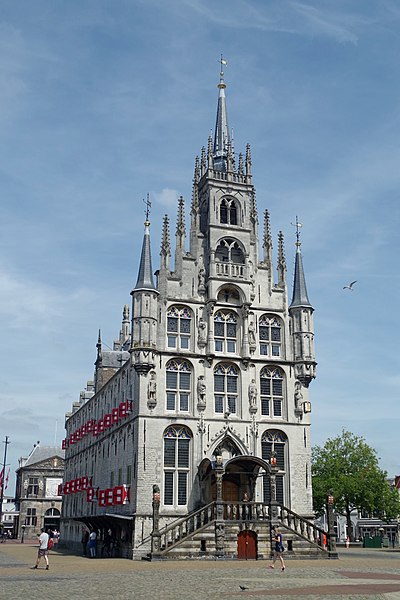
Den Haag - Madurodam - Stadhuis Gouda




Geopolitical and Environmental Context of Gouda
Gouda's location in the western Netherlands, specifically within the province of South Holland, places it in a region characterized by low-lying, reclaimed land and an intricate network of waterways. Situated between the major urban centers of Rotterdam and Utrecht, Gouda benefits from its accessibility and historical role as a transit point. The original marshland environment necessitated significant hydrological engineering, with the development of canals playing a pivotal role in transforming the landscape for settlement and agriculture.
The Gouwe River was instrumental in the city's founding, providing access to trade routes and eventually forming a vital harbor by 1225. This geographical positioning has historically facilitated both internal Dutch trade and connections to broader European markets. The temperate maritime climate influences the region's agricultural output and the preservation of its historical structures, contributing to its appeal as a tourist destination.
The Genesis and Evolution of Gouda's Urban Fabric
The origins of Gouda trace back to the establishment of a settlement by the Van der Goude family, who constructed a fortified castle on the banks of the Gouwe River. This early settlement, initially referred to as Ter Goude, gradually evolved from its marshy beginnings over a period of two centuries. A pivotal moment in its historical trajectory was the conferral of city rights by Floris V, Count of Holland, in 1272.
This charter granted Gouda significant autonomy and legal standing, fostering its growth as a commercial and administrative center. The city's urban fabric bears the indelible marks of its medieval past, evident in its numerous historic churches and architectural landmarks, most notably the iconic 15th-century city hall. These preserved structures are not merely relics but active contributors to the city's cultural identity and its appeal as a heritage tourism site.
Gouda's Enduring Culinary and Craft Legacy
Gouda's global recognition is overwhelmingly tied to its namesake cheese, a product whose production and quality have been refined over centuries. This semi-hard cheese, known for its mild, nutty flavor profile, remains a cornerstone of the city's identity and economy. Complementing its dairy fame is the stroopwafel, a confectionary delight consisting of thin waffle layers sandwiching a sweet syrup.
The historical significance of Gouda also extends to its past prominence in the manufacturing of smoking pipes, a craft that once defined a segment of its industrial output. The city actively promotes these cultural and culinary heritage assets, leveraging them for tourism and economic development. The preservation of its historic architecture, including its canals and the Markt square dominated by the Stadhuis, further enhances its unique cultural landscape.
Economic Drivers and Governance in Gouda
The economic landscape of Gouda is significantly shaped by its globally recognized products: Gouda cheese and stroopwafels. These industries form the backbone of local commerce, encompassing agricultural production, artisanal craftsmanship, and international trade. Beyond these flagship sectors, Gouda sustains a diversified economy that includes robust retail, service industries, and a thriving tourism sector.
The city's historical appeal and well-preserved heritage sites attract a steady stream of visitors, supporting a wide array of hospitality businesses. Administratively, Gouda operates as a municipality within the province of South Holland, governed by a local council and mayor responsible for public services, urban planning, and economic development initiatives. The Dutch language is the official language, underpinning all governmental and commercial activities.
Education and Societal Development in Gouda
Gouda, as a modern Dutch municipality, provides a comprehensive educational framework for its residents. The educational system is structured to cater to various age groups and learning needs, starting with primary education (basisschool) and progressing to secondary education (middelbare school) which offers different tracks, including vocational and pre-university studies. Higher education opportunities are accessible through institutions in nearby larger cities like Rotterdam and Utrecht, though Gouda itself may host specialized vocational training centers.
The city's commitment to education is reflected in its efforts to equip its population with the skills necessary to contribute to both its traditional industries and emerging economic sectors. This focus on lifelong learning and skill development is crucial for maintaining Gouda's economic vitality and societal well-being in an ever-changing global environment.
See also
Frequently Asked Questions
What is Gouda famous for?+
Where is Gouda located?+
How did Gouda get its name?+
Why is Gouda's city hall special?+
What role do canals play in Gouda?+
Based on content from Wikipedia · Licensed under CC BY-SA 4.0