

Golf Course: The Giant Green Playground!
Images

Golf course storage unit


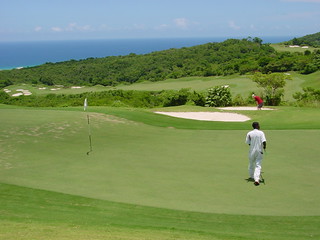


The Art and Science of Golf Course Architecture
A golf course is a meticulously engineered landscape, far more than just a patch of grass. The standard 18-hole configuration, while prevalent, is a convention rather than a strict rule, with 9-hole, 12-hole, and other variations existing to cater to different needs and space constraints. Each hole is a unique strategic puzzle, beginning with the teeing ground, offering players a choice of starting points that influence the hole's difficulty.
The fairway, a precisely manicured corridor, represents the optimal path, while the 'rough' – longer, denser grass – penalizes errant shots. Integral to the design are hazards, such as bunkers (sand traps) and water features, strategically placed to challenge golfers' decision-making and shot execution. The green, a finely tuned putting surface, culminates in the hole itself, marked by a flagstick. The concept of 'par,' a benchmark score for proficient players, dictates the expected number of strokes for each hole (typically 3, 4, or 5), forming the basis of the game's scoring system.
Par-3 courses and 'short courses' represent variations that emphasize different aspects of skill, such as accuracy or strategic course management over raw power.
From Natural Links to Engineered Landscapes
The genesis of golf courses lies in the rugged, natural terrain of Scotland's coastal regions, where the game originated. These early 'links' courses were characterized by sandy soil, undulating dunes, and hardy grasses shaped by wind and sea. They were not constructed but rather adapted from the existing landscape, fostering a game deeply connected to its environment.
As golf's global appeal expanded, so did the desire for more controlled and challenging playing conditions. This led to the development of specialized turfgrass management, sophisticated irrigation systems, and the deliberate shaping of land to create features like artificial mounds, strategically placed water hazards, and meticulously sculpted greens. This evolution from natural, often wild, environments to highly managed and engineered spaces reflects golf's transition from a regional pastime to a major international sport, with significant investment in course design and maintenance.
The Multifaceted Significance of Golf Courses
Golf courses serve multiple roles beyond their primary function as sporting venues. They are significant economic drivers, supporting jobs in maintenance, hospitality, and retail, and often acting as anchors for real estate development, particularly in the case of private country clubs. Socially, they provide spaces for recreation, community building, and networking.
Ecologically, large golf courses represent substantial green spaces that can contribute to biodiversity, provide wildlife habitats, and help manage stormwater runoff, especially when designed with native plantings and sustainable practices. However, their environmental impact is a subject of ongoing debate, particularly concerning water usage, pesticide application, and land transformation. The management of these courses increasingly involves balancing the demands of the sport with environmental stewardship and community integration.
Contemporary Issues and Future Directions in Golf Course Management
Modern golf courses face evolving challenges and opportunities. The demand for sustainability has led to innovations in water conservation, such as drought-tolerant turfgrasses and efficient irrigation technologies. Efforts are also underway to reduce reliance on chemical inputs through integrated pest management and the use of biological controls.
Furthermore, the design of new courses and the renovation of existing ones are increasingly influenced by ecological considerations, aiming to create habitats for wildlife and minimize environmental footprints. The popularity of 'short courses' and 'par-3' courses reflects a trend towards more accessible and potentially less resource-intensive forms of golf. As societal expectations shift, golf courses are increasingly being viewed not just as recreational facilities but as complex landscapes requiring careful management to ensure their long-term viability and positive contribution to their surroundings.
Go deeper
Based on content from Wikipedia · Licensed under CC BY-SA 4.0