

Giovanni Bellini
Images

Venetian embassy to the Mamluks in Damascus in 1511 workshop of Giovanni Bellini


The Bellini Legacy
Giovanni Bellini (c. 1430 – 1516) emerged from the esteemed Bellini artistic dynasty in Venice, a family that dominated the city's painting scene for decades. Initially, his older brother, Gentile, was the more celebrated figure, a testament to the high artistic standards within the household. Giovanni’s upbringing within this environment, likely under the tutelage of his father Jacopo Bellini, provided a strong foundation.
However, Giovanni’s artistic trajectory diverged significantly, particularly after his marriage to the sister of Andrea Mantegna, himself a master of perspective and line. While Mantegna's influence is debated, it's clear Giovanni absorbed and synthesized various artistic currents. The critical shift, however, was Giovanni's eventual surpassing of his brother's reputation.
Today, Giovanni is recognized not just as a key figure of the Bellini family but as the pivotal artist who propelled Venetian painting into a new era of coloristic richness and emotional depth, moving beyond the more linear traditions.
The Transformative Power of Oil
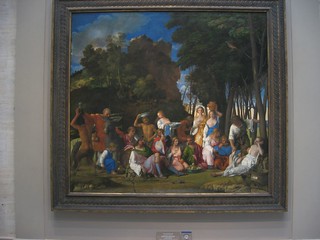
Giovanni Bellini is widely credited with revolutionizing Venetian painting, ushering in a style that was more 'sensuous and colouristic.' This transformation was intrinsically linked to his sophisticated understanding and application of oil paints. Unlike the faster-drying tempera prevalent at the time, oil paints offered unparalleled flexibility. Bellini exploited this slow-drying property to achieve deep, luminous hues and subtle tonal gradations that were previously unattainable.
He could meticulously blend colors on the canvas, creating rich, velvety textures and nuanced shading that gave his figures and landscapes a palpable presence. This mastery allowed him to imbue his works with a vibrant, almost glowing quality, setting a new benchmark for color saturation and atmospheric rendering that would profoundly influence the subsequent development of painting in Venice and beyond.
Crafting Atmospheric Worlds
Bellini's genius extended beyond his handling of pigment to his innovative approach to landscape. He moved away from purely decorative backdrops, instead integrating atmospheric effects that enhanced the emotional impact of his compositions. His skies possess a tangible quality, his light sources are carefully observed, and his rendering of distance through atmospheric perspective creates a profound sense of depth and space.
This holistic approach, where color, light, and landscape work in concert, imbued his religious and mythological scenes with a new level of psychological realism and spiritual intensity. This profound sensitivity to atmosphere and environment had a seismic effect on the Venetian school. His pupils, notably Giorgione and Titian, absorbed these lessons, developing their own interpretations of Bellini's groundbreaking techniques, solidifying his role as a foundational figure.
Enduring Influence
The legacy of Giovanni Bellini is multifaceted. Artistically, his innovations in color, light, and atmospheric landscape painting laid the groundwork for the High Renaissance in Venice and directly influenced the titans who followed, including his most famous students, Giorgione and Titian. His ability to synthesize the linearity of Florentine art with the coloristic traditions of Venice created a unique and enduring style.
Beyond the canvas, Bellini's name has achieved a unique cultural resonance. The Bellini cocktail, a sophisticated blend of prosecco and peach puree, named in his honor, speaks to his enduring fame. While seemingly disparate, the drink's vibrant color and refined character can be seen as a modern, albeit indirect, echo of the rich, sensuous aesthetic that Bellini so masterfully pioneered centuries ago, cementing his status as an icon across different domains.
Go deeper
Frequently Asked Questions
Who was Giovanni Bellini?+
What made his paintings different?+
How did he paint landscapes?+
Did he have any famous students?+
What was his family like?+
Based on content from Wikipedia · Licensed under CC BY-SA 4.0