

Giant Salamander
Images

Coastal Giant Salamander, Dicamptodon tenebrosus


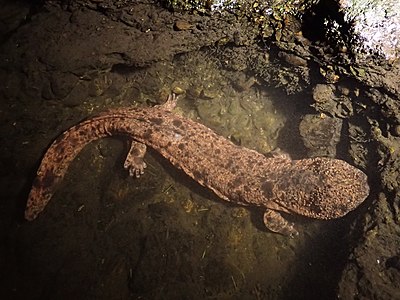
Evolutionary Marvels
The family Cryptobranchidae represents a remarkable branch of amphibian evolution, comprising some of the largest living tetrapods. These fully aquatic salamanders are distinguished by their rudimentary gills, often hidden or reduced, necessitating a lifestyle intimately tied to oxygen-rich water. Their evolutionary history places them within the Cryptobranchoidea, one of the two major infraorders of living salamanders, alongside the Hynobiidae (Asiatic salamanders).
This ancient lineage suggests a long period of adaptation to aquatic environments, with their morphology reflecting a specialization for life in rivers and lakes. The sheer size attained by species like the South China giant salamander (Andrias sligoi), reaching up to 1.8 meters, is a testament to their successful evolutionary trajectory in specific ecological niches. Understanding their phylogenetic position is key to appreciating their unique biological characteristics and their place within the broader context of vertebrate evolution.
Geographic Distribution and Habitat Specificity
The distribution of giant salamanders is geographically restricted, primarily to East Asia and the eastern United States. The genus Andrias, encompassing the largest species, is found in China and Japan. The South China giant salamander (Andrias sligoi) and the Japanese giant salamander (Andrias japonicus) inhabit temperate river systems, preferring clear, cold, and fast-flowing waters.
Their habitat requirements are stringent; they depend on substrates with ample hiding places, such as large rocks and submerged wood, which provide both shelter from predators and ideal ambush points for prey. The hellbender (Cryptobranchus alleganiensis), the sole representative of its genus, occupies a similar ecological role in the rivers of the eastern United States. These specific habitat needs make them highly vulnerable to environmental changes, including water temperature fluctuations, sedimentation, and habitat fragmentation caused by human development.
Predatory Adaptations and Nocturnal Foraging Strategies
As carnivores, giant salamanders are apex predators within their aquatic ecosystems. Their diet primarily consists of fish and crustaceans, though they are opportunistic feeders and may consume other invertebrates or even smaller vertebrates. Their hunting strategy is largely based on patience and surprise.
They are masters of camouflage, their mottled, wrinkled skin allowing them to blend seamlessly with the riverbed. Many species, including the Japanese giant salamander, exhibit predominantly nocturnal foraging behavior. This allows them to avoid diurnal predators and capitalize on the activity patterns of their prey.
Their large mouths and relatively weak swimming abilities are compensated by their ability to remain motionless for extended periods, waiting for prey to come within striking distance. Their sensory systems, likely including a well-developed lateral line system for detecting vibrations in the water, play a crucial role in locating food in low-visibility conditions.
Longevity, Conservation Imperatives, and Ecological Significance
Giant salamanders possess an extraordinary lifespan, with some individuals documented to live for over 50 years in captivity, and potentially even longer in the wild. This longevity is indicative of a slow metabolism and a life history strategy adapted to stable, resource-rich environments. However, this slow life cycle also makes them particularly susceptible to population declines.
Many species, most notably the South China giant salamander, are critically endangered due to a confluence of anthropogenic pressures. Habitat degradation, pollution from agricultural runoff and industrial waste, and overexploitation for food and traditional medicine have decimated wild populations. The ecological significance of giant salamanders lies in their role as indicators of aquatic health.
Their presence signifies a robust and unpolluted riverine ecosystem. Conservation efforts are multifaceted, involving habitat restoration, captive breeding programs, and stringent legal protections. The future of these ancient giants hinges on our ability to mitigate these threats and preserve the vital aquatic habitats they depend upon.
See also
Frequently Asked Questions
What is a giant salamander?+
How big can giant salamanders get?+
Where do giant salamanders live?+
What do giant salamanders eat?+
How long do giant salamanders live?+
Based on content from Wikipedia · Licensed under CC BY-SA 4.0