

Giant Otter
Images
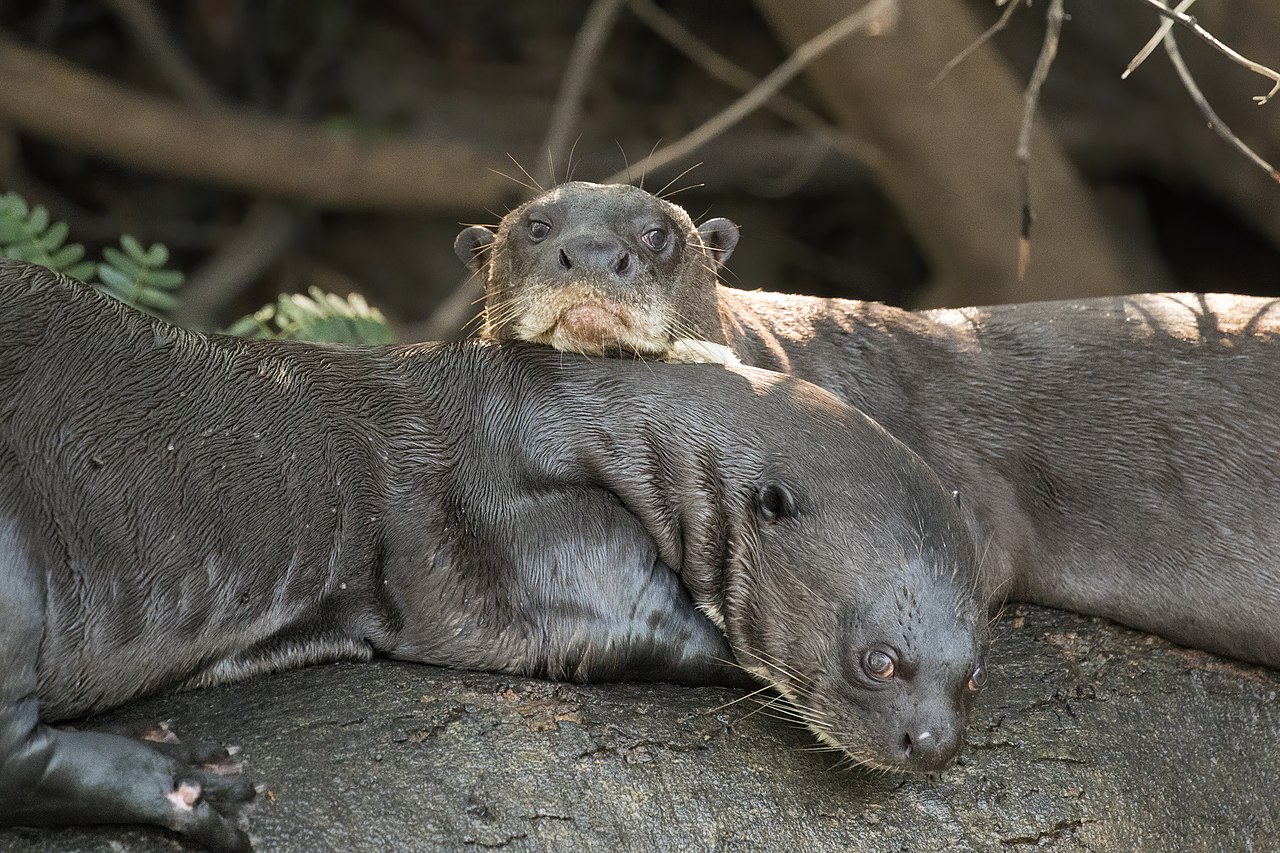
Giant otters (Pteronura brasiliensis)


Social Cohesion and Communication in a Riverine Ecosystem
The giant otter (Pteronura brasiliensis) stands out within the Mustelidae family not only for its impressive size, reaching up to 1.8 meters, but also for its highly social and cooperative nature. Unlike the typically solitary habits of many mustelids, giant otters form cohesive family groups, usually comprising a dominant breeding pair and their offspring, numbering between three and eight individuals.
This social organization is central to their survival, facilitating cooperative hunting, shared vigilance against predators, and communal care of young. Their diurnal activity pattern ensures they are active during daylight hours, maximizing opportunities for foraging and social interaction. Communication is paramount, with the species exhibiting the most complex vocal repertoire among otters. A diverse array of calls-including whistles, chirps, and growls-serves to convey alarm, aggression, reassurance, and social bonding signals.
This intricate communication network is vital for maintaining group cohesion and coordinating activities in the vast and often visually obstructed riverine environments they inhabit. While generally peaceful, their territoriality is evident in observed inter-group aggression, underscoring the importance of resource defense within their ecosystem.
Morphological and Behavioral Adaptations for an Aquatic Lifestyle
The giant otter's physiology is exquisitely adapted for its semi-aquatic existence. Its fur is exceptionally dense, providing superior insulation against the often cool waters of its habitat, a critical feature for maintaining thermoregulation during extended periods of foraging. Webbed feet enhance propulsion and maneuverability, while a broad, wing-like tail functions as a powerful rudder, enabling agile navigation through complex river systems.
These adaptations allow them to thrive in freshwater rivers, streams, lakes, and springs, particularly in areas characterized by seasonal flooding. Giant otters are adept at constructing extensive campsites, clearing significant vegetation to create resting and denning areas close to productive feeding grounds. Their diet is predominantly piscivorous, with a strong preference for characins and catfish, species abundant in their native waters.
However, their opportunistic feeding strategy extends to consuming crabs, turtles, snakes, and even small crocodilians, demonstrating their role as apex predators within their niche. This dietary flexibility is crucial for survival, especially when preferred prey is scarce.
Historical Decline and Contemporary Conservation Imperatives
The conservation status of the giant otter is a stark reminder of human impact on biodiversity. Historically, populations across north-central South America, particularly along the Amazon River and in the Pantanal, have been drastically reduced and are now discontinuous. The primary driver of this decline was intense poaching for their highly prized velvety pelts, which reached its zenith in the mid-20th century.
This exploitation led to a precipitous drop in numbers, prompting their classification as endangered in 1999. Current wild population estimates are alarmingly low, typically below 5,000 individuals. The most significant contemporary threat is habitat degradation and loss, stemming from deforestation, pollution, and agricultural expansion, which directly impacts the health of river ecosystems and prey availability.
While certain regions like the Guianas and parts of the Peruvian Amazon remain vital strongholds, the species' vulnerability is undeniable. Their rarity in captivity, with only 60 individuals recorded in 2003, further emphasizes the urgent need for robust in-situ conservation efforts to protect this iconic Neotropical mammal.
Ecological Role and Inter-species Dynamics
As apex predators, giant otters play a crucial role in regulating fish populations within their ecosystems. Their presence and feeding habits can influence the structure and dynamics of aquatic communities. While they have few natural predators other than humans, they do face competition for food resources.
This competition comes from other aquatic predators, including other otter species, such as the Neotropical otter, and various crocodilian species like caimans and crocodiles. The effectiveness of their cooperative hunting strategies likely helps them secure a significant portion of their prey, but inter-specific competition remains a factor in resource allocation. Understanding these inter-species dynamics is essential for comprehensive ecosystem management and for developing effective conservation strategies that consider the broader ecological context in which giant otters exist.
Their status as an endangered species highlights the interconnectedness of biodiversity and the far-reaching consequences of habitat alteration and overexploitation.
See also
Frequently Asked Questions
What does a giant otter look like and how big is it?+
How do giant otters live together in families?+
What do giant otters eat and how do they catch food?+
Why are giant otters considered endangered and what hurts them?+
How do giant otters stay warm and move in water?+
Based on content from Wikipedia · Licensed under CC BY-SA 4.0