

Gerard Piqué
Images

Broche van goud met robijn en diamanten in doos met deksel, BK-2010-2-204




The Architectural Marvel of Piqué's Defense
Gerard Piqué Bernabeu emerged as a colossus in the world of football, a centre-back whose presence on the field was as commanding as a fortress. His career, spanning over a decade and a half, was characterized by an exceptional blend of physical prowess, tactical intelligence, and composure under pressure. At FC Barcelona, he was not merely a defender but an architect of their defensive structure, a vital component of one of the most dominant eras in club history.
His partnership with Carles Puyol, and later Javier Mascherano, formed an almost impenetrable barrier. Piqué's ability to read the game, intercept passes, and initiate attacks from deep positions was revolutionary for a centre-back. He was instrumental in Barcelona's two historic 'trebles' (2008-09 and 2014-15), a feat that underscores his immense contribution to the team's unparalleled success.
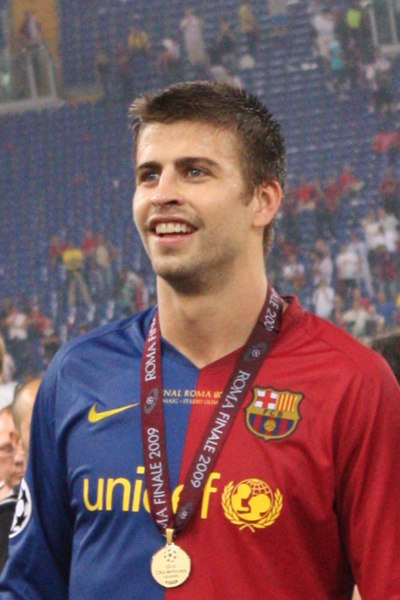
His 616 competitive appearances for the club are a testament to his enduring quality and importance. Furthermore, his unique achievement of winning the Champions League with two different clubs – Manchester United in 2008 and Barcelona in 2009 and 2011 – places him in an exclusive pantheon of footballing greats, demonstrating his ability to excel at the highest level across different environments and teams. This consistency and adaptability are hallmarks of a truly elite player.
The Unyielding Backbone of Spain's Golden Generation
Piqué's impact extended far beyond the club level, where he became an indispensable pillar of the Spanish national team during their most glorious period. Earning 102 caps, he was a constant presence in a squad that achieved unprecedented success. His debut in 2009 marked the beginning of a remarkable international journey, culminating in pivotal roles in Spain's triumphs at the 2010 FIFA World Cup and the UEFA Euro 2012.
In South Africa, Piqué was a rock in defense, shutting down opposition attacks and demonstrating the resilience that defined Spain's championship run. His performances in Euro 2012 further cemented his reputation as one of the world's premier defenders, capable of performing under the immense scrutiny of international tournaments. His retirement from the national team after the 2018 World Cup marked the end of an era for Spain, leaving behind a legacy of defensive solidity and crucial contributions to two of the nation's most cherished sporting achievements.
His leadership and unwavering commitment were vital to the team's sustained excellence.
From Pitch to Boardroom
Gerard Piqué's post-playing career has been as dynamic and impactful as his time on the field. In 2022, he ventured into sports entrepreneurship by founding the Kings League, a revolutionary sports competition that has rapidly captured global attention. This venture is not merely a new league; it's a reimagining of sports entertainment, blending traditional football with elements of esports, social media, and fan interaction.
The league's innovative rules, such as the '10-minute match' concept and the use of player drafts, are designed to create a faster, more engaging spectacle. Piqué's vision was to create a platform that appeals to a younger, digitally-native audience, and the Kings League has achieved this with remarkable speed. By leveraging his immense personal brand and footballing acumen, he has attracted significant investment, high-profile participants, and a massive viewership.
The Kings League represents a bold step into the future of sports, showcasing Piqué's ability to identify market trends and execute ambitious projects with precision and flair. It signifies a shift from athlete to innovator, demonstrating a profound understanding of the evolving sports landscape.
The Enduring Significance of Piqué's Multifaceted Legacy
Gerard Piqué's legacy transcends mere statistics; it is a narrative of sustained excellence, leadership, and forward-thinking innovation. As a player, he stands as one of the greatest defenders of his generation, a symbol of defensive mastery and a serial winner with an astounding 37 major trophies. His contributions to FC Barcelona and the Spanish national team are etched in footballing history, forming the bedrock of iconic triumphs.
Beyond his on-field achievements, Piqué has demonstrated a keen business acumen and a visionary approach to the sports industry. The Kings League is a testament to his ambition to redefine sports entertainment, creating a model that is both commercially successful and culturally relevant. This dual identity as a sporting icon and a pioneering entrepreneur positions Piqué as a unique figure in contemporary sports.
His influence continues to shape the game, not just through his past performances but through his ongoing efforts to innovate and inspire. He embodies the modern athlete who leverages their platform to create lasting impact, both within and beyond the confines of the pitch.
Connecting the Dots
Gerard Piqué's career offers a compelling case study in the evolution of athletic influence. His success as a player, particularly his role in Spain's golden era and Barcelona's dominance, established him as a global footballing icon. This established platform provided him with the credibility and reach to pursue ambitious ventures off the pitch.
The creation of the Kings League is particularly significant as it taps into the growing intersection of sports, entertainment, and digital media. By incorporating elements like player-specific content, interactive fan experiences, and a unique league structure, Piqué is not just creating a competition but a brand that resonates with a new generation of consumers. This approach reflects a broader trend in sports where athletes are increasingly becoming media moguls and influencers, capable of shaping culture and driving commercial success beyond their playing careers.
Piqué's ability to seamlessly transition from elite athlete to visionary entrepreneur highlights his adaptability and his understanding of the modern sports ecosystem. His impact is therefore not limited to trophies won, but extends to the innovative ways he is shaping the future of sports engagement and consumption, making him a truly contemporary and influential figure.
See also
Frequently Asked Questions
What position did Gerard Piqué play on the soccer field?+
Which big trophies did Piqué win while playing for Barcelona?+
How many games did Piqué play for the Spanish national team?+
What is the Kings League and why did Piqué create it?+
Did Piqué win the Champions League with more than one club?+
Based on content from Wikipedia · Licensed under CC BY-SA 4.0