

Wales: A Land of Mountains and Sea!
Images

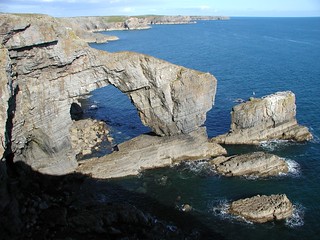
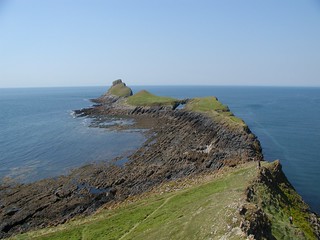
Coastal Landform - Stacks. Pembroke, South Wales, UK





Geological Foundations and Landscape Diversity
Wales's physical geography is a direct consequence of its intricate geological history, characterized by a predominantly upland interior. The country is largely mountainous, with the Cambrian Mountains forming a significant backbone. These uplands, shaped by millennia of erosion and tectonic activity, are interspersed with valleys and plateaus.
The northern and western coastal plains are relatively narrow, often giving way abruptly to steep slopes. In contrast, the southern coastal plain is more extensive, particularly in the Vale of Glamorgan, which benefits from more fertile soils derived from limestone and sandstone. This fertile land has historically supported agriculture, a stark contrast to the more rugged, sheep-grazing lands of the interior.
The presence of offshore islands, most notably Anglesey, further diversifies the coastal geography, creating unique ecological niches and historical settlement patterns. The total land area of Wales is substantial, covering over 5 million acres, and its north-south extent of approximately 170 miles allows for significant climatic and ecological variation.
The Imprint of Industry and Economic Geography
The economic geography of Wales is indelibly marked by its industrial past, particularly the exploitation of its rich coalfields during the Industrial Revolution. The South Wales Coalfield, one of the largest in the world, fueled the development of a dense network of industrial towns and valleys. This period saw the rapid expansion of port cities like Cardiff, Newport, and Swansea, which became crucial for exporting coal and manufactured goods.
The smaller North Wales Coalfield also contributed to industrial development in that region. This intense industrialization created a distinct urban economic geography in South Wales. However, beyond these coalfield areas, much of Wales retained a rural character, with economies historically dependent on agriculture and, increasingly, tourism.
The legacy of coal mining continues to influence land use, environmental challenges, and the ongoing process of economic diversification and regeneration in former industrial heartlands.
Maritime Influence and Climatic Patterns
Wales's climate is profoundly shaped by its position adjacent to the Atlantic Ocean and the prevailing westerly winds. This maritime influence results in a generally mild, cloudy, and wet climate, with relatively small temperature variations between seasons. Extremes of heat and cold are rare.
The westerly winds bring significant moisture, contributing to the lush green landscapes that are characteristic of Wales. However, the mountainous terrain also creates microclimates, with higher rainfall and lower temperatures at higher elevations. The mountains can also create rain shadow effects, leading to drier conditions in their lee.
This consistent moisture and mildness are ideal for pastoral farming, particularly sheep and cattle. The coastal areas, while moderated by the sea, can be exposed to strong winds, influencing vegetation and coastal erosion patterns. The overall climate supports a rich biodiversity and a landscape that is constantly being shaped by the elements.
Coastal Dynamics and Human Interaction
The coastline of Wales is a dynamic and significant geographical feature, extending for approximately 1,680 miles, a length comparable to the distance across the continental United States. This extensive shoreline, including the substantial island of Anglesey, has profoundly influenced human settlement, trade, and culture throughout history. The varied nature of the coast, from sandy beaches and estuaries to dramatic cliffs and rocky headlands, offers diverse habitats and resources.
Historically, ports were vital for the export of Welsh coal and other goods, and fishing communities dotted the coastline. Today, the coast is a major asset for tourism and recreation, attracting visitors to its scenic beauty and opportunities for activities like sailing, surfing, and hiking. The ongoing processes of coastal erosion and sea-level rise also present contemporary challenges, requiring careful management and adaptation strategies for coastal communities and ecosystems.
Demographic Distribution and Urban Centers
The population of Wales, numbering around 3.1 million people, is not evenly distributed across its varied landscape. The most densely populated areas are concentrated in the southern coastal plain and the valleys, a direct legacy of the industrial era. Cardiff, the capital and largest city, is situated in the urbanized South East Wales region and serves as the primary economic, cultural, and administrative hub.
Other significant urban centers, such as Swansea and Newport, are also located in the south, historically linked to their roles as industrial and port cities. In contrast, the mountainous interior and the more remote northern and western regions tend to have lower population densities, with smaller, often dispersed rural communities. This demographic pattern reflects the historical pull of industrial employment and the ongoing challenges of maintaining populations in more isolated rural areas, often relying on agriculture, tourism, and public services.
See also
Based on content from Wikipedia · Licensed under CC BY-SA 4.0