

Gaius Caesar
Images

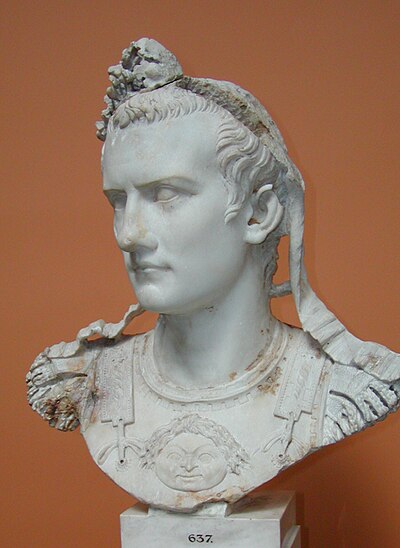
Roman portrait head of Gaius Caesar, British Museum




The Julio-Claudian Dynasty and the Burden of Expectation
Gaius Caesar was born into the heart of Roman power, a scion of the Julio-Claudian dynasty. As the grandson of Emperor Augustus and the son of his daughter Julia the Elder and the esteemed general Marcus Vipsanius Agrippa, Gaius was marked for greatness from birth. Augustus, eager to secure a stable succession for the newly established Roman Empire, adopted Gaius and his younger brother Lucius, designating them as his joint heirs.
This adoption was not merely a familial gesture but a crucial political maneuver to legitimize their future rule and consolidate power. The brothers were raised under Augustus's direct tutelage, their lives meticulously shaped to prepare them for the immense responsibilities of imperial leadership. This intense preparation, while intended to ensure competence, also placed an extraordinary burden on their young shoulders, a stark contrast to the lives of ordinary Roman youths.
Navigating the Cursus Honorum
The Roman Republic had established a structured career path for aspiring politicians known as the cursus honorum, a sequence of magistracies that individuals typically held in ascending order. This system was designed to ensure experience and competence. However, for Gaius and Lucius, this established order was significantly altered.
The Roman Senate, under Augustus's influence, granted them dispensations, allowing them to advance their careers without first holding the traditional offices of quaestor and praetor. Gaius, for instance, was granted the tribunician power and the proconsular imperium, enabling him to exercise authority equivalent to that of senior magistrates. This accelerated trajectory was a testament to their privileged status but also a departure from republican ideals, setting a precedent for future imperial heirs and highlighting the evolving nature of Roman governance under autocratic rule.
Eastern Command and Diplomatic Acumen
In 1 BC, Gaius Caesar was entrusted with a pivotal command of the eastern provinces. This region was strategically vital, bordering the powerful Parthian Empire, Rome's perennial rival. His appointment signified Augustus's confidence in Gaius's ability to manage complex foreign relations and maintain Roman dominance.
During his eastern tenure, Gaius achieved a significant diplomatic success by concluding a peace treaty with King Phraates V of Parthia. This negotiation, conducted on an island in the Euphrates River, was a testament to his diplomatic skills and likely bolstered his reputation as a capable future leader. Following this triumph, he was appointed consul for 1 AD, one of the highest and most prestigious offices in the Roman state, underscoring his rapid ascent and the high hopes placed upon him.
The Shadow of Mortality
The promising trajectory of Gaius Caesar's life was tragically interrupted by illness and death. In 2 AD, his younger brother Lucius died while en route to Massilia (modern Marseille). This loss was a profound shock to the imperial family and a significant blow to Augustus's succession plans.
Less than two years later, in February 4 AD, Gaius himself succumbed to an illness contracted while on campaign in Lycia. His death, following so closely on the heels of his brother's, created a severe succession crisis for Augustus. With both of his adopted heirs gone, the emperor was forced to reconsider his options.
This led to the adoption of his stepson Tiberius and his surviving grandson, Agrippa Postumus, fundamentally altering the future leadership of the Roman Empire and ultimately paving the way for Tiberius's reign.
Historical Significance and Counterfactuals
The life and death of Gaius Caesar represent a critical juncture in Roman imperial history. His premature demise prevented the implementation of Augustus's carefully crafted succession plan, forcing a last-minute revision that had far-reaching consequences. Had Gaius lived, the Roman Empire might have experienced a different trajectory under his leadership.
His early exposure to command and diplomacy suggests a potential for effective rule, though the pressures of imperial power and the inherent instability of Roman politics make any definitive counterfactual analysis speculative. His story serves as a poignant reminder of the fragility of power, the unpredictable nature of life, and the profound impact that the survival or demise of key individuals can have on the grand narrative of history.
See also
Based on content from Wikipedia · Licensed under CC BY-SA 4.0