

Gadolinium
Images
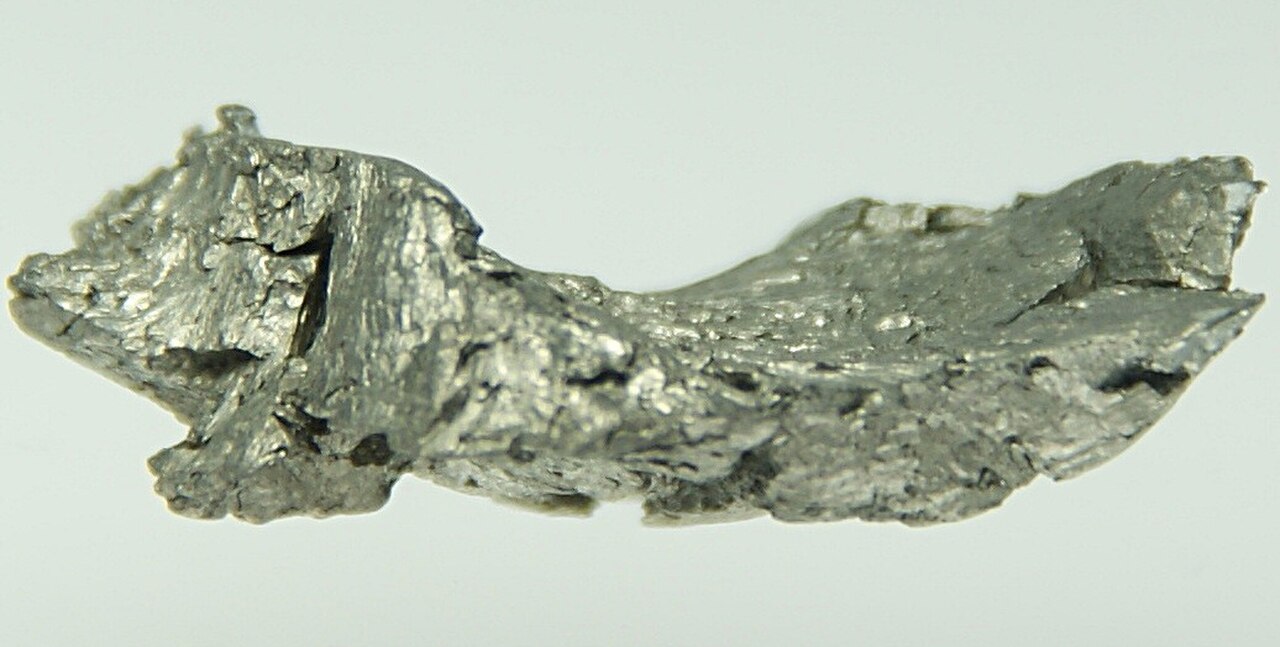
Gadolinium
The Intrinsic Nature of Gadolinium
Gadolinium (Gd), atomic number 64, is a lustrous, silvery-white member of the lanthanide series, commonly classified as a rare-earth element. In its pure, unoxidized form, it exhibits metallic properties, being both malleable and ductile. Its reactivity with atmospheric oxygen and moisture leads to the formation of a dark, adherent oxide coating, which paradoxically offers some protection against further corrosion.
A defining characteristic of Gadolinium is its magnetic behavior. Below its Curie temperature of 20°C (68°F), it transitions into a ferromagnetic state, displaying a strong attraction to magnetic fields, surpassing that of nickel. Above this critical temperature, it exhibits exceptionally high paramagnetism, making it one of the most paramagnetic elements known.
This strong magnetic response is intrinsically linked to the unpaired electrons in its 4f electron shell. Gadolinium is never found in its elemental form in nature; it exists exclusively in oxidized compounds, often mixed with other lanthanides due to their similar chemical properties, necessitating complex separation processes.
Historical Context
The journey to understanding Gadolinium began in 1880 when Jean Charles de Marignac, using the powerful analytical tool of spectroscopy, identified its oxide within mineral samples. This marked the initial discovery of the element. The metal owes its name to the mineral gadolinite, a primary source from which its oxide was detected, which in turn was named in honor of the Finnish chemist Johan Gadolin, who conducted early research on rare-earth minerals.
Despite its discovery in the late 19th century, the isolation of pure Gadolinium metal remained an elusive goal for decades. The challenge lay in separating it from other chemically similar rare-earth elements. It was Félix Trombe who finally achieved the isolation of pure Gadolinium in 1935, a significant milestone that enabled comprehensive study of its unique physical and chemical attributes and opened doors for technological applications.
Material Science and Nuclear Applications
Gadolinium's unique metallurgical properties have made it indispensable in various industrial applications. Even in small concentrations, as little as 1% by weight, it can significantly enhance the workability, oxidation resistance, and high-temperature performance of alloys based on iron, chromium, and other metals. This makes Gadolinium a valuable additive in specialized alloys requiring superior durability and resilience.
Beyond material enhancement, Gadolinium plays a critical role in nuclear technology. Its remarkable ability to absorb neutrons makes it an effective material for neutron shielding in nuclear reactors and in neutron radiography, a non-destructive testing method. This neutron-absorbing capacity is crucial for controlling nuclear chain reactions and ensuring the safe operation of nuclear facilities.
Furthermore, Gadolinium(III) ions possess fluorescent characteristics, leading to their use as phosphors in various lighting and display technologies.
Enhancing MRI Contrast
Perhaps Gadolinium's most impactful application lies in the field of medical diagnostics, specifically as a key component in Magnetic Resonance Imaging (MRI) contrast agents. While Gadolinium(III) ions in simple soluble salts exhibit significant toxicity to mammals, their use is made safe through chelation. In this process, Gadolinium(III) ions are bound to organic molecules, forming stable complexes that prevent the free ions from interacting harmfully with biological tissues.
These chelated Gadolinium complexes are administered intravenously. Their intense paramagnetic properties dramatically shorten the relaxation times of nearby water protons, thereby enhancing the signal intensity in MRI scans. This results in highly detailed images of soft tissues, blood vessels, and pathologies, allowing for more accurate and earlier diagnosis of a wide range of medical conditions, from tumors to vascular abnormalities.
The majority of these agents are efficiently excreted by healthy kidneys, minimizing systemic exposure.
Go deeper
Frequently Asked Questions
What is gadolinium and why does it have magnetic powers?+
How is gadolinium used in MRI scans?+
Why do scientists add gadolinium to metal alloys?+
How does gadolinium help in nuclear reactors?+
Where was gadolinium first discovered?+
Based on content from Wikipedia · Licensed under CC BY-SA 4.0