

Frisian Language
Images

Anglo-Frisian distribution map




The Frisian Language
Frisian represents a crucial, yet often overlooked, branch of the West Germanic language family. Its linguistic position is particularly significant due to its close relationship with English. While both languages evolved from a common ancestor, Frisian has retained a greater number of archaic features, offering scholars a unique window into the proto-West Germanic language and the early stages of English development.
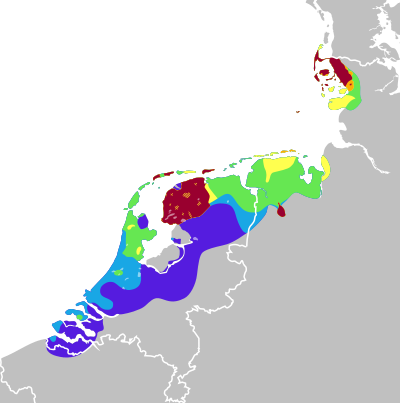
The language is not monolithic; it comprises three distinct branches: West Frisian, spoken by the majority in the Netherlands; North Frisian, spoken in parts of Schleswig-Holstein, Germany; and Saterland Frisian, spoken in a small region of Lower Saxony, Germany. Each branch exhibits unique phonological, morphological, and lexical characteristics, reflecting centuries of independent development and regional influences. The total number of speakers, estimated at around 500,000, makes it an endangered language in some of its forms, underscoring the importance of its documentation and revitalization efforts.
Its survival is a testament to the enduring cultural identity of the Frisian people.
Historical Trajectory
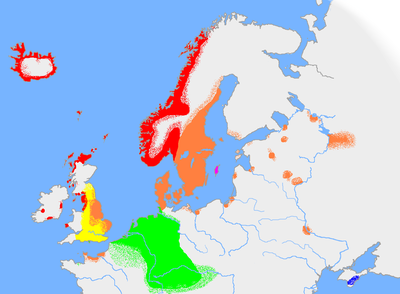
The genesis of Frisian can be traced back to the early medieval period, specifically to the dialects spoken by the Frisians, a Germanic people inhabiting the coastal regions of the North Sea. During the Anglo-Saxon migrations to Britain (c. 5th-7th centuries CE), the dialects spoken by those who migrated and those who remained in their homeland were closely related, forming what is known as the Anglo-Frisian group. Over time, as the Angles and Saxons established themselves in Britain, their language evolved into Old English, while the Frisian dialects on the continent continued their own developmental path.
This shared ancestry explains the remarkable similarities between modern Frisian and English. The subsequent history of Frisian has been marked by periods of suppression by more dominant languages like Dutch and German, as well as periods of revival and standardization. The development of a standardized West Frisian in the 19th century was a pivotal moment, providing a unified literary and official form of the language that has been crucial for its continued use and recognition.
The Enduring Significance of Frisian
The importance of the Frisian language is multifaceted, extending into historical linguistics, cultural studies, and sociolinguistics. For historical linguists, Frisian serves as a living laboratory for studying language change. Its conservative nature allows for direct comparisons with Old English and other ancient Germanic texts, helping to reconstruct linguistic history and understand the mechanisms of language evolution.
For example, certain vowel shifts or consonant developments in Frisian mirror stages that are only inferred in English. Culturally, Frisian is a cornerstone of Frisian identity, representing a unique heritage distinct from Dutch or German culture. Its use in literature, media, and education reinforces this identity and promotes cultural diversity.
In sociolinguistics, the study of Frisian provides insights into language maintenance and shift in minority language communities, offering valuable lessons for language preservation efforts worldwide. The ongoing efforts to promote Frisian in education and public life are vital for its survival and for the preservation of linguistic diversity.
Lexical and Grammatical Parallels
The linguistic kinship between Frisian and English is most evident in their shared vocabulary and grammatical structures. Many basic words in Frisian bear a striking resemblance to their English counterparts, often more so than to Dutch or German. For instance, Frisian 'fisk' (fish), 'hân' (hand), 'mûs' (mouse), 'swart' (black), and 'wetter' (water) are all highly cognate with their English equivalents.
Grammatically, both languages share features such as a relatively flexible word order and similar verb conjugations, though English has undergone more simplification over time. Frisian often retains older grammatical distinctions that have been lost in English. This shared linguistic DNA makes Frisian an exceptionally interesting subject for English speakers seeking to understand the roots of their own language.
It highlights how languages, though diverging, can retain profound echoes of their common origins, offering tangible connections to a shared past.
See also
Based on content from Wikipedia · Licensed under CC BY-SA 4.0