

Frigatebirds: The Pirates of the Sky!
Images
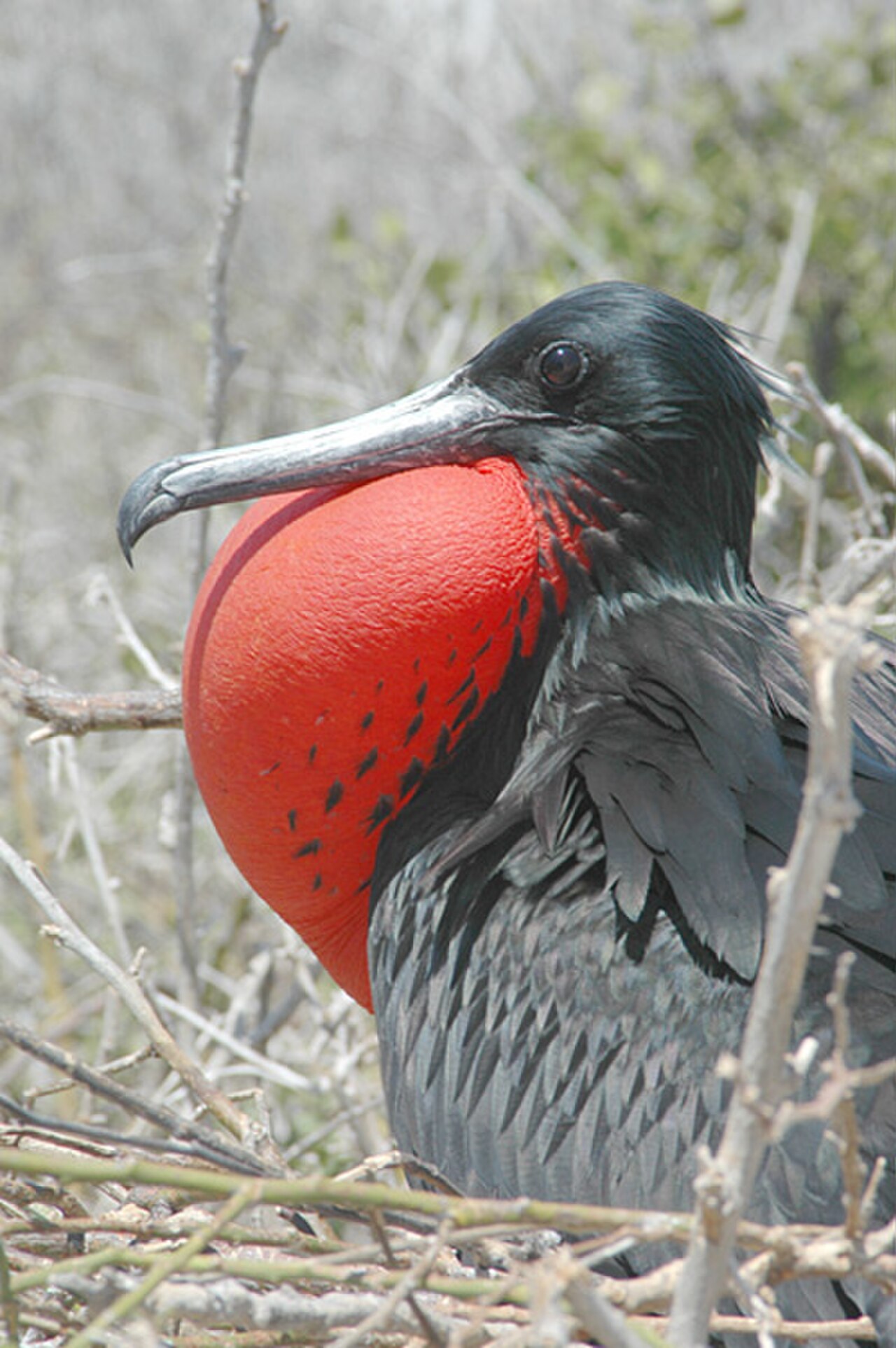
Frigatebird


![Magnificent Frigatebird [12/100]](https://live.staticflickr.com/3862/32668075583_c5bb4f0213_n.jpg)
Anatomy of an Aerial Specialist
Frigatebirds, genus Fregata, represent a pinnacle of avian adaptation for a pelagic lifestyle. Their morphology is finely tuned for sustained aerial activity. Possessing an exceptionally large wingspan relative to their body mass, often exceeding 7 feet (2.1 meters), they achieve a very low wing loading.
This allows for remarkable soaring capabilities, enabling them to remain airborne for extended periods, sometimes for weeks on end, without needing to land. Their flight is characterized by agile maneuvering, facilitated by a deeply forked tail and long, pointed wings. A critical adaptation is their lightweight, hollow bone structure and a plumage that, while not waterproof, is highly efficient for gliding.
This lack of waterproofing, however, necessitates a unique feeding strategy, as they avoid prolonged immersion in water, which could compromise insulation and buoyancy.
Habitat, Distribution, and Ecological Niche
The five species of frigatebirds are distributed across tropical and subtropical oceanic regions worldwide, including the Atlantic, Pacific, and Indian Oceans. They are pelagic birds, spending the majority of their lives at sea, but they rely on islands and coastal areas for nesting. These nesting sites are typically on trees, shrubs, or even cliffs, and are often utilized in large, mixed-species colonies.
Frigatebirds occupy a distinct ecological niche as highly efficient aerial predators and opportunistic kleptoparasites. Their ability to exploit updrafts and thermals allows them to cover vast distances in search of food, making them highly mobile and adaptable to oceanic conditions. Their presence is often an indicator of productive marine ecosystems.
Feeding Strategies
Frigatebirds exhibit a diverse and opportunistic feeding strategy. Their primary diet consists of small fish, squid, and jellyfish that are accessible at the ocean's surface. They employ a distinctive hunting technique, swooping down from considerable heights to snatch prey with their elongated, hooked beaks without fully alighting on the water.
However, their most notable feeding behavior is kleptoparasitism. They actively harass other seabirds, such as boobies, gannets, and shearwaters, forcing them to regurgitate their recent meals, which the frigatebird then intercepts in mid-air. This behavior is not merely opportunistic but a crucial component of their diet, particularly when natural prey is scarce.
They also supplement their diet by scavenging and occasionally preying on nestlings of other birds.
Reproductive Biology and the Iconic Gular Pouch
The reproductive cycle of frigatebirds is characterized by elaborate courtship displays and significant parental investment. Males possess a striking gular pouch, a sac of skin on the throat that can be inflated to a vibrant red or orange color. During the breeding season, males gather in leks, inflating these pouches and vibrating their wings while emitting guttural calls to attract females.
The size, color intensity, and display vigor are indicators of male quality. Females, typically monogamous for a breeding season, select mates based on these displays. They lay a single egg, and incubation and chick-rearing are shared responsibilities, often lasting for an extended period, sometimes exceeding 14 months.
This prolonged parental care reflects the challenges of provisioning young in a pelagic environment and ensures high survival rates for the offspring.
Conservation Challenges and Future Outlook
While most frigatebird species are currently listed as 'Least Concern' by the IUCN, they face various threats that could impact their populations. Habitat degradation of nesting islands due to human activities, pollution, and climate change affecting prey availability are significant concerns. Overfishing can reduce the abundance of their primary food sources, and entanglement in fishing gear poses a risk. Understanding their migratory patterns and reliance on specific island habitats is crucial for effective conservation strategies.
Continued monitoring of population trends and research into their ecological requirements are essential to ensure the long-term survival of these magnificent aerial predators.
See also
Frequently Asked Questions
What makes frigatebirds so fast in the sky?+
Why do frigatebirds have a big red throat pouch?+
How do frigatebirds catch food without landing on the water?+
Where do frigatebirds nest and why?+
How long can frigatebirds stay airborne?+
Based on content from Wikipedia · Licensed under CC BY-SA 4.0