

François Mitterrand
Images

Esplanade François Mitterrand et hôtel de ville de Bellerive-sur-Allier 2023-10-08
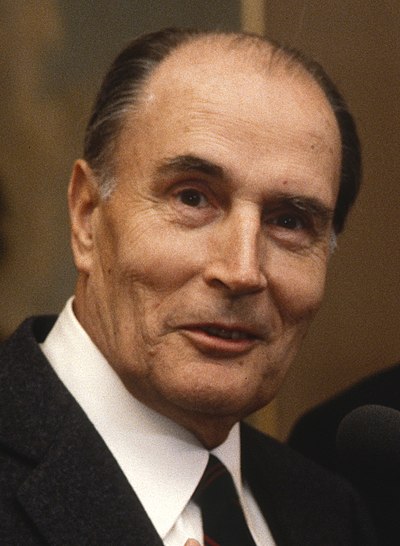


The Long Road to the Élysée
François Mitterrand's political trajectory was marked by a profound ideological evolution and remarkable political resilience. Initially influenced by Catholic nationalism, his early career included service under the Vichy regime, a period that would later cast a shadow and necessitate careful historical examination. However, his wartime experience in the Resistance fundamentally reshaped his worldview, propelling him towards the left.
He became a central figure in the post-war Socialist Party, tirelessly working to make it a credible force capable of governing France. Mitterrand's path to the presidency was a testament to his strategic patience and political maneuvering. He endured defeats in the 1965 and 1974 presidential elections, learning from each campaign and outmaneuvering rivals within his own party and the broader left-wing coalition.
His eventual victory in 1981, becoming the first left-wing president of the Fifth Republic, was not merely a personal triumph but a significant historical turning point, signaling a potential shift in France's political landscape after decades of conservative dominance. His ability to adapt and persist, while maintaining a core vision, defined his long political career.
Radical Ambitions, Pragmatic Adjustments
Mitterrand's first term was characterized by an ambitious agenda aimed at fundamentally restructuring French society and economy. He initiated a wave of nationalizations, bringing key sectors like banking, industry, and media under state control, reflecting a deep-seated belief in state intervention to promote economic equality and national sovereignty. The introduction of the 39-hour work week was a significant victory for labor unions and aimed to redistribute leisure time.
Socially, his presidency championed progressive causes, most notably the abolition of the death penalty in 1981, a landmark decision that aligned France with a growing international trend towards human rights. He also dismantled the state's monopoly on broadcasting, fostering a more diverse media environment. However, the economic realities of the mid-1980s, including high inflation and unemployment, forced a strategic pivot.
Mitterrand famously abandoned parts of his radical economic program in favor of austerity measures and market liberalization, a policy shift known as 'rigueur' (rigor). This pragmatic adjustment, while necessary for economic stability and to appease international financial markets, marked a departure from his initial socialist fervor and demonstrated the complex interplay between ideology and governance in a globalized economy.
Cultural Grandeur, International Diplomacy, and Lingering Controversies
Beyond politics and economics, Mitterrand was a fervent patron of the arts and culture, initiating the 'Grands Projets' – monumental architectural undertakings that reshaped Paris. Projects like the glass pyramid at the Louvre, the Musée d'Orsay housed in a former railway station, and the Grande Arche de la Défense were designed to blend historical grandeur with modern vision, solidifying Paris's status as a global cultural capital. On the international stage, Mitterrand pursued a foreign policy that built upon, yet diverged from, his Gaullist predecessors.
While maintaining France's independent stance, he reversed the skepticism towards European integration, becoming a crucial architect of the modern European Union. His close partnership with German Chancellor Helmut Kohl was instrumental in pushing forward the Maastricht Treaty, which established the EU and the euro. He also accepted German reunification, a momentous decision that reshaped the European map.
Yet, his presidency was also marred by controversy, most notably the 1985 bombing of the Rainbow Warrior, a Greenpeace vessel, ordered by his government. This act, intended to disrupt anti-nuclear protests, drew widespread international condemnation and raised ethical questions about state actions.
Navigating Power Dynamics and a Complex Legacy
Mitterrand's 14-year tenure was marked by significant political adaptability, particularly his experience with 'cohabitation.' Twice, he was forced to govern with conservative prime ministers – Jacques Chirac (1986-1988) and Édouard Balladur (1993-1995) – after his Socialist Party lost its parliamentary majority. These periods required delicate power-sharing and demonstrated his capacity to function within a divided government. He also made history by appointing Édith Cresson as France's first female prime minister in 1991, a symbolic step towards gender equality in leadership.
Mitterrand's presidency witnessed the rise of the Socialist Party as the dominant force on the French left, while the influence of the Communist Party, once a significant player, steadily declined. He managed to conceal his battle with prostate cancer for much of his presidency, a personal struggle that underscored his dedication to his office. His legacy is multifaceted: a modernizer of France, a key figure in European integration, a champion of culture, but also a leader who navigated complex ethical and political challenges.
See also
Based on content from Wikipedia · Licensed under CC BY-SA 4.0