

Foot
Images
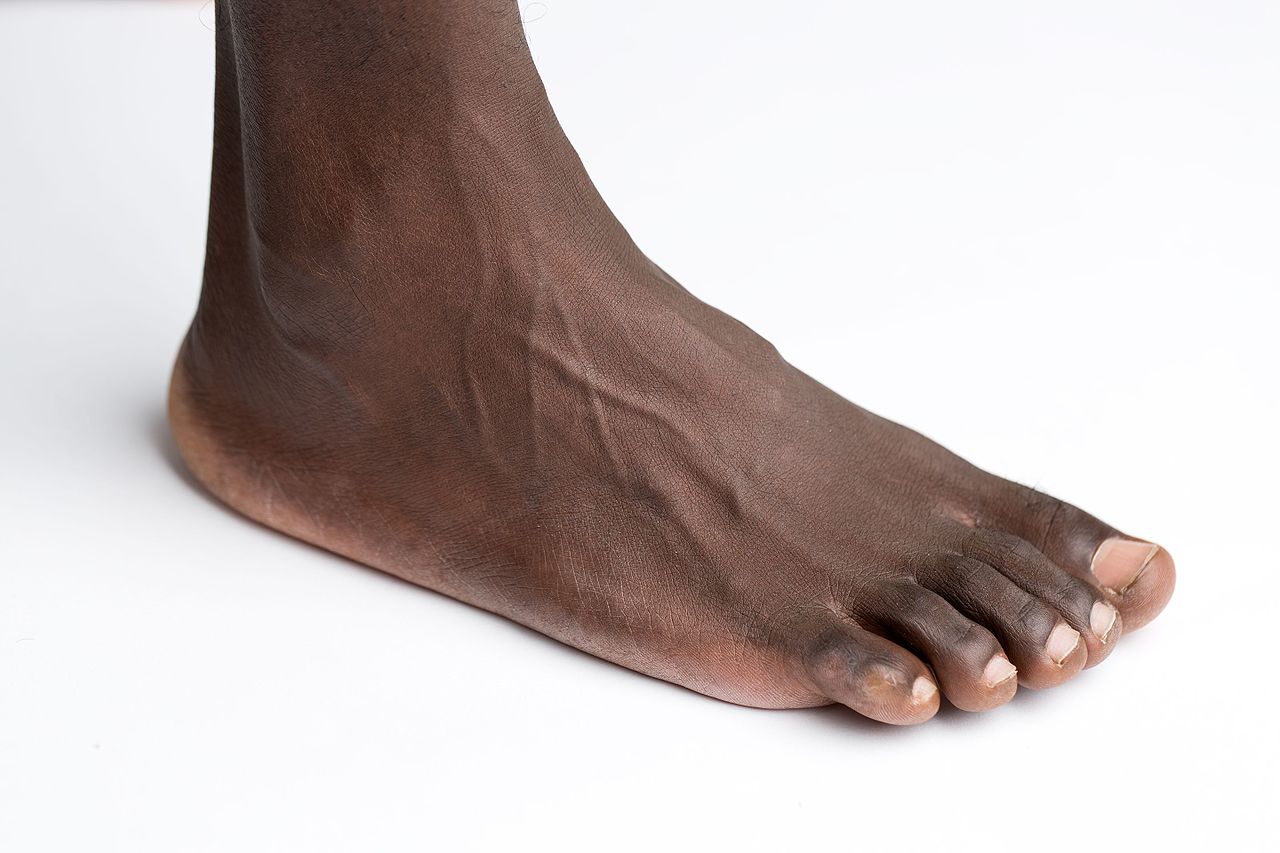
Foot
The Foot's Complex Anatomy and Biomechanical Role
The human foot is a masterpiece of anatomical design, comprising 26 bones, 33 articulations, and a complex network of over 100 muscles, tendons, and ligaments. This intricate system facilitates an extraordinary range of motion, enabling functions from fine motor control for balance to the powerful propulsive forces required for locomotion. The foot's unique arched structure, comprising the medial longitudinal arch, lateral longitudinal arch, and transverse arch, is crucial for its role as a dynamic shock absorber and weight distributor.
During the gait cycle, these arches flatten to absorb impact forces, then recoil to provide a rigid lever for push-off, efficiently transferring energy from the ground to the body. This sophisticated biomechanical interplay is essential for efficient ambulation and preventing injury to the lower extremities and spine.
Evolutionary Transition
The evolution of the human foot represents a pivotal adaptation in our lineage, transitioning from the arboreal lifestyle of our primate ancestors to obligate terrestrial bipedalism. Early hominin feet retained some grasping capabilities, evidenced by a more divergent hallux (big toe), suitable for climbing. However, as hominins increasingly adopted upright walking, selective pressures favored feet that provided stability and propulsion on the ground.
This led to the development of a non-opposable, adducted hallux aligned with the other digits, forming a strong terminal lever. The lengthening of the foot and the development of robust arches were critical for supporting body weight and enabling efficient, energy-conserving bipedal gait, a defining characteristic of the human species that profoundly influenced our evolutionary trajectory.
The Foot's Integral Role in Human Health and Function
The significance of the foot extends far beyond mere locomotion; it is a cornerstone of overall musculoskeletal health and functional mobility. As the body's primary interface with the environment, the feet are densely populated with mechanoreceptors and proprioceptors, providing constant sensory feedback essential for maintaining balance, coordination, and spatial awareness. Malalignments or dysfunctions in the foot can create kinetic chain disruptions, leading to compensatory changes and potential pathologies in the ankles, knees, hips, and lumbar spine.
Therefore, maintaining foot health is paramount for preventing chronic pain, improving athletic performance, and ensuring independent mobility throughout the lifespan, underscoring its critical importance in human physiology and quality of life.
The Gait Cycle
The process of walking, known as the gait cycle, involves a complex, coordinated sequence of movements within the foot. The cycle begins with heel strike, where the calcaneus impacts the ground, followed by foot flat, during which the entire plantar surface makes contact. As the body moves forward, the stance phase progresses through midstance, where the foot supports the body's weight, and then into terminal stance and pre-swing, characterized by heel rise and toe-off.
During these phases, the foot's arches dynamically adapt, absorbing shock and then stiffening to act as a rigid lever for propulsion. This intricate interplay of flexion, extension, pronation, and supination, controlled by neural pathways and muscular action, allows for efficient and stable ambulation, showcasing the foot's remarkable adaptability.
Modern Relevance and Future Perspectives
In contemporary society, the foot remains a subject of intense study across various fields, from biomechanics and sports science to orthopedics and podiatry. Advances in footwear technology, orthotic design, and surgical techniques continue to improve foot function and address a wide range of conditions, from common ailments like plantar fasciitis to complex congenital deformities. Understanding the foot's intricate biomechanics is also crucial for developing effective rehabilitation strategies for injuries and optimizing athletic performance.
Furthermore, research into the foot's sensory feedback mechanisms may offer insights into novel approaches for balance training and fall prevention, particularly in aging populations, highlighting the enduring importance of this fundamental human structure.
Go deeper
Frequently Asked Questions
What does the human foot do?+
How many bones are in a human foot?+
Why do our feet have arches?+
How do our feet help us walk?+
What happens if our feet are not healthy?+
Based on content from Wikipedia · Licensed under CC BY-SA 4.0