

Follicle (fruit): Nature's Tiny Seed Pods!
Images

Pergularia daemia(Forsk.)Chiov.


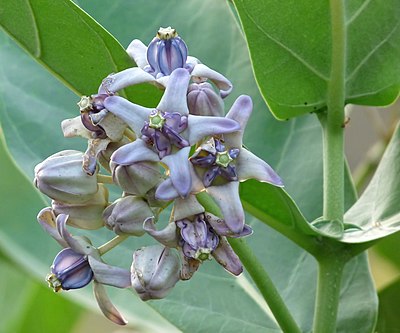


The Follicle
The follicle represents a fundamental dry fruit type within angiosperm morphology, distinguished by its derivation from a single carpel and its characteristic dehiscence. Typically unilocular, it encloses two or more seeds, which are released upon maturation. This dehiscence usually occurs along a single suture, either ventral or dorsal, facilitating seed dispersal.
The evolutionary advantage of this mechanism lies in its ability to promote gene flow and colonization of new habitats, thereby reducing intraspecific competition and increasing survival rates. Understanding the follicle is crucial for plant systematics and evolutionary biology, as its presence and variations offer insights into the relationships between plant families. Its simple yet effective design has been a successful strategy for numerous plant lineages, contributing to their widespread distribution across diverse ecosystems.
Mechanisms of Dehiscence and Seed Dispersal Strategies
The process of dehiscence in follicles is a finely tuned biological event, often triggered by environmental cues such as changes in humidity or temperature. The split typically occurs along the pre-formed line of weakness, the suture, allowing the carpel walls to separate. This separation can be passive, with gravity or wind aiding seed release, or active, involving turgor pressure changes that can forcibly eject seeds.
Examples like the milkweed (Asclepias) showcase sophisticated adaptations, where seeds are equipped with pappi (silky hairs) that act as parachutes, enabling long-distance anemochory (wind dispersal). Conversely, some follicles, like those found in certain species of Banksia, dehisce along the ventral suture, potentially exposing seeds to specific environmental conditions or facilitating dispersal by other agents. The diversity in dehiscence patterns reflects varied selective pressures and ecological niches occupied by follicle-bearing plants.
The Follicetum
The aggregation of multiple follicles on a single plant, forming a structure known as a 'follicetum,' presents a fascinating variation on the basic follicle theme. These aggregates can exhibit distinct organizational patterns, reflecting the underlying floral structure. In genera such as Aquilegia and Delphinium, follicles are often arranged in a whorl around a shortened receptacle, a characteristic arrangement within the Ranunculales order.
In contrast, the iconic Magnolia species display follicles arranged spirally along an elongated receptacle. This aggregation can influence seed protection, dispersal efficiency, and even pollination dynamics. The study of folliceta provides valuable data for phylogenetic analyses, helping to clarify evolutionary pathways and relationships within families like the Magnoliaceae and Ranunculaceae, highlighting how a fundamental fruit type can be elaborated upon in complex ways.
Challenges in Classification
The botanical classification of fruits is not always straightforward, and the follicle presents its own set of challenges, particularly in the case of indehiscent forms. The genus Filipendula, for example, features fruits that are structurally derived from a single carpel but lack the characteristic dehiscence of a typical follicle. These indehiscent fruits blur the lines between follicles and achenes, which are also dry, single-seeded fruits that do not dehisce.
Such 'difficult cases' necessitate careful examination of developmental morphology and comparative anatomy to accurately assign taxonomic positions. The existence of these intermediate forms underscores the fluid nature of evolutionary processes and the potential for convergence or divergence in fruit development strategies. Understanding these nuances is vital for accurate botanical identification and for tracing the evolutionary history of fruit types.
Ecological Roles and Broader Implications
Beyond their reproductive function, follicles and the plants that bear them play significant roles in their respective ecosystems. For instance, milkweed follicles are not only crucial for seed dispersal but also serve as a food source for certain insects, and the plant itself is vital for the monarch butterfly life cycle. The diversity of follicle structures and dispersal mechanisms contributes to the overall biodiversity of plant communities.
Furthermore, the study of fruit development, including follicles, has implications for agriculture and horticulture, informing breeding programs and cultivation techniques. As climate change impacts ecosystems, understanding the resilience and adaptability of plants, often reflected in their reproductive strategies like follicle development, becomes increasingly important for conservation efforts and ecological management. The follicle, therefore, is more than just a botanical term; it is a window into plant adaptation, ecological interaction, and evolutionary success.
See also
Frequently Asked Questions
What is a follicle in plants?+
How do follicles release their seeds?+
Why do some follicles have silky hairs on their seeds?+
What is a follicetum?+
Are all follicles the same?+
Based on content from Wikipedia · Licensed under CC BY-SA 4.0