

Fluorescence: The Glow-in-the-Dark Magic!
Images
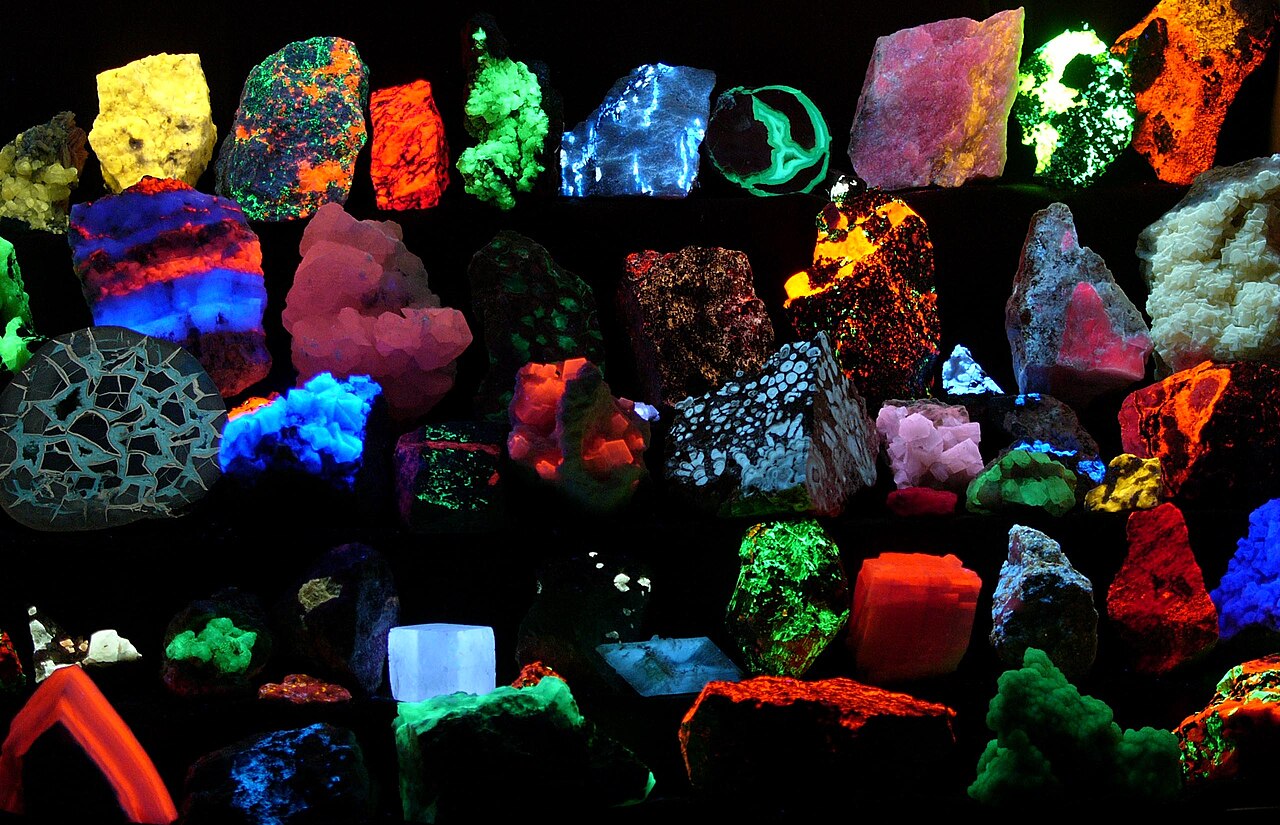
Fluorescence


The Quantum Mechanics of Fluorescence
Fluorescence is a fundamental photophysical process rooted in quantum mechanics. When a molecule or atom absorbs a photon of light, its electrons are promoted from the ground electronic state to a higher, excited electronic state. This absorption is governed by selection rules, meaning only certain transitions are probable.
For fluorescence to occur, the excited state must be relatively short-lived, typically on the order of nanoseconds. During this brief period, the molecule can undergo vibrational relaxation within the excited state, losing some energy as heat. The molecule then returns to its ground electronic state by emitting a photon.
This emitted photon has lower energy (longer wavelength) than the absorbed photon because of the energy lost during vibrational relaxation. This energy difference, known as the Stokes shift, is a hallmark of fluorescence. The efficiency of fluorescence, quantified by the quantum yield, depends on the probability of radiative decay (emission of light) versus non-radiative decay pathways (e.g., heat dissipation, intersystem crossing).
Historical Development and Key Discoveries
The phenomenon of fluorescence has been observed for centuries, but its scientific investigation began in earnest in the 19th century. Sir George Stokes's 1852 paper, 'On the Change of Colour of the More Refrangible Visible Rays,' is pivotal, as he coined the term 'fluorescence' after studying the mineral fluorite (fluorspar). He systematically demonstrated that certain substances could absorb invisible ultraviolet light and re-emit it as visible light.
This discovery spurred further research into the nature of light and matter. In the early 20th century, physicists like Henri Becquerel and later researchers explored the relationship between fluorescence and radioactivity. The development of quantum theory provided the theoretical framework to explain the electronic transitions responsible for fluorescence.
Advances in spectroscopy and the synthesis of new fluorescent compounds in the mid-20th century led to a surge in practical applications, transforming fields from analytical chemistry to materials science.
The Multifaceted Importance of Fluorescence
Fluorescence is indispensable across numerous scientific and technological domains. In analytical chemistry, fluorescent probes are used for highly sensitive detection and quantification of analytes, enabling trace analysis in environmental monitoring, food safety, and pharmaceutical research. In biology and medicine, fluorescent labeling techniques, such as immunofluorescence and green fluorescent protein (GFP) tagging, are revolutionary tools for visualizing cellular structures, tracking molecular processes in real-time, and diagnosing diseases.
Fluorescent materials are critical components in lighting technologies, with fluorescent lamps offering energy efficiency over incandescent bulbs. They are also vital in display technologies (e.g., LCD backlights), security features (e.g., anti-counterfeiting inks), and materials science for developing novel sensors and optical devices. The ability to selectively emit light upon excitation makes fluorescence a powerful diagnostic and imaging modality.
Mechanisms and Factors Influencing Fluorescence
The process of fluorescence involves the interaction of photons with electrons in a molecule. Upon absorbing a photon with sufficient energy, an electron is excited to a higher energy level. The rate of absorption and emission is governed by the molecule's electronic structure and the properties of the incident light (intensity, wavelength).
Factors influencing fluorescence include the chemical structure of the fluorophore, its environment (solvent polarity, pH), and the presence of quenchers. Quenching refers to processes that reduce fluorescence intensity, such as collisional quenching by other molecules or energy transfer. The spectral characteristics of a fluorophore, including its excitation and emission maxima, quantum yield, and fluorescence lifetime, are crucial for its application.
Spectroscopic techniques like fluorimetry allow for detailed analysis of these properties, providing insights into molecular interactions and environmental conditions.
Fluorescence in the Natural World and Beyond
Beyond human technology, fluorescence is a widespread phenomenon in nature. Many marine organisms, including corals, anemones, and fish, exhibit intrinsic fluorescence, potentially serving roles in communication, camouflage, or photoprotection in deep-sea environments. The discovery of Green Fluorescent Protein (GFP) in the jellyfish Aequorea victoria revolutionized biological research, providing a non-invasive way to tag and track proteins and cellular processes.
On land, scorpions are famously fluorescent, emitting a bright blue-green glow under UV light, though the evolutionary purpose remains debated. Some fungi and plant structures also display fluorescence. Research continues to uncover new fluorescent biomolecules and explore their ecological functions, highlighting fluorescence as a versatile tool shaped by evolution for diverse biological purposes.
Go deeper
Frequently Asked Questions
What is fluorescence?+
Why does something glow after absorbing light?+
How long does the glowing last?+
Where can we see fluorescence in everyday life?+
Who first discovered fluorescence?+
Based on content from Wikipedia · Licensed under CC BY-SA 4.0