

Flag of Spain
Images

Flag of Spain (1701–1760)




Genesis of the Rojigualda
The current flag of Spain, as codified by the 1978 Constitution, is a striking tricolor of red, yellow, and red horizontal stripes, with the central yellow band being twice the height of each red band. Its origins trace back to a decree by King Charles III in 1785, establishing a new naval ensign, the 'Pabellón de la Marina de Guerra'. This choice was made from twelve designs proposed by Antonio Valdés y Bazán, indicating a deliberate and strategic selection process.
Initially, the flag's application was predominantly maritime, adorning warships, coastal fortresses, and naval barracks. However, its symbolic reach expanded dramatically during the Peninsular War (1808-1814). As Spanish forces engaged in fierce resistance, the bicolor flag was adopted by marine regiments fighting inland and began appearing in army camps.
This period marked a critical transition, transforming the flag from a specific military ensign into a potent symbol of national resistance and unity for the broader Spanish populace. By 1843, during the reign of Queen Isabella II, its adoption was formalized across all branches of the Spanish Armed Forces, cementing its status as the national flag.
The 'Rojigualda' Nomenclature and Heraldic Significance
The flag's distinctive color scheme is historically referred to by the archaic term 'la Rojigualda'. The 'Roji' component directly translates to red, while 'guada' derives from 'gualda', an old term for weld, a plant historically used to produce a yellow dye. This nomenclature underscores the flag's primary visual identity.
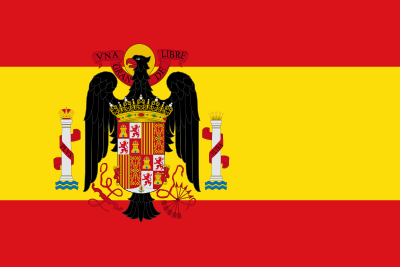
Beyond its colors, the flag often incorporates the Spanish coat of arms, a complex heraldic emblem that serves to further articulate national identity. The coat of arms itself is a rich tapestry of symbols representing the historical kingdoms of Spain (Castile, León, Aragon, Navarre) and Granada, along with the Bourbon royal crown and the Pillars of Hercules. The inclusion of the coat of arms is mandatory in certain official contexts, reinforcing the flag's role not just as a national banner but as a bearer of historical and dynastic legitimacy.
The evolution of the coat of arms over time reflects shifts in Spain's political structure, while the underlying red and yellow stripes have remained a constant.
Enduring Design and Constitutional Mandate
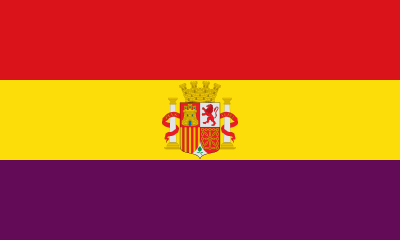
The fundamental design of the Spanish flag, characterized by its red and yellow stripes, has demonstrated remarkable continuity throughout modern Spanish history. Since its establishment in the late 18th century, this color combination has been preserved, with only one significant interruption. During the Second Spanish Republic (1931-1939), the flag underwent a modification, notably the replacement of the red-yellow-red design with a red-yellow-purple tricolor.
However, following the establishment of the Francoist regime and subsequent transition to democracy, the traditional red and yellow design was definitively reinstated. The 1978 Constitution of Spain formally defines the flag, solidifying its status and ensuring its continued use. While the specific depiction of the coat of arms on the flag has seen variations to reflect different governmental eras, the core red and yellow stripes have endured as an unwavering symbol of the Spanish nation, transcending political changes and representing a deep-seated national heritage.
Symbolism and National Cohesion
The flag of Spain functions as a powerful unifying symbol for a nation composed of diverse autonomous communities, each with its own distinct cultural identity. Its journey from a specific naval ensign to a universally recognized national emblem mirrors Spain's own historical trajectory, encompassing periods of exploration, conflict, and political transformation. The enduring red and yellow colors evoke a sense of shared history, pride, and collective identity that resonates across the country.
The flag serves not only as a marker of sovereignty but also as a visual representation of the Spanish people's resilience and enduring spirit. Its consistent presence, particularly after periods of upheaval, reinforces its role in fostering national cohesion and providing a stable point of reference in the nation's evolving narrative. The flag is a tangible link to Spain's past, present, and future, embodying its cultural richness and historical depth.
See also
Based on content from Wikipedia · Licensed under CC BY-SA 4.0