

Field Research: Becoming a Super Explorer!
Images

Field research


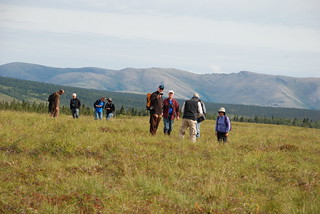


The Epistemological Foundation of Field Research
Field research, also known as fieldwork, represents a fundamental methodology in empirical scientific inquiry, characterized by the collection of raw data outside of controlled laboratory or institutional settings. Its epistemological value lies in its direct engagement with phenomena in their natural context, allowing researchers to observe, interact with, and document subjects as they exist organically. This contrasts sharply with laboratory research, which, while offering control, may not fully replicate real-world complexities.
The approaches and methods employed are highly discipline-specific, ranging from ethological observations of animal behavior in situ to ethnographic studies of human societies in their native environments. The inherent variability and unpredictability of field settings necessitate adaptable and often qualitative research designs, though quantitative data collection is frequently integrated.
Diverse Methodologies for Authentic Data Capture
The toolkit of a field researcher is extensive and adaptable. Core qualitative methods include 'direct observation,' where researchers meticulously record behaviors, interactions, and environmental conditions without intervention. 'Informal interviews' facilitate open-ended discussions, enabling the exploration of nuanced perspectives, cultural understandings, and personal experiences. 'Participant observation' involves the researcher immersing themselves within the group or community being studied, adopting a role to gain an insider's view, a technique particularly prevalent in anthropology and sociology.
Beyond these, researchers may analyze 'personal documents' produced within the group, conduct 'collective discussions' for shared insights, engage in 'self-analysis' regarding their role and biases, or gather data from 'activities undertaken off- or on-line.' The compilation of 'life-histories' provides rich, longitudinal narratives of individuals' experiences.
Integrating Qualitative Depth with Quantitative Precision
While often categorized under qualitative research due to its emphasis on context, meaning, and lived experience, field research frequently incorporates quantitative dimensions. For instance, a biologist might not only observe animal interactions but also quantify the frequency of specific behaviors, measure environmental parameters like temperature or humidity, or collect samples for laboratory analysis. A sociologist conducting interviews might systematically code responses to identify patterns in attitudes or opinions across a population sample.
This mixed-methods approach leverages the strengths of both qualitative depth and quantitative rigor, providing a more comprehensive and robust understanding of the research questions. The ability to collect both types of data in situ makes field research a powerful tool for hypothesis generation and testing.
The Indispensable Role of Field Research in Knowledge Advancement
The significance of field research extends across numerous scientific and social domains. In ecology and conservation biology, it is indispensable for understanding species distribution, population dynamics, ecosystem health, and the impacts of environmental change, informing conservation strategies. For anthropologists and sociologists, it is the primary means of understanding cultural diversity, social structures, and human behavior in its myriad forms, challenging ethnocentric assumptions and fostering cross-cultural understanding.
Geographers utilize field research to analyze landscapes, human-environment interactions, and spatial patterns. Furthermore, in fields like geology, archaeology, and even urban planning, direct observation and data collection in the field are critical for reconstructing past events, understanding present conditions, and planning for the future. Without the authentic insights gleaned from fieldwork, our scientific understanding of the complex, interconnected world would be profoundly incomplete.
See also
Frequently Asked Questions
What is field research?+
How does field research differ from lab research?+
What tools do field researchers use?+
Can field research include numbers and measurements?+
Why is field research important for animals and people?+
Based on content from Wikipedia · Licensed under CC BY-SA 4.0