

Fencing: The Sport of Swords!
Images
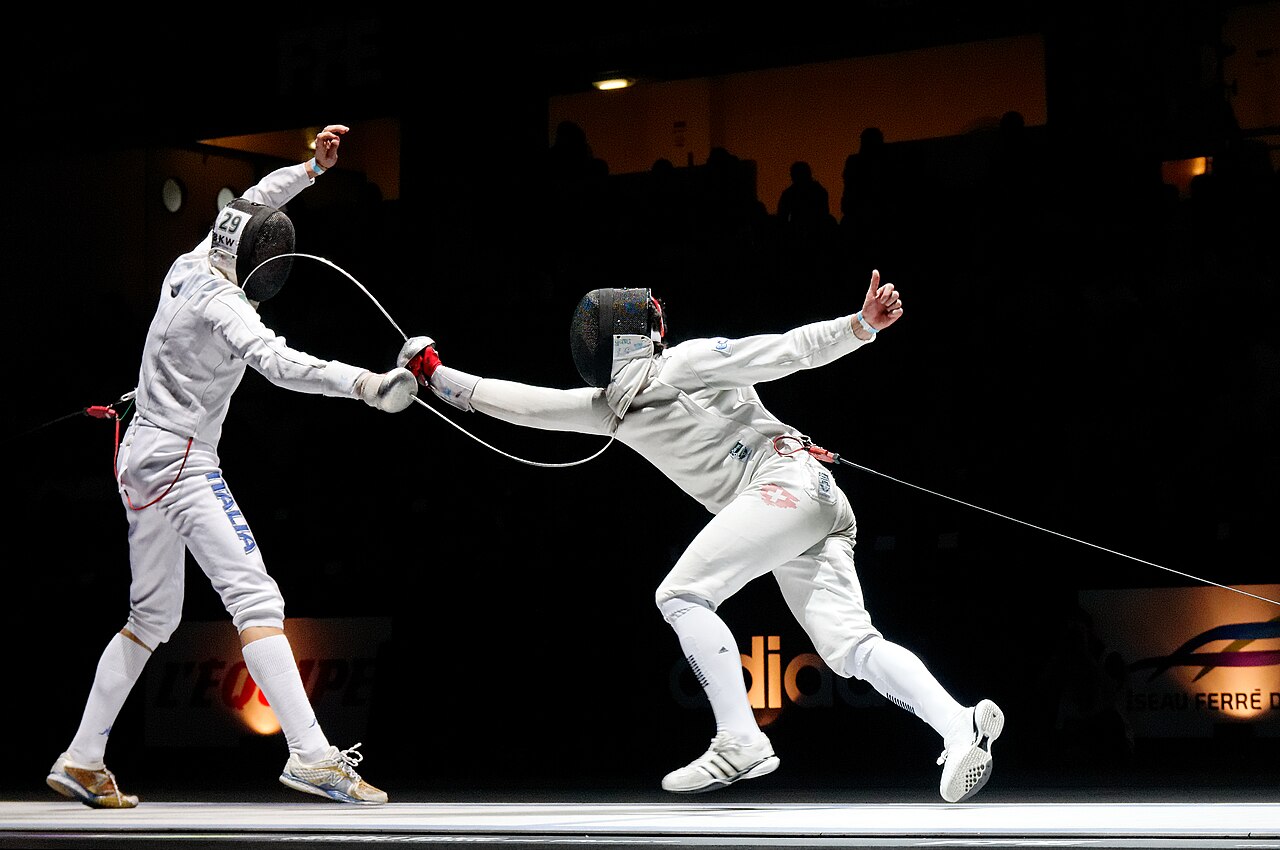
Fencing


![Happy Fence Friday [55/366]](https://live.staticflickr.com/7202/6926637145_9a9ca1feab_n.jpg)


![Fridays Fence [Olympus Trip 35] EXPLORE](https://live.staticflickr.com/663/20565916520_7d26703a20_n.jpg)
![Shadow fence [Explored]](https://live.staticflickr.com/4831/46016050871_fdc890e717_n.jpg)


The Genesis of Fencing
Fencing's lineage traces back to the development of swords as primary personal weapons in Europe, evolving from battlefield combat and dueling into a formalized sport. Early fencing masters, often skilled soldiers, codified techniques for thrusting and cutting, emphasizing precision, timing, and footwork. As the prevalence of actual combat diminished with advancements in weaponry and societal changes, fencing transitioned from a life-or-death skill to a refined art and a competitive discipline.
The establishment of fencing academies, particularly in France and Italy during the Renaissance, played a pivotal role in standardizing techniques and equipment. This historical evolution is crucial to understanding the sport's emphasis on strategy and etiquette, distinguishing it from purely physical contests. The transition was solidified by the late 19th century, leading to its inclusion in the inaugural modern Olympic Games in 1896, a testament to its enduring global appeal and recognized athletic merit.
The Triad of Weapons
Modern Olympic fencing is contested with three distinct weapons, each governed by specific rules and requiring unique skill sets. The foil, the lightest of the three, is a thrusting weapon with a flexible blade and a small bell guard. Scoring is limited to the torso, and the 'right of way' rule is paramount: the fencer who initiates a valid offensive action has priority, meaning simultaneous touches are awarded to the fencer with the right of way.
The épée, a heavier weapon with a larger guard, allows thrusting attacks to the entire body, including the hands and feet. It operates on a 'first-to-touch' principle, eliminating the 'right of way' and emphasizing immediate reaction and precision. The sabre, designed for both thrusting and cutting, has a triangular blade and a more protective guard.
Its target area includes the torso, arms, and head, making it the fastest of the three weapons and incorporating elements of both foil and épée rules, with a 'right of way' system governing attacks.
The Fencer's Mind and Body
Fencing is a sport that demands an extraordinary synthesis of physical conditioning and acute mental acuity. Athletes require exceptional cardiovascular fitness, explosive power for rapid lunges and retreats, and remarkable agility to evade attacks. The sport's demanding nature also cultivates profound mental discipline.
Fencers must possess keen observational skills to read their opponent's intentions, lightning-fast reflexes to react to attacks, and the strategic foresight to plan offensive and defensive sequences. Often likened to 'physical chess,' fencing requires constant tactical adaptation and problem-solving under immense pressure. This mental rigor sharpens cognitive functions, including decision-making, pattern recognition, and strategic planning.
Beyond performance, fencing instills values of discipline, respect, perseverance, and sportsmanship, contributing to holistic personal development. Its continuous presence in the Olympic Games underscores its status as a globally recognized and respected athletic discipline.
The Piste and the Rules
Fencing bouts are conducted on a designated strip known as a 'piste,' measuring 14 meters in length and 1.5 to 2 meters in width. This confined space dictates movement, forcing fencers to engage in a dynamic interplay of advance and retreat while maintaining offensive and defensive postures. The objective is to reach a predetermined score, typically five or fifteen points, or to lead in points when the allotted time expires.
The intricacies of scoring are weapon-specific. In foil and sabre, the 'right of way' rule is a critical tactical element, requiring fencers to understand offensive sequences and counter-attacks to gain priority. Épée, conversely, rewards the first valid touch, emphasizing speed and accuracy. Electronic scoring systems, utilizing conductive blades and body cords, register touches with illuminated signals, ensuring objective adjudication and adding a technological dimension to the sport.
Understanding these rules and the spatial dynamics of the piste is fundamental to both competing and appreciating the strategic depth of fencing.
Fencing's Enduring Legacy and Modern Relevance
Fencing's historical significance as a method of combat and self-defense has profoundly shaped its modern athletic form, imbuing it with a unique blend of tradition and innovation. Its inclusion in every modern Olympic Games since 1896 highlights its status as a foundational sport, representing a direct link to ancient martial practices while simultaneously showcasing cutting-edge athletic performance. In contemporary society, fencing continues to offer significant benefits beyond athletic achievement.
It serves as a powerful tool for developing critical thinking, strategic planning, and rapid decision-making skills, attributes highly valued in academic and professional environments. Furthermore, the discipline, focus, and respect inherent in fencing contribute to character development, fostering resilience and sportsmanship. As a global sport, fencing promotes international understanding and camaraderie, bridging cultural divides through shared athletic endeavor and a common appreciation for skill and strategy.
Go deeper
Frequently Asked Questions
What is fencing and why is it called a sport of swords?+
How many weapons are used in Olympic fencing and what are they?+
What is the 'right of way' rule in fencing?+
Why is fencing sometimes called 'physical chess'?+
What are the dimensions of the fencing strip (piste)?+
Based on content from Wikipedia · Licensed under CC BY-SA 4.0